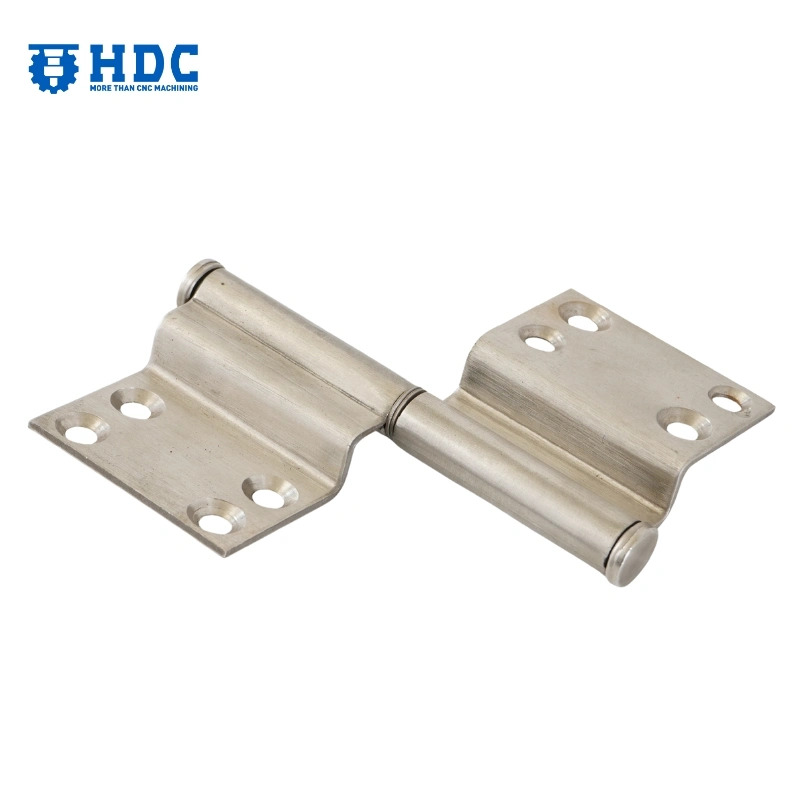
Sé que al menos una vez pensaste en comparar el bronce con el latón y el cobre. Como si los pusieras todos en un campo de batalla para ver cuál funciona mejor. La verdad es que mucha gente se lo imagina y no obtiene un resultado adecuado.
En este artículo, eso es precisamente lo que haremos. Analizaremos las diferencias entre los tres. ¡Y no solo eso, sino que también descubrirás para qué sirve cada uno!
Entendiendo los metales rojos
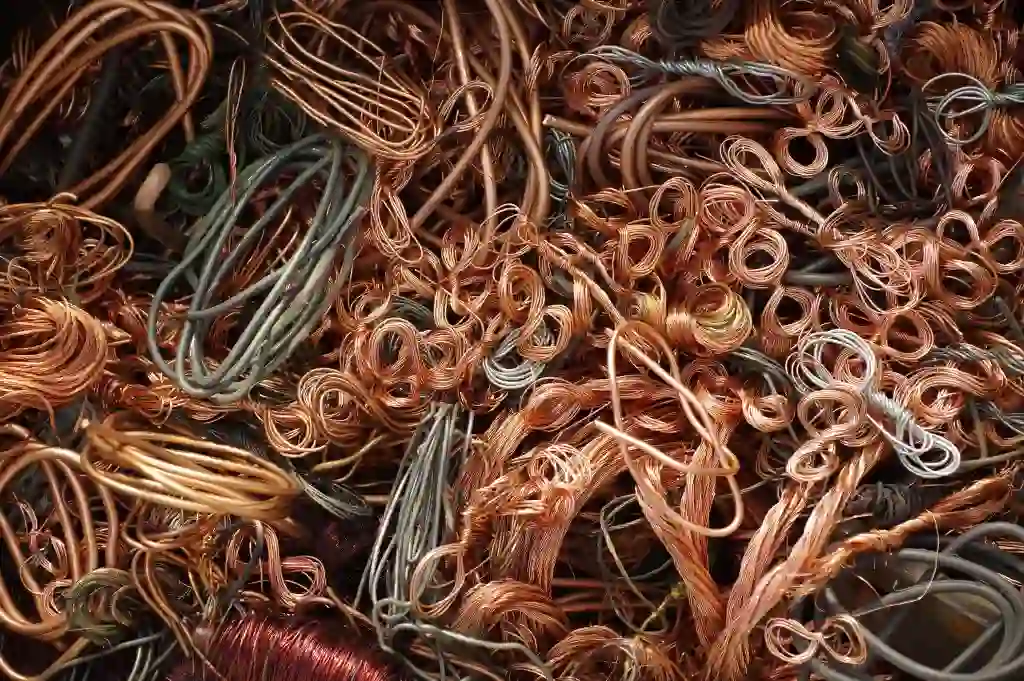
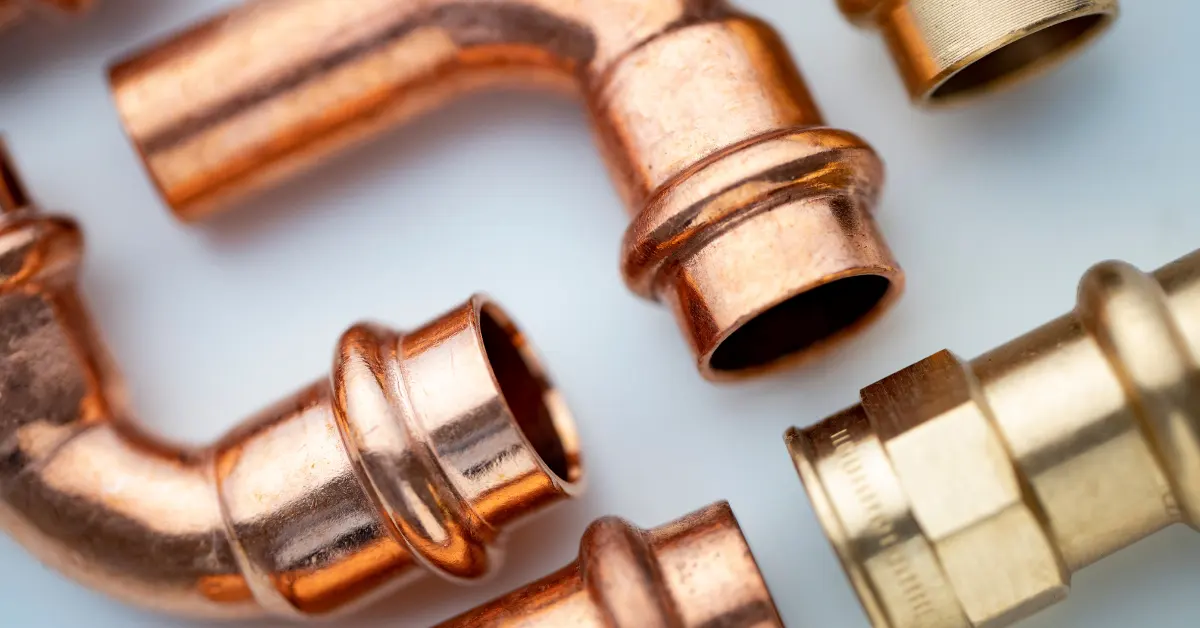
Fuente: Chatarra GLE
La razón principal por la que se les conoce como los "metales rojos" es su tonalidad. Todos ellos poseen este distintivo tono rojizo, único y, a diferencia de otros metales, ¡también se encuentran entre los más comunes del mundo!
Así pues, ¡analicemos cada uno de ellos de forma independiente para ver cuán diferentes y únicos son entre sí!
Latón

Empecemos con el primero: el latón. Básicamente, el latón es una aleación de cobre y zinc, y la proporción exacta varía, lo que permite una gama de colores y propiedades mecánicas.
En general, cuanto mayor sea el contenido de cobre, más rojo e intenso será el tono. Por otro lado, un mayor contenido de zinc le da un aspecto más amarillo dorado.
Además de eso, el latón también es conocido por:
- Su brillante apariencia dorada
- Excelente resistencia a la corrosión
- Baja fricción
- Buena maquinabilidad
Se utilizan con frecuencia para fabricar instrumentos musicales, accesorios de fontanería e incluso herramientas. ¿Por qué? ¡Porque son resistentes, pero fáciles de mecanizar, moldear y pulir!
Leer más: ¿Se oxida el latón? Un análisis exhaustivo
Bronce
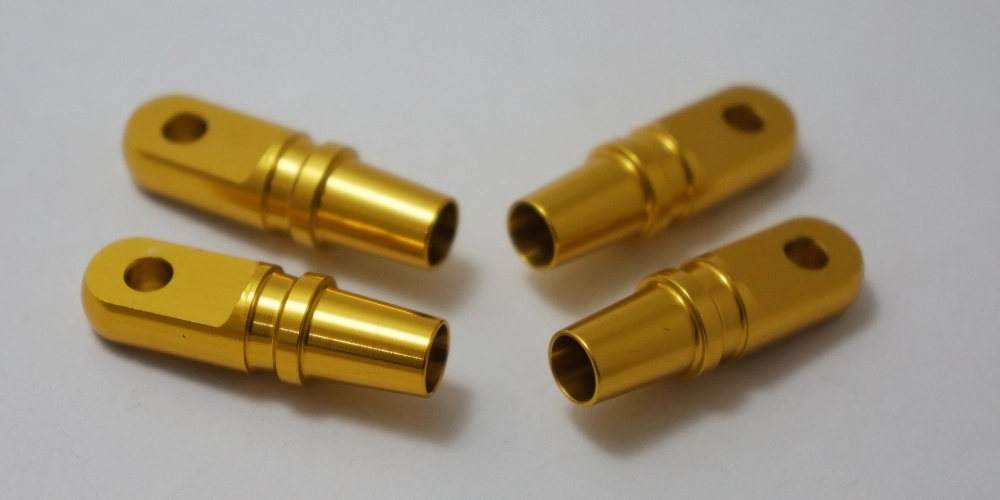
El bronce es otra aleación a base de cobre. Su diferencia con el latón radica en el otro elemento. Verás, en lugar de zinc, suele mezclarse con estaño.
También se pueden añadir otros elementos como aluminio, fósforo o silicio para ayudar a mejorar propiedades específicas.
Las características y propiedades del bronce incluyen, entre otras:
- Una apariencia más oscura, de color marrón rojizo.
- Mayor dureza y durabilidad en comparación con el latón.
- Resistencia al desgaste y la corrosión, especialmente por agua salada.
Los usos comunes incluyen: cojinetes, esculturas, accesorios para barcos y herramientas donde la resistencia y la resistencia a la corrosión son de suma importancia.
Cobre
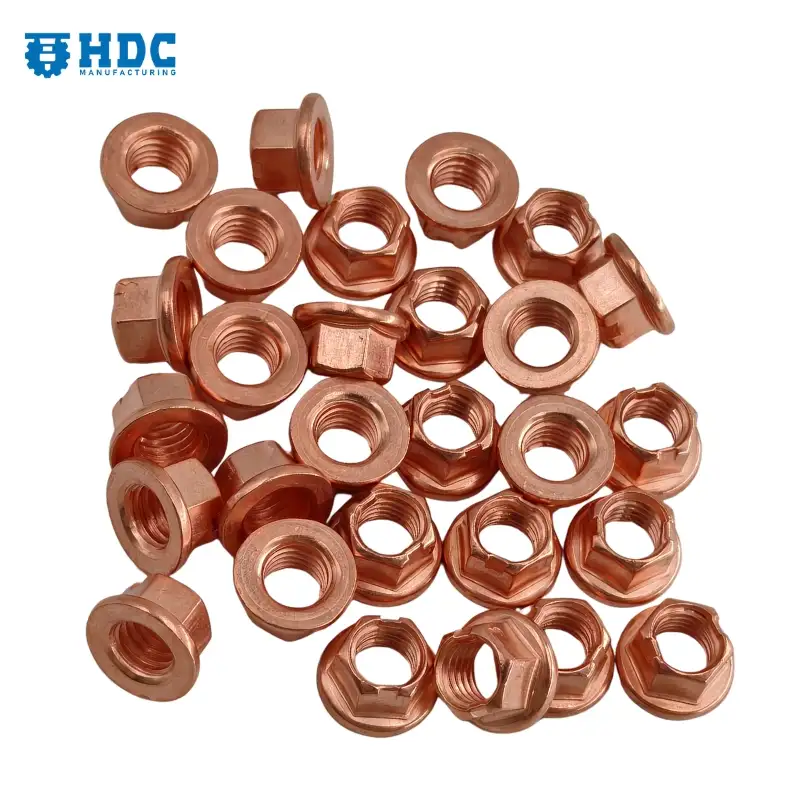
Por último, pero no por ello menos importante, está el cobre. Es el metal base tanto del bronce como del latón. Además, es un metal natural de color naranja rojizo, blando, maleable y altamente conductor.
A continuación se presentan algunas de las características más comunes del cobre:
- Alta conductividad eléctrica y térmica
- Propiedades antimicrobianas
- Resistencia natural a la corrosión
En cuanto a sus aplicaciones, dista bastante de los usos del bronce y el latón, ya que el cobre se encuentra a menudo en el cableado eléctrico, los tejados, las tuberías, la electrónica y otros componentes de la maquinaria industrial.
NOTA: El cobre también es esencial para la producción de latón y bronce. Sin cobre, no se les llamaría "metales rojos", ¡porque no serían rojos!
Esas son las diferencias entre estos tres metales. No es tan difícil de entender, ¿verdad?
Leer más: El cobre: un metal fundamental para el progreso humano
¿Cómo se puede saber si es cobre, bronce o latón?
A menos que hayas estado observando metales toda tu vida, te resultará un desafío, difícil, incluso imposible para algunos. Sin embargo, no lo es. ¡Déjame enseñarte un par de trucos para ayudarte a identificarlos!
Identificación de colores
El color suele ser la pista más sencilla. El cobre tiene un distintivo tono rojizo anaranjado. El latón, en cambio, parece más amarillento o dorado. Y el bronce es un poco más oscuro, con una tendencia hacia un marrón intenso o marrón rojizo. Pero, dado que sus colores están influenciados por su composición, no te fíes de ello.
Propiedades físicas
Otro aspecto a tener en cuenta, que también puede ser una fuente fiable de información, son las propiedades físicas. De los tres metales, el cobre es el más blando y maleable; esta es la razón por la que su color rojizo es el secreto de su característico tono.
El bronce es el más duro de los tres, mientras que el latón se sitúa en un punto intermedio.
Sonido
Por último, también existen diferencias notables en el sonido que produce cada uno de estos metales. Al golpear el cobre, se obtiene el sonido más suave. El latón produce un sonido agudo, mientras que el bronce produce el sonido más grave.
¡No necesitas ser un experto en metales para entender esto! Con estas sutiles pistas y sugerencias, ¡ya no tendrás que preocuparte por identificar cuál es cuál!
Bronce vs. Latón vs. Cobre: ¿Cuál te conviene más?
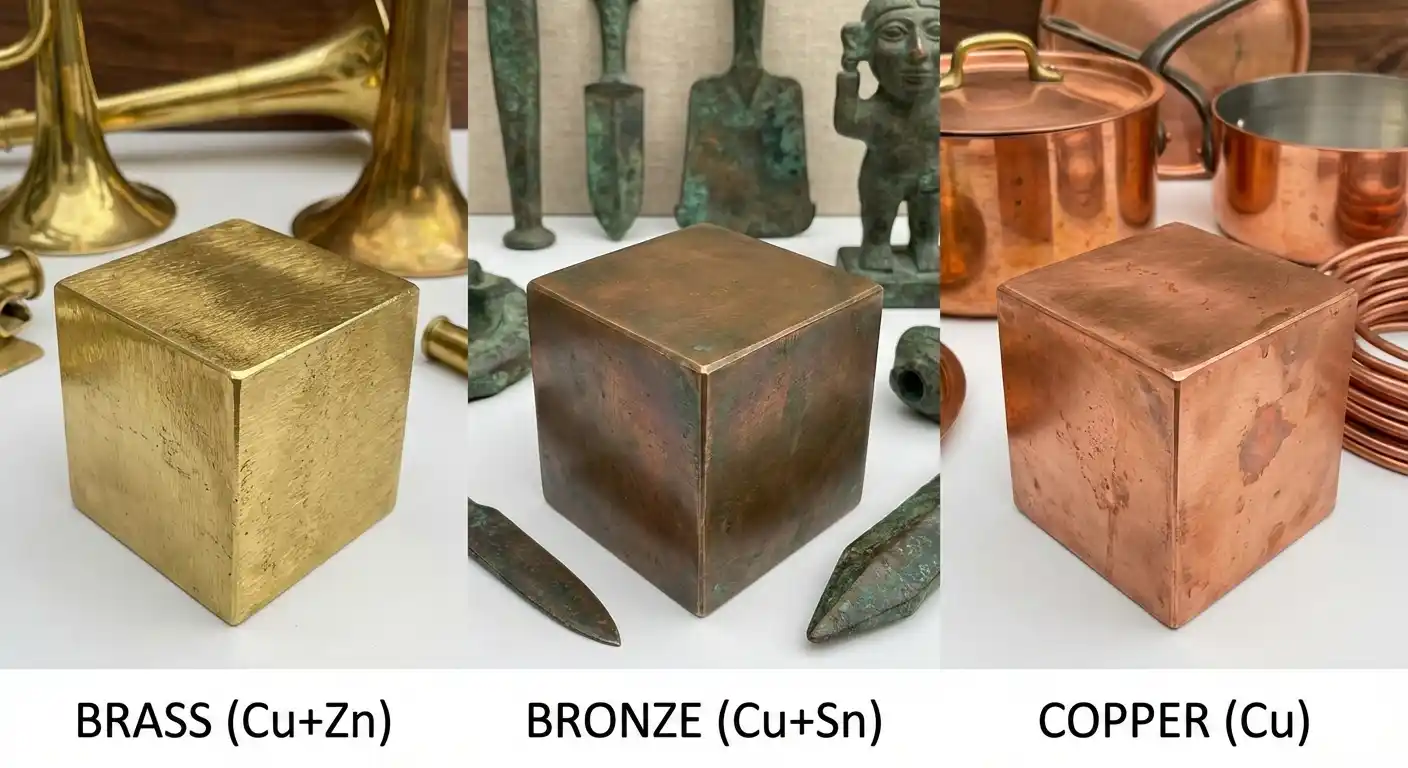
Las diferencias entre estos tres metales son tan grandes que la omisión de una sola propiedad puede provocar cambios drásticos. Pero te lo explicaremos de la mejor, más sencilla y breve manera posible.
Si estás buscando fortaleza y Resistencia a la corrosión, Especialmente en entornos marinos o exteriores, el bronce es la mejor opción. Es duro, duradero y sumamente adecuado para aplicaciones de alta resistencia, como cojinetes, bujes y esculturas expuestas a la intemperie.
Para maquinabilidad, asequibilidad, y atractivo estético, El latón se lleva la palma; se utiliza ampliamente en fontanería, instrumentos musicales y grifería donde un acabado dorado y la facilidad de moldeado son importantes. Sin embargo, es menos resistente a la corrosión que el bronce o el cobre.
Pero, si su proyecto necesita alta electricidad o conductividad térmica, ¡El cobre supera a ambos! Este elemento es esencial en el cableado y la electrónica, y si bien el cobre no es tan resistente como el bronce ni tan fácil de mecanizar como el latón, su flexibilidad lo hace confiable para un uso prolongado en diferentes entornos.
Lea también: ¿Cuáles son los mejores metales de alta temperatura en 2026? (Guía completa de expertos)
¡Ahí lo tienen! ¡La respuesta a sus preguntas! Estos metales no son universales. Son muy diferentes entre sí y tienen funciones distintas.
¿Por qué HDC Manufacturing es el principal fabricante de metales de China?
Durante más de una década, HDC Manufacturing ha estado en la senda del crecimiento en lo que respecta a los metales., procesos de metales, fundición a la cera perdida, etc. Por lo tanto, ¡no hay duda sobre nuestra capacidad para producir el material exacto que necesita!
Ahora que conoces a la perfección la diferencia entre bronce, latón y cobre, saber que puedes contar con HDC para cualquiera de ellos también es una ventaja. Sea cual sea el producto y el sector en el que te encuentres, ¡puedes contar con nosotros! Mecanizado CNC, forjar, molienda, y otros procesos sin duda serán más que suficientes para ganarnos su confianza.
¡Contáctanos hoy y obtén un presupuesto gratuito para lo que necesites!