¿Alguna vez te has encontrado debajo del fregadero de la cocina o en la pared de un gran edificio industrial preguntándote cómo se conectan todas esas tuberías? Parece un inmenso laberinto mecánico. Esas conexiones no tienen ningún adorno; son las uniones y los músculos de cualquier sistema de tuberías.
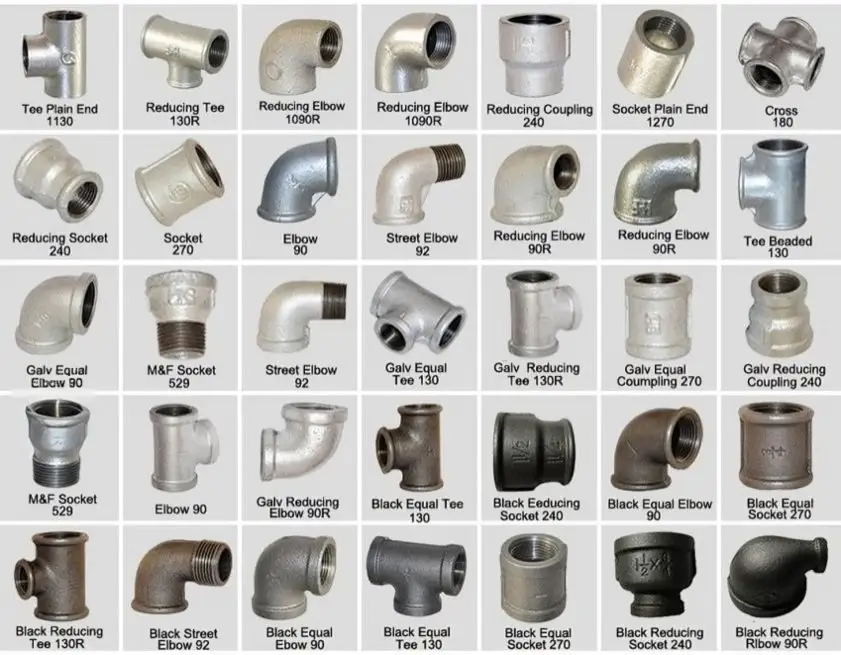
En esta guía vamos a hablar de los 12 tipos principales de accesorios de tubería que debes conocer. Se pueden usar tanto para reparar una simple fuga en tu casa como para construir una gran tubería industrial; conocer estos componentes es clave para el éxito de tu proyecto.
Tabla comparativa rápida de los 12 tipos principales de accesorios para tuberías
La siguiente tabla ofrece una visión general de los más comunes. tipos de accesorios de tubería, sus funciones principales y la ubicación de los usos más comunes en los sistemas de tuberías reales.
| Tipo de accesorio de tubería | Tipo de conexión | Materiales típicos | Manejo de la presión | Dificultad de instalación | Ventaja clave |
| Conector de codo | Roscado, soldado y de enchufe. | Acero inoxidable, PVC y cobre | Medio a alto | Fácil | Flujos con cambio de dirección en las tuberías. |
| Conexión en T | Roscado o soldado | Latón, acero y PVC | Medio a alto | Moderado | Establece las conexiones de las tuberías de derivación. |
| Conector reductor | Soldadura a tope o roscada | Acero inoxidable y acero al carbono | Alto | Moderado | Relaciona tuberías de varios tamaños. |
| Acoplamiento | Deslizante o roscado | PVC, cobre y acero inoxidable | Medio | Fácil | Unión de tuberías sencilla y rápida |
| Conexión de unión | Roscado con tuerca de unión | Latón y acero inoxidable | Medio | Fácil | Puedes desconectar las tuberías fácilmente. |
| Conexión de la tapa | Roscado o soldado | Acero, cobre y PVC | Medio | Fácil | Sella de forma segura los extremos de las tuberías. |
| Conector de enchufe | Enroscado | Latón, acero y plástico | Medio | Fácil | Sella las aberturas de las tuberías. |
| Ajuste cruzado | Roscado o soldado | Acero inoxidable y latón | Medio | Moderado | Une cuatro tuberías entre sí. |
| Conector de boquilla | Extremos roscados macho | Acero, latón y PVC | Medio | Muy fácil | Sistemas de montaje rápido para conectores. |
| Conector de buje | Enroscado | Latón y acero inoxidable | Medio | Fácil | El diámetro de la tubería se reduce en una zona estrecha. |
| Adaptador de conexión | Roscado o deslizante | PVC, cobre y plástico. | Medio | Fácil | Conecta varios tipos de tuberías. |
| Conexión de brida | Conexión de brida atornillada | Acero inoxidable y acero al carbono | Muy alto | Complejo | Buena conexión de tubería industrial. |
Por qué los accesorios de tubería son esenciales en los sistemas de tuberías.
Imagina una tubería como un traductor. A veces, una tubería puede necesitar hacer una curva, pero es recta. En otras ocasiones, una tubería grande debe compartir su agua con una más pequeña. Si no tuvieras conexiones en tu sistema de plomería, sería una larga línea recta que no llevaría a ninguna parte.
Los accesorios son importantes, ya que
- Cambiar de dirección: Ayudan a que las tuberías rodeen paredes y suelos.
- Controlar el flujo: Son capaces de prevenir, iniciar o separar el líquido o gas que fluye a través del sistema.
- Conecta diferentes tamaños: Se utilizan entre tuberías grandes y pequeñas.
¿Qué son los accesorios para tuberías?
En pocas palabras, un racor es un componente importante en un sistema de tuberías, que se utiliza para conectar tramos rectos de tubería. Son los puentes que crean una red compleja.
Por qué los usamos en fontanería
La fontanería no se trata simplemente del transporte de agua, sino de su circulación segura. Los accesorios permiten controlar el flujo de agua para que no salga a presión del grifo. Permiten ajustar el diámetro de las tuberías para soportar la presión y simplifican las tareas de mantenimiento y reparación. Cuando falla una parte de la tubería, normalmente es posible reemplazar solo el accesorio, pero no toda la línea.
Materiales comunes
Los accesorios están fabricados con diversos materiales, dependiendo de lo que deba circular por su interior (agua, gas o productos químicos):
- Acero inoxidable: Potente y no se oxida.
- Latón: Es una buena opción y adecuada para altas temperaturas.
- CLORURO DE POLIVINILO: Plástico que se utiliza como desagüe.
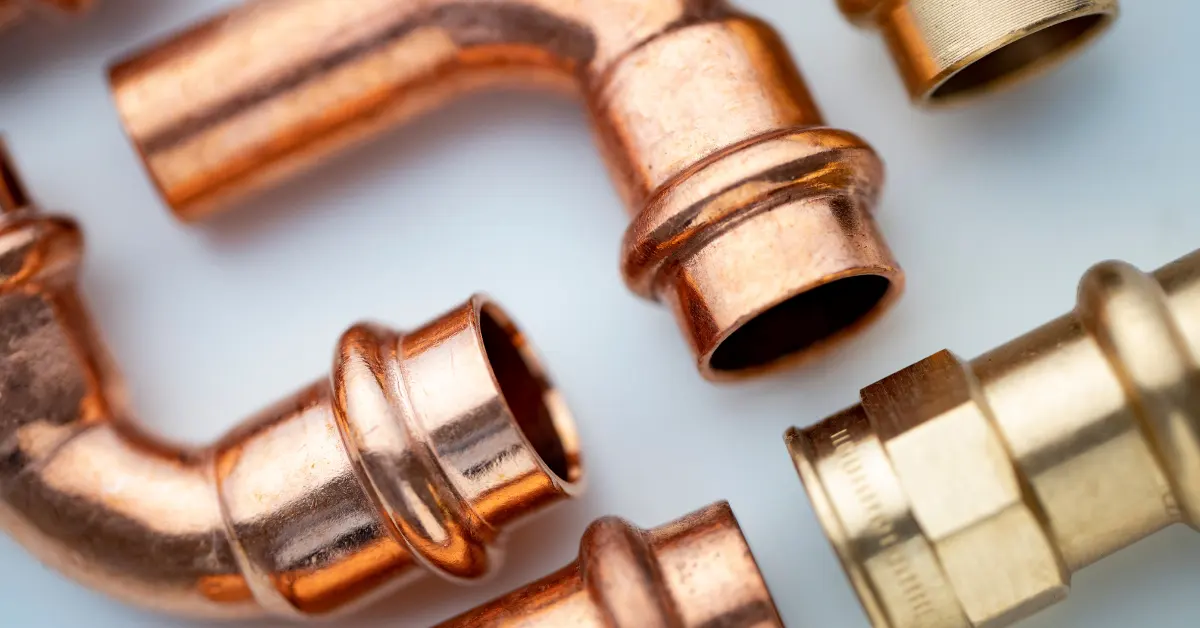
- Cobre: El estándar de oro para las tuberías de agua domésticas.
- Hierro fundido: Construcción de gran envergadura de líneas subterráneas de desagüe.
Cómo funcionan los accesorios de tubería en un sistema de tuberías
Los racores se fijan a las tuberías mediante roscas, pegamento o soldadura. Tras su instalación, deben mantener la presión del sistema. Un fallo en un racor provoca una pérdida de presión en todo el proceso, lo que puede ocasionar fugas o incluso explosiones en la industria.
Tendrás estos accesorios por todas partes:
- Fontanería residencial: Tu ducha, tu inodoro y tu fregadero de la cocina.
- Plantas industriales: Plantas que fabrican alimentos o medicamentos.
- Petróleo y gas: Enormes oleoductos que atraviesan naciones enteras.
- Sistema de climatización: La calefacción y el aire acondicionado que hacen que tu casa sea acogedora.
12 tipos de accesorios para tuberías
El conocimiento de los distintos tipos de accesorios para tuberías ayudará a ingenieros, fontaneros y demás personas relacionadas con la construcción a crear sistemas de tuberías seguros y eficientes para uso residencial e industrial.
1. Accesorios de tubería en forma de codo
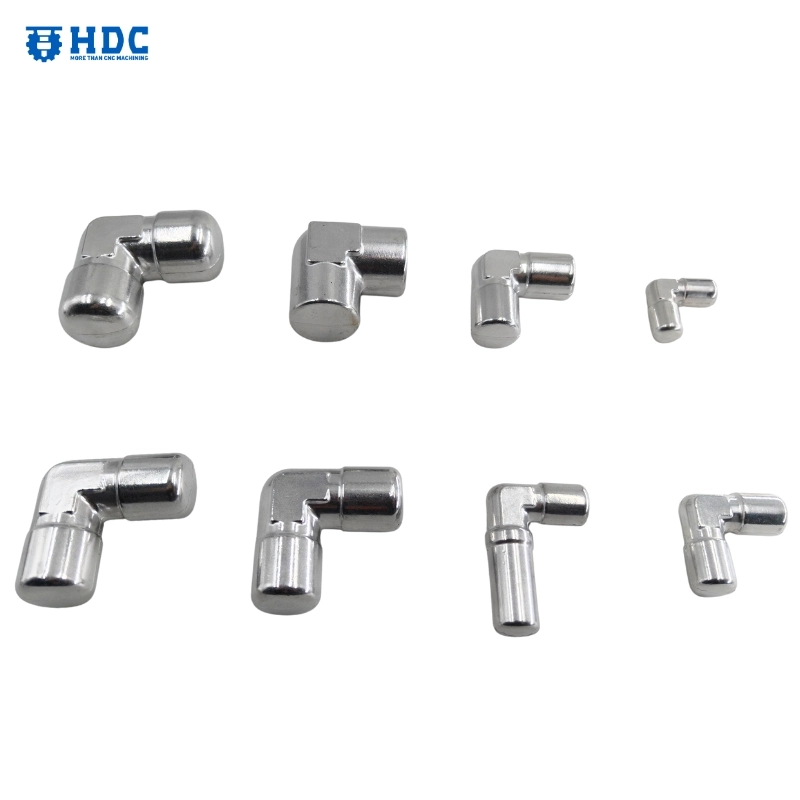
El codo es uno de los componentes más utilizados en cualquier sistema de tuberías. Como su nombre indica, este accesorio tiene forma de brazo curvo que permite doblar la tubería.
Qué hace
Un codo modifica el flujo del fluido en la tubería. La ausencia de codos solo permitiría la instalación de tuberías en línea recta, lo que haría imposible la construcción de la mayoría de los sistemas de fontanería e industriales.
Tipos de codos
Los codos vienen en una variedad de ángulos, dependiendo de la magnitud del cambio de dirección que requiera la tubería.
- Codo de 90 grados: Forma un giro en ángulo recto.
- Codo de 45 grados: Gira suavemente y minimiza la pérdida de presión.
- Codo de 180 grados: Se trata de un giro en U que invierte el flujo en la dirección opuesta.
Materiales
Los fabricantes elaboran codos de acero inoxidable, PVC, latón, cobre y acero al carbono.
Aplicaciones
Los accesorios del codo se encontrarán en numerosos lugares y son
- Sistemas de plomería domésticos
- sistemas de tuberías de climatización
- oleoductos industriales
- redes de suministro de agua
Por ejemplo: Cuando una tubería tiene que desviarse del suelo a la pared o incluso rodear una viga de la estructura, un codo puede solucionar ese problema.
2. Accesorios de tubería en T
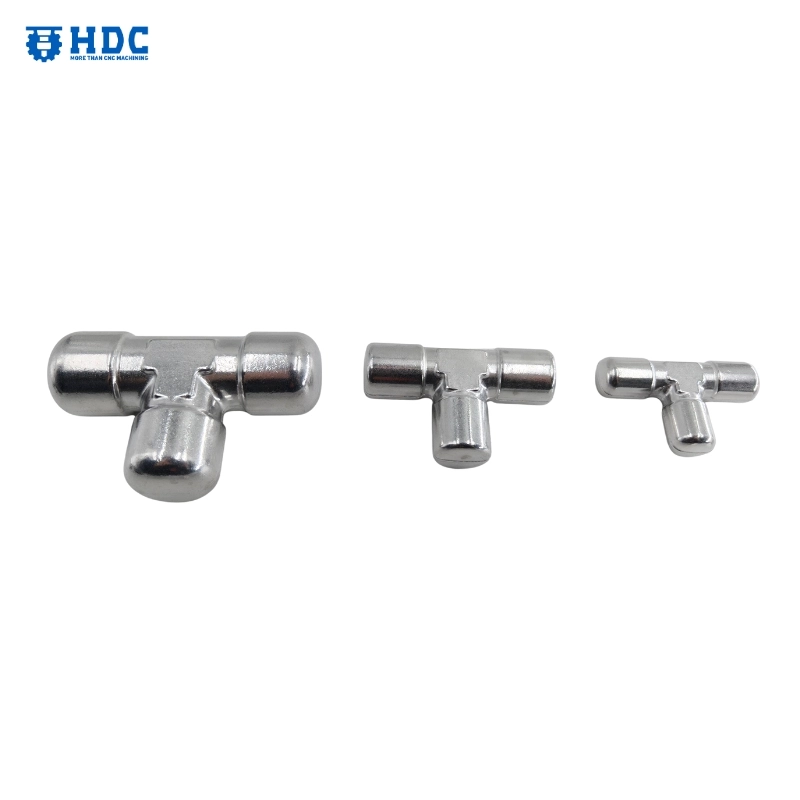
Una conexión en T recibe ese nombre por su forma, ya que se asemeja perfectamente a la letra T. Une tres tuberías entre sí y facilita la formación de ramales en un sistema de tuberías.
Qué hace
Una conexión en T está diseñada con una entrada y dos salidas, o bien puede diseñarse como una combinación de dos flujos en una sola línea, dependiendo de la dirección del fluido.
Funciones
Este accesorio tiene dos funciones importantes.
- Divide un flujo compuesto en dos tuberías.
- Conjuga dos corrientes de fluido en una sola tubería.
Tipos
- Camiseta igualitaria: El diámetro de todas las aberturas es igual.
- Conector en T reductor: Se trata de una derivación cuyo diámetro es menor que el de la tubería principal.
Aplicaciones
Las conexiones en T son muy importantes en los sistemas de distribución de agua.
Por ejemplo: Aquí se muestra una tubería principal que abastece de agua a una casa, y una conexión en T se utiliza para dividir el suministro de agua, incluyendo una tubería para la cocina y otra para el baño. Las conexiones en T también son comunes en sistemas de riego, plantas químicas y sistemas de tuberías industriales.
3. Accesorios de acoplamiento para tuberías
Uno de los tipos más sencillos de accesorios para tuberías es el acoplamiento, que, sin embargo, desempeña un papel muy importante en la conexión de las tuberías.
Qué hace
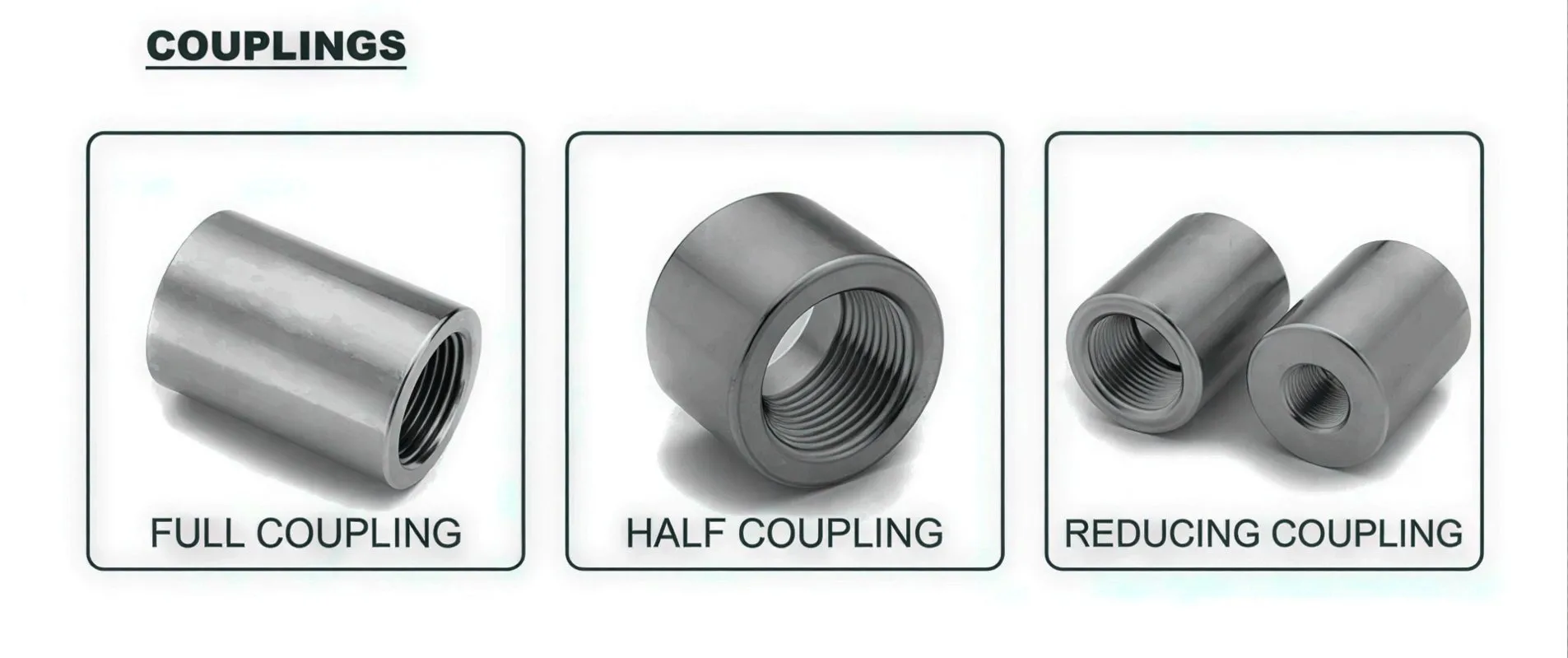
Un acoplamiento es una conexión lineal entre dos tuberías de idéntico tamaño. Consiste en una funda que sujeta los dos extremos de la tubería.
Tipos
Existen dos tipos principales de acoplamientos:
- Acoplamiento completo: Conecta dos tuberías completamente.
- Acoplamiento parcial: Esto se suelda a un tubo grande para formar una salida más pequeña.
Funciones
Los acoplamientos son útiles en diversas tareas:
- Prolongar la duración de un oleoducto.
- Sustitución de tramos de tubería rotos.
- Conexión permanente de tuberías.
Aplicaciones
Los usos comunes de los acoplamientos son
- Servicios de fontanería doméstica.
- Sistemas de suministro de agua.
- Tuberías industriales.
En el caso de una tubería corta y dañada, se puede conectar otra sección de la tubería mediante un acoplamiento y el sistema se puede restablecer en poco tiempo.
4. Conectores de tubería de unión
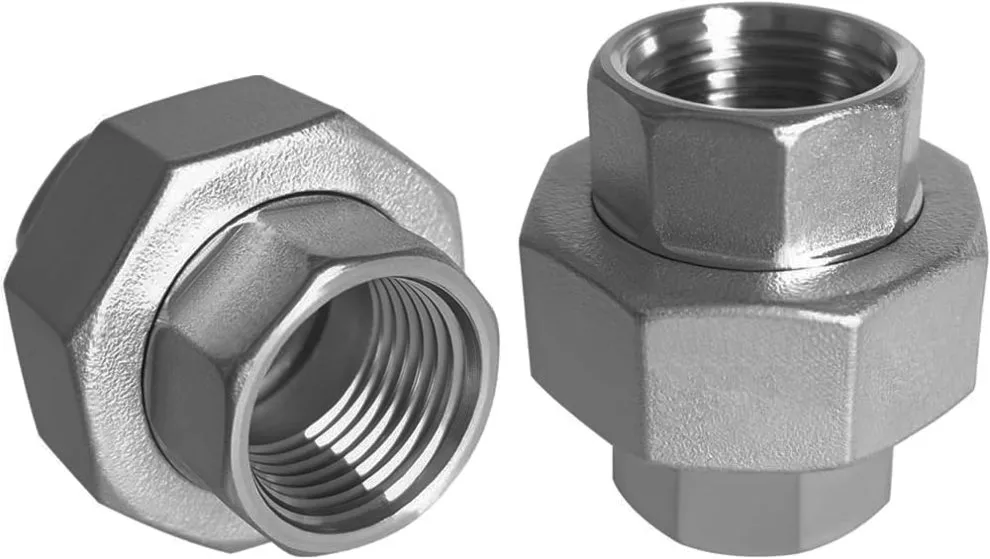
Un accesorio de unión se asemeja a un acoplamiento, pero tiene una característica adicional importante: su fácil desmontaje.
Qué hace
La unión se utiliza para conectar dos tuberías; sin embargo, en el centro de la unión hay una tuerca especial. Es posible separar las tuberías sin cortarlas desenroscando esta tuerca.
Beneficios
Los racores de unión ofrecen varias ventajas:
- Fácil instalación.
- Extracción rápida de tuberías.
- Servicio y reparaciones básicas.
Componentes
Un racor de unión normal consta de tres componentes:
- Una nuez
- Un extremo femenino
- Un extremo masculino
Aplicaciones
Los racores de unión se suelen instalar en los lugares donde puede ser necesario realizar mantenimiento, entre ellos:
- bombas de agua
- Máquinas industriales
- Sistemas de filtración
Como ejemplo: Cuando una bomba requiere limpieza o reemplazo, el racor de unión permite a los técnicos retirar fácilmente la tubería sin interrumpir el sistema.
5. Accesorios reductores de tubería
No todos los sistemas de tuberías tienen el mismo diámetro. De ahí la necesidad de utilizar reductores.
Qué hace
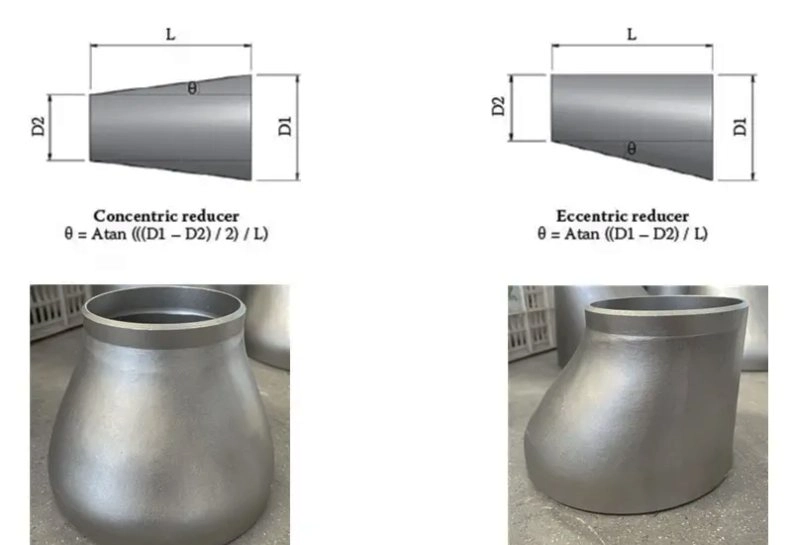
Un reductor se utiliza para unir tuberías de diámetro variable. Reduce gradualmente el tamaño de las tuberías para garantizar que el fluido fluya sin problemas.
Tipos
A: Reductor concéntrico
- Diseño en forma de cono.
- Mantenga la alineación de los centros de las dos tuberías.
- Aplicable en sistemas de tuberías verticales.
B: Reductor excéntrico
- Un lado es plano.
- Se opone a la formación de burbujas de aire.
- Se utiliza habitualmente en tuberías horizontales.
Funciones
Los reductores ayudan a:
- Controlar la velocidad del fluido.
- Es importante mantener los niveles de presión adecuados.
- Conecta tuberías con máquinas que tienen entradas más pequeñas.
Aplicaciones
Los reductores se suelen emplear con:
- Procesamiento de implantes en la industria.
- Oleoductos químicos.
- Sistemas de bombeo.
- Instalaciones de petróleo y gas.
6. Accesorios de tubería con buje
Un racor de casquillo es similar a un reductor, con la diferencia de que tiene un tamaño menor.
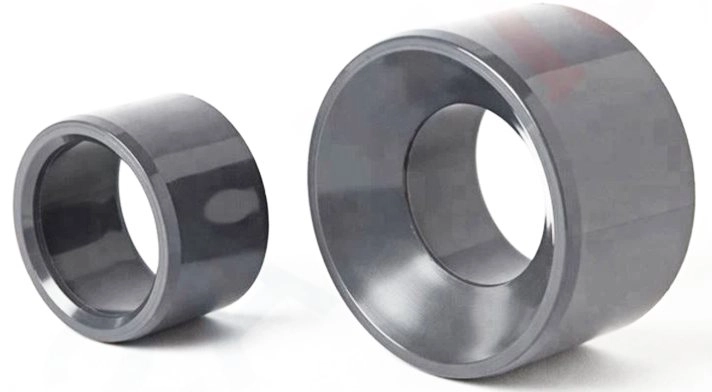
Qué hace
Se sustituye un tornillo por un casquillo que encajará en una tubería más grande y reducirá el tamaño de la abertura.
Funciones
El buje le permite:
- Conectar las tuberías pequeñas con las tuberías más grandes.
- Ajusta el tamaño de la tubería rápidamente.
- Reduzca el espacio en instalaciones estrechas.
Ventajas
Los casquillos son de menor tamaño en comparación con los reductores; por lo tanto, se pueden utilizar en áreas con espacio limitado.
Aplicaciones
Los bujes se encuentran comúnmente en
- Sistemas de fontanería en edificios residenciales.
- Equipos de filtración de agua.
- Instalación de tuberías industriales.
Ofrecen una forma económica y sencilla de cambiar el tamaño de las tuberías.
7. Accesorios de tubería transversales
La pieza en forma de cruz se asemeja a un signo de suma (+) y une cuatro tuberías.
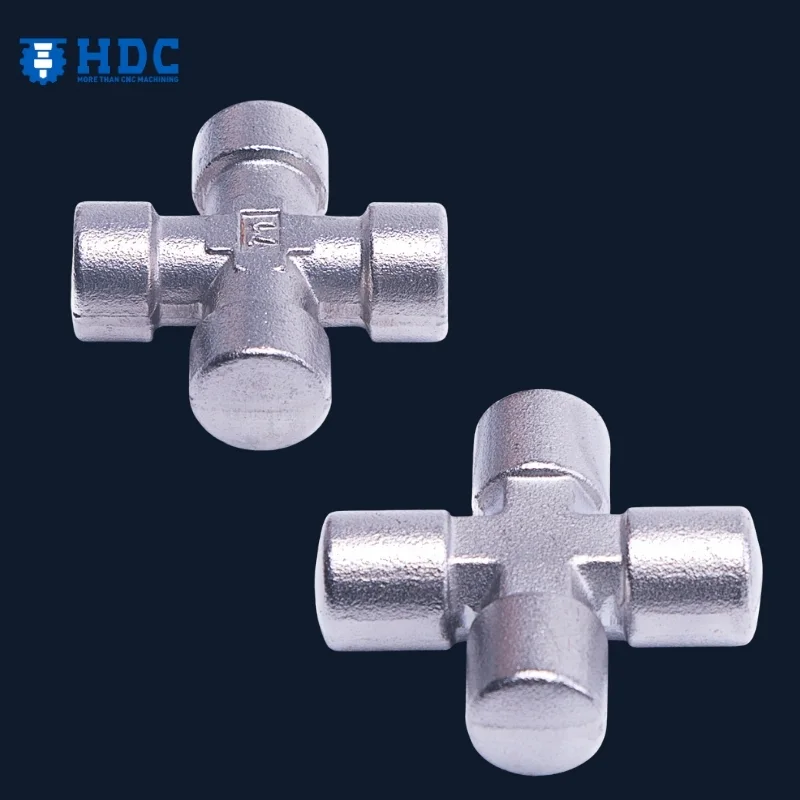
Qué hace
Una conexión en cruz tiene una entrada y tres salidas; por lo tanto, el fluido puede fluir en diversas direcciones.
Funciones
Este accesorio regula el flujo de fluido en cuatro ramales de la tubería.
Ventajas
Los racores transversales ayudan a simplificar los diseños complejos de tuberías en los que sería necesario que varias líneas se unieran en un único punto central.
Aplicaciones
Los accesorios de conexión en cruz se utilizan ampliamente en:
- Sistemas de rociadores contra incendios.
- Sistemas de distribución de agua en la industria.
- Sistemas de riego.
Por ejemplo, En un sistema de rociadores contra incendios, se utilizan accesorios transversales para distribuir el agua en varias líneas de un conjunto de rociadores instalados en el techo. En muy poco tiempo.
8. Accesorios de tubería con tapa
Un tapón de tubería es una tapa que cubre una tubería.
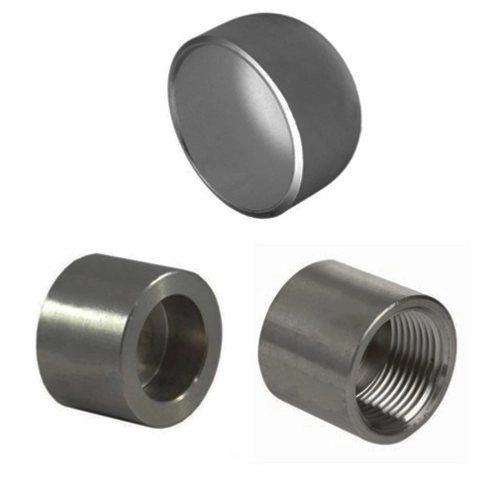
Qué hace
Es el punto en el recorrido de una tubería y la cubre por completo.
Funciones
Las tapas cumplen varias funciones:
- Detenga el flujo de fluido.
- Proteja los extremos de las tuberías para evitar su destrucción.
- Selle los tramos de tubería que no se utilicen.
Materiales
Las tapas de las tuberías suelen estar hechas de:
- Acero inoxidable
- Latón
- CLORURO DE POLIVINILO
- Acero carbono
Aplicaciones
Los límites máximos son aplicables en numerosos casos, entre los que se incluyen:
- Los bloqueos temporales de las tuberías.
- Sistemas de prueba de presión.
- Futuras ampliaciones del oleoducto.
Por ejemplo: Cuando los ingenieros tengan previsto ampliar un oleoducto en el futuro, tendrán la opción de sellarlo hasta el siguiente período de construcción.
9. Tapones para accesorios de tubería
El tapón de tubería es similar a una tapa de tubería, excepto que funciona de manera diferente.
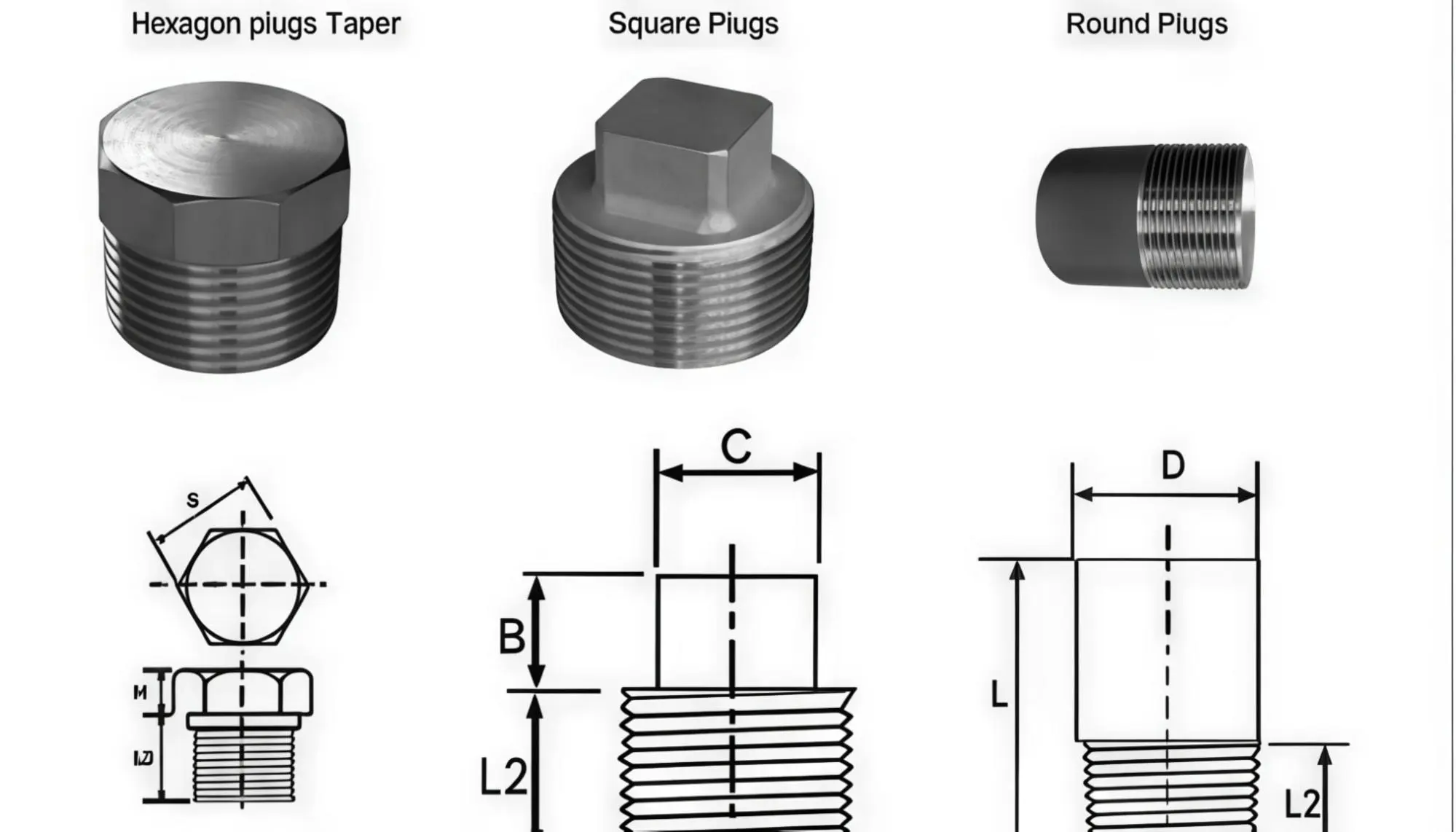
Qué hace
En lugar de envolver la parte exterior de la tubería, se inserta un tapón en una abertura roscada de la misma.
Funciones
Los tapones para tuberías se utilizan para:
- Selle los extremos de las tuberías.
- Cierre los enchufes que no se utilicen.
- Evita fugas de fluidos durante el servicio.
Tipos
Los diseños de enchufes comunes incluyen:
- Tapones de cabeza cuadrada
- Tapones de cabeza hexagonal.
- Tapones de cabeza redonda.
Aplicaciones
Los tapones para tuberías se utilizan ampliamente en.
- Reparaciones de fontanería.
- Mantenimiento de equipos industriales.
- Oleoductos y gasoductos.
Ofrecen un buen sellado y no presentan fugas durante el mantenimiento del sistema.
10. Conectores de tubería tipo niple
Un niple de tubería es una parte corta de una tubería que tiene rosca en cada extremo.
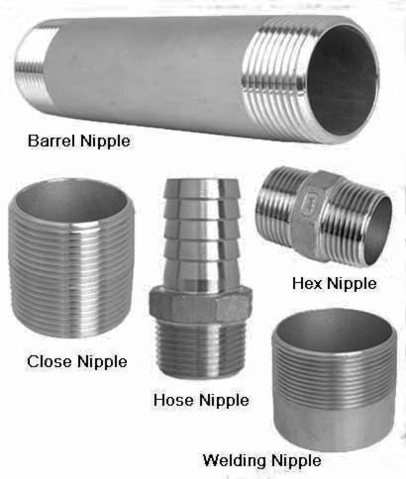
Qué hace
Une dos accesorios de una tubería o prolonga ligeramente una tubería existente.
Funciones
Los niples de tubería sirven como conectores entre accesorios que están montados muy cerca unos de otros.
Tipos
Los tipos de variaciones de pezones son
- Pezón cerrado
- Boquilla hexagonal
- Niple de barril
Aplicaciones
Los niples de tubería se encuentran comúnmente en:
- Sistemas de distribución de gas
- Calentadores de agua
- Instalaciones de fontanería en viviendas residenciales.
Son pequeños y fáciles de instalar, lo que les confiere flexibilidad para ofrecer diversas opciones de conexión.
11. Adaptadores para tuberías
Uno de los accesorios más utilizados en los sistemas de tuberías son los adaptadores.
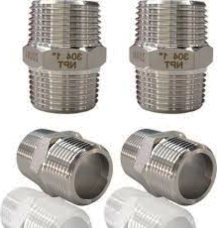
Qué hace
Se utilizará un adaptador para conectar tuberías de diferentes tipos o materiales de conexión.
Funciones
Los adaptadores ayudan con:
- Transformar hilos femeninos en masculinos.
- Fijación de tuberías de plástico a tuberías metálicas.
- Elaboración de diversos estándares para tuberías.
Ventajas
Los adaptadores garantizan una mayor flexibilidad de los sistemas de tuberías, ya que permiten que los componentes funcionen conjuntamente.
Aplicaciones
Los adaptadores se encuentran en numerosas instalaciones, como por ejemplo:
- Fontanería residencial
- Conexiones de maquinaria industrial
- Sistemas de filtración de agua.
Resuelven cualquier problema de compatibilidad entre los distintos materiales de tubería o tipos de rosca.
12. Brida Accesorios de tuberia
Las bridas son accesorios de tubería robustos que se utilizan en sistemas de tuberías de alta exigencia.
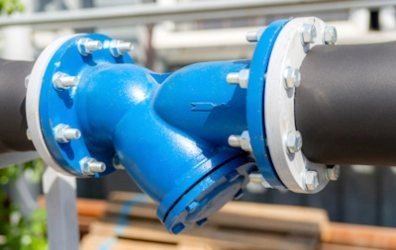
Qué hace
Una brida es una placa plana y redondeada que sujeta las tuberías mediante pernos y una junta entre las dos bridas.
Funciones
Las bridas proporcionan:
- Conexiones de tuberías resistentes.
- Sellado hermético.
- El mantenimiento se realiza fácilmente mediante desmontaje.
Ventajas
A diferencia de las uniones soldadas, las bridas permiten a los técnicos desmontar las tuberías y volver a conectarlas fácilmente mediante pernos.
Aplicaciones
Las bridas se utilizan ampliamente en:
- Oleoductos y gasoductos.
- Plantas químicas.
- Instalaciones de tratamiento de agua.
- centrales de generación de energía.
Las grandes tuberías industriales dependen de las bridas debido a la alta presión, las temperaturas y la gran carga que pueden soportar.
Cómo elegir los accesorios de tubería adecuados
La elección inadecuada de los accesorios provoca fugas o incluso roturas. Recuerde los siguientes cuatro puntos:
- Material: Asegúrese de que la pieza encaje en la tubería. Cuando algunos metales (como el cobre y el acero) se mezclan entre sí, pueden corroerse mediante un proceso llamado electrólisis.
- Tamaño: ¡Mide dos veces! Un pequeño espacio de 1 mm garantizará una conexión defectuosa.
- Presión y temperatura: El vapor caliente requiere conexiones mucho más resistentes en comparación con la frialdad del agua del jardín.
- Solicitud: ¿Se trata de un fregadero doméstico o de una planta química? En las instalaciones industriales siempre se deben utilizar accesorios de calidad industrial.
Aplicaciones comunes de los accesorios de tubería en las industrias
- Construcción: Cada edificio debe tener entrada de agua y salida de residuos.
- Petróleo y gas: Esto implica el transporte de combustible entre continentes, lo cual requiere conexiones de acero de alta presión.
- Tratamiento del agua: El agua sucia se transforma en agua limpia mediante miles de codos y derivaciones.
- Sistema de climatización: El aire acondicionado tiene pequeños racores de cobre por donde circula el gas refrigerante.
Beneficios Utilizar accesorios de tubería de alta calidad
Los accesorios de buena calidad resultan rentables a largo plazo. Las piezas de alta calidad evitan fugas y protegen su propiedad del agua. Además, se desgastan mucho más tarde; es decir, no tendrá que agacharse debajo de la casa para repararlos año tras año. Lo más importante es que mejoran el rendimiento de su sistema al garantizar que la presión no fluctúe.
Consejos para la instalación de accesorios de tubería
- Comprueba la talla: Antes de comenzar, siempre es mejor comprobarlo por diámetro.
- Utilice materiales de sellado: Aplique cinta de teflón o sellador para tuberías en las conexiones roscadas para evitar pequeñas holguras.
- Siga las clasificaciones de presión: No utilice un accesorio de PVC de baja presión en una línea de gas de alta presión.
- Inspeccione con frecuencia: Una vez instalado, ponga en funcionamiento el sistema y compruebe que no esté sudando ni goteando.
Conclusión: Selección de los mejores tipos de accesorios de tubería para sistemas industriales y de plomería.
Con el conocimiento de estos 12 tipos de accesorios de tubería, Obtendrás una nueva perspectiva del mundo de la fontanería y la construcción. Desde el codo más sencillo hasta la brida reforzada, todas estas piezas tienen un propósito específico: garantizar que el agua, el gas y la calefacción circulen de forma segura. La diferencia entre un sistema que dura décadas y uno que falla en una semana radica en la elección de los accesorios.
En Fabricación de HDC Ayudamos con proyectos industriales a través de la fabricación de Accesorios de tubería metálicos a medida que están diseñados para ser utilizados en condiciones extremas. La combinación de fundición de metales, forjado de precisión y alta tolerancia máquinas CNC Está diseñada para producir componentes duraderos de alta calidad con tolerancias estrictas y una producción predecible. Esto nos permitirá adaptar los accesorios a otras dimensiones, materiales y usos industriales. Aquí encontrará soluciones para accesorios de tubería forjados de alta calidad o componentes metálicos a medida para su próximo proyecto:
https://hdcmfg.com/product/forging/pipe-fitting/
Nuestro equipo de ingeniería también colabora con los clientes para proporcionarles accesorios de alta calidad fabricados con las dimensiones exactas que exige la industria. ¿Necesita construir un sistema de tuberías más eficaz y seguro? Ya sea que requiera diseños especializados o producción a gran escala, estamos dispuestos a ayudarle en el proceso.