À un moment donné, je sais que vous vous êtes déjà posé la question : acier ou aluminium, de quoi ai-je vraiment besoin ? Certains d’entre vous sont peut-être même complètement perdus face à la complexité de ces matériaux ! Vous les connaissez de nom, mais êtes-vous vraiment sûrs de leurs propriétés et de leurs performances ?
C’est à cela que nous voulons que ce blog serve. Nous voulons éclairer ce sujet pour aider les personnes qui (1) peuvent être confuses quant à savoir laquelle utiliser entre les deux ; et (2) celles qui ne comprennent pas vraiment les différences entre elles.
Comprendre les bases et les deux métaux
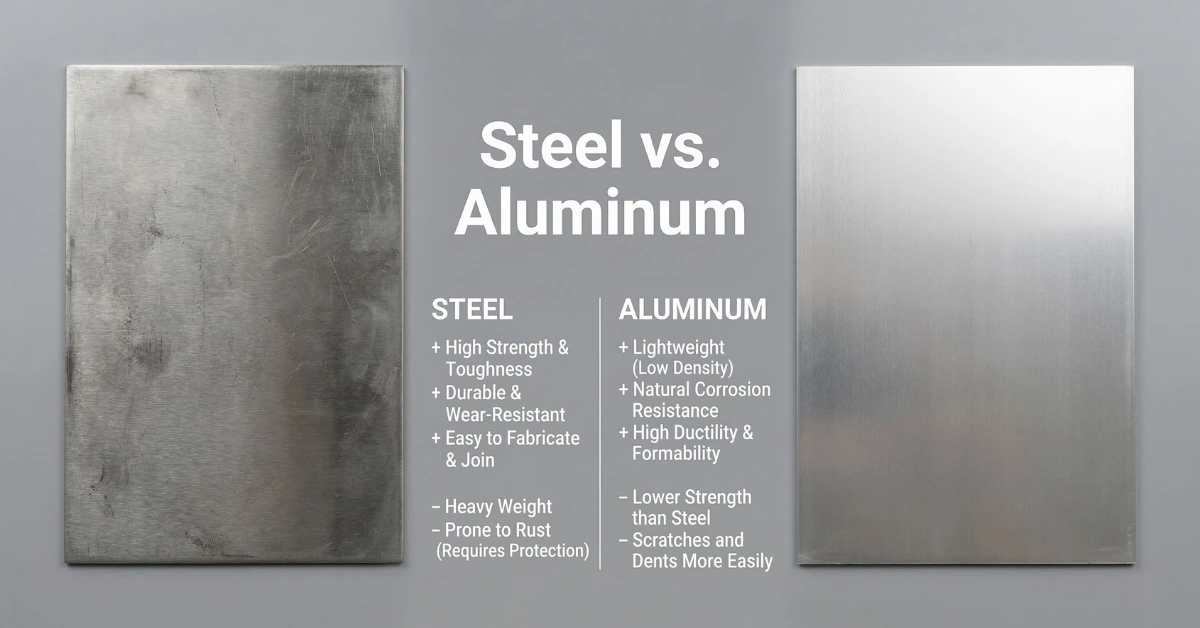
L'acier et l'aluminium sont omniprésents. Des bâtiments aux véhicules en passant par les outils du quotidien, ces deux métaux jouent un rôle essentiel dans l'industrie moderne. Bien qu'ils servent parfois à des fins similaires, leur résistance, leur poids et leur durabilité diffèrent considérablement.
Comprendre la nature et le comportement de chaque métal vous aidera à choisir le matériau adapté à une application spécifique. Examinons-les de plus près.
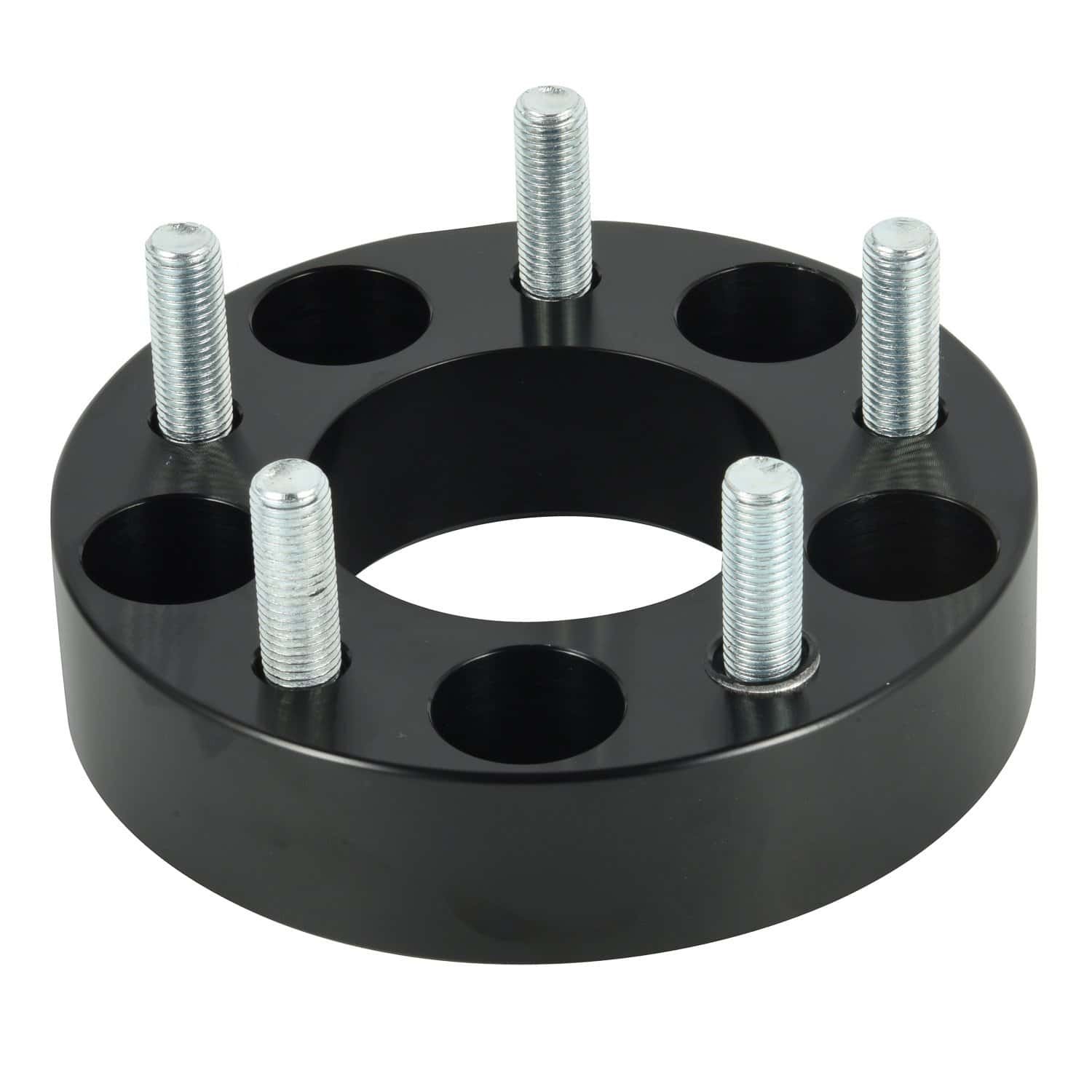
À lire également : Améliorez votre véhicule avec des entretoises de roue en aluminium : style et performances
Aluminium
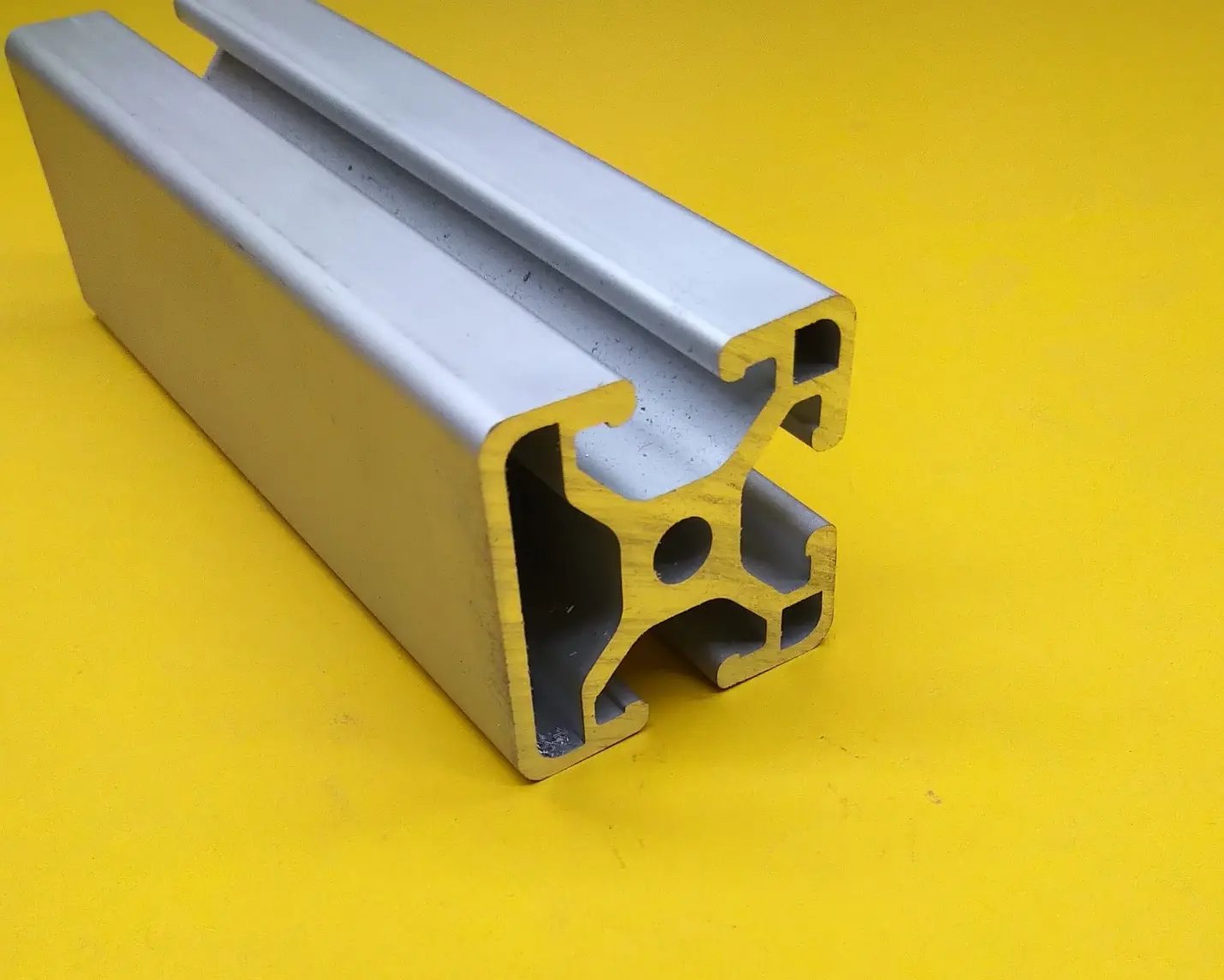
L'aluminium est produit à partir de bauxite et raffiné pour obtenir un métal léger réputé pour son excellent rapport résistance/poids. L'une de ses caractéristiques principales est la fine couche d'oxyde qui se forme naturellement à sa surface et qui contribue à ralentir la corrosion. C'est pourquoi on le retrouve fréquemment dans les structures d'aéronefs, les panneaux de carrosserie, les matériaux de construction et les composants électriques, où la réduction du poids est essentielle.
Acier
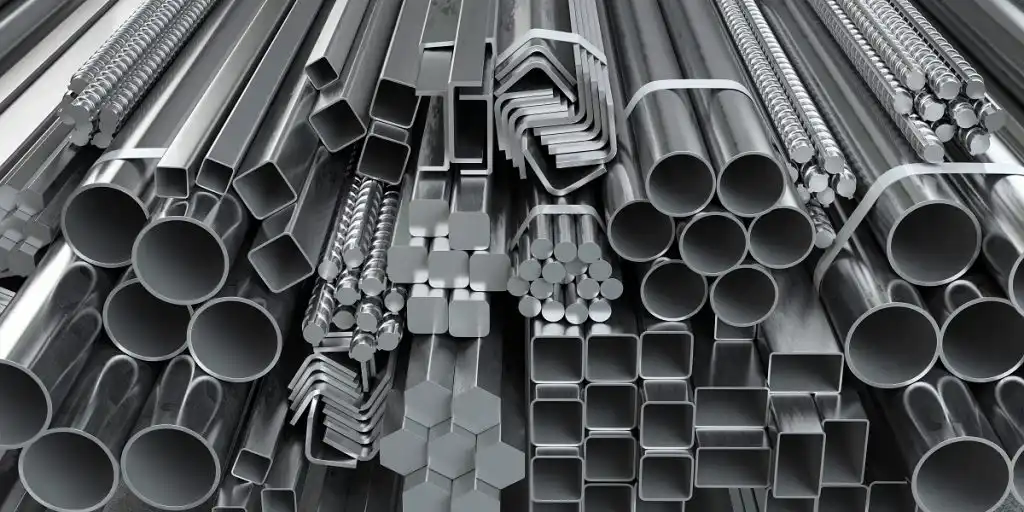
Contrairement à l'aluminium, l'acier est composé de fer comme base et sa résistance est accrue par l'ajout de carbone et d'autres éléments d'alliage. La composition exacte varie considérablement selon la nuance d'acier, ce qui permet aux ingénieurs d'adapter l'acier à différentes exigences mécaniques. Grâce à sa durabilité et à sa capacité de charge, l'acier est couramment utilisé dans la construction de bâtiments, les machines industrielles, les pipelines et les équipements de transport.
Acier contre aluminium : comparaison côte à côte
Lorsqu'on compare l'aluminium et l'acier, les différences vont bien au-delà de l'apparence et des propriétés physiques. En effet, ces deux métaux se comportent de manière très différente en termes de résistance mécanique et à la traction, de poids et de durée de vie globale.
Alors, examinons-les tous les deux et comprenons en quoi ils diffèrent et se ressemblent.
Force
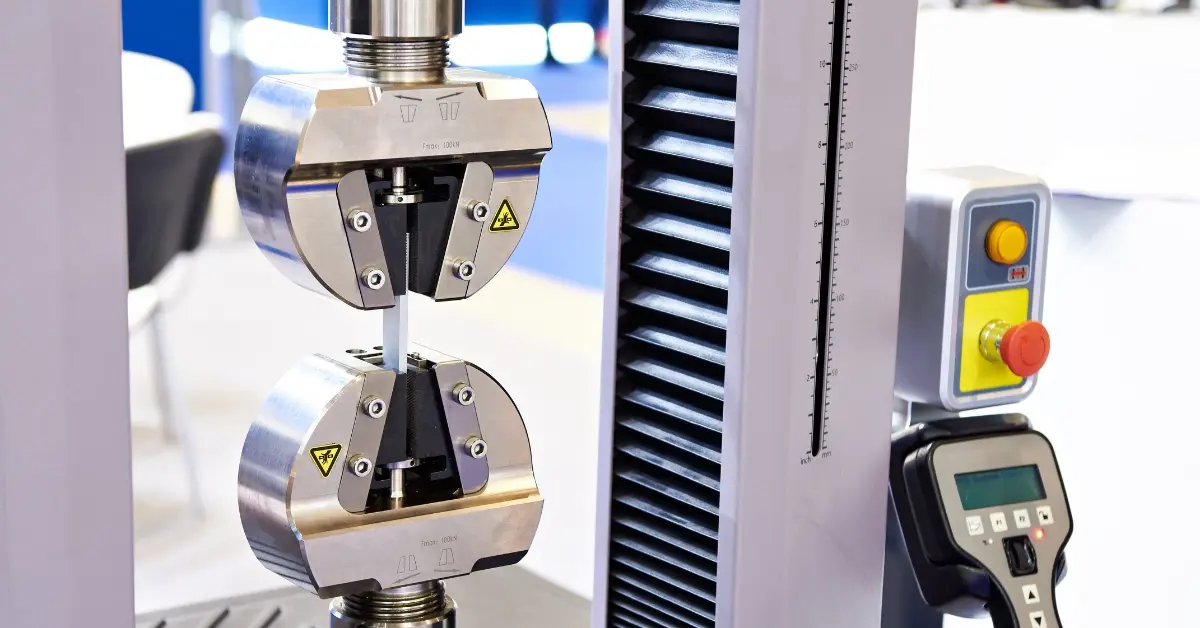
À épaisseur égale, l'acier est généralement plus résistant que l'aluminium. La plupart des aciers de construction supportent des charges de traction et de limite élastique nettement supérieures, ce qui explique leur utilisation répandue dans les ponts, les machines lourdes et les charpentes de bâtiments. Les alliages d'aluminium peuvent certes atteindre une résistance impressionnante, mais ils nécessitent généralement des sections plus épaisses pour égaler la capacité portante de l'acier.
Différence de poids
Un autre facteur essentiel à prendre en compte est le poids. En effet, l'une des principales différences entre ces deux métaux réside dans leur densité. L'aluminium a une densité d'environ 2,7 g/cm³, tandis que celle de l'acier est en moyenne d'environ 7,8 g/cm³.
Qu'est-ce que cela signifie ? Eh bien, cela signifie simplement que l'aluminium pèse environ un tiers du poids de l'acier. C'est pourquoi on privilégie souvent l'aluminium dans les secteurs où la réduction du poids améliore l'efficacité, comme l'aérospatiale, les transports et les équipements portables.
Propriétés matérielles
Outre leur poids, l'acier et l'aluminium diffèrent également par leur structure interne et leur comportement mécanique. L'acier est plus rigide et, par conséquent, plus résistant. Autrement dit, il résiste à la flexion et à la déformation sous contrainte.
L'aluminium, en revanche, est plus flexible et plus facile à mettre en forme. Ces propriétés influent sur les performances de chaque matériau lors de la fabrication, de la conception structurelle et de la durabilité à long terme.
Résistance à la corrosion
L'un des facteurs les plus importants et les plus courants à prendre en compte est leur résistance à la corrosion. Bien qu'ils paraissent identiques, ils sont en réalité très différents. L'aluminium forme une fine couche d'oxyde au contact de l'air, protégeant ainsi sa surface de l'humidité et de l'oxydation.
L'acier ne possède pas cette protection naturelle ; l'acier au carbone peut donc rouiller s'il n'est pas traité. Cependant, les revêtements, la galvanisation ou les alliages d'acier inoxydable peuvent considérablement améliorer sa résistance aux environnements agressifs.
Résistance à la chaleur
Le comportement thermique est un autre domaine où l'acier et l'aluminium se distinguent. L'acier conserve généralement mieux sa résistance et sa forme lorsqu'il est exposé à de fortes chaleurs, ce qui explique sa présence fréquente dans les moteurs, les équipements industriels et les pièces structurelles soumises à des contraintes thermiques.
L'aluminium, en comparaison, transfère la chaleur très efficacement, ce qui le rend utile pour les radiateurs., dissipateurs thermiques, et des composants de refroidissement. Cependant, ce métal commence à perdre de sa rigidité à des températures plus basses que l'acier ; il est donc moins adapté aux applications où la résistance structurelle doit rester stable sous une chaleur extrême.
Usinabilité
L'usinage de l'aluminium est généralement plus aisé car ce métal est plus tendre et plus léger. Les outils de coupe peuvent le traverser rapidement, ce qui permet des cadences de production plus élevées et des finitions de surface lisses. L'acier, quant à lui, exige une force de coupe plus importante et génère généralement plus de chaleur lors de l'usinage, ce qui implique souvent l'utilisation d'outils plus robustes et de vitesses de coupe plus lentes pour garantir la précision.
Prix
Nous ne sommes pas hypocrites de ne pas parler du prix de l'acier et de l'aluminium. Comparer le prix est presque un réflexe lorsqu'on compare deux métaux, et l'aluminium comme l'acier ne font pas exception.
Bien que les prix ne soient pas vraiment stables (comme tout de nos jours), ceux de l'acier et de l'aluminium restent relativement proches. L'acier au carbone est généralement moins cher et plus abordable au kilogramme. L'aluminium, quant à lui, peut coûter plus cher, mais sa légèreté permet de réaliser des économies sur le transport et l'installation.
En savoir plus: Qu’est-ce que l’acier inoxydable ? Votre guide ultime pour comprendre l’acier inoxydable
Comparaison de l'acier et de l'aluminium en termes d'application
Pour finir, il nous faut examiner l'acier et l'aluminium ainsi que leurs applications. Lorsqu'on compare l'aluminium et l'acier, la discussion porte souvent sur les domaines d'application les plus performants de chaque matériau. Ces deux métaux sont présents dans de nombreux secteurs industriels, mais leur choix repose sur des raisons différentes.
Examinons quelques-unes de leurs utilisations et applications les plus courantes !
| Secteur / Application | Acier | Aluminium |
| Construction et infrastructures | Poutres de structure, ponts, barres d'armature, charpentes de bâtiments | Panneaux de toiture, cadres de fenêtres, revêtement de façade |
| Transport | châssis de camions, rails de chemin de fer, composants de véhicules lourds | Structures d'aéronefs, panneaux de carrosserie automobile, pièces marines |
| Machines et fabrication | Équipements industriels, engrenages, arbres, machines lourdes | Pièces de précision, carters de machines légers |
| Énergie et puissance | oléoducs, équipements de forage, structures de centrales électriques | lignes de transport d'électricité, cadres de panneaux solaires |
| Les produits de consommation | Outils, appareils électroménagers, équipements de cuisine | Boîtiers électroniques, canettes de boissons, emballages |
| Marine et offshore | Structures navales, ancres, plateformes offshore | Coques de bateaux, accessoires marins |
Obtenez tout ce dont vous avez besoin chez HDC Manufacturing !
Si vous recherchez un fabricant capable de travailler différents types de métaux pour fabriquer les pièces dont vous avez besoin, vous trouverez aujourd'hui de nombreux fournisseurs et fabricants. Mais chez HDC Manufacturing, nous pouvons produire tous les types de pièces métalliques dont vous avez besoin ! Qu'il s'agisse d'acier ou d'autres métaux, nous sommes là pour vous. aluminium, acier inoxydable, ou même régulièrement Acier Carbone, vous pouvez nous faire confiance !
Nous pouvons être votre fabricant unique pour toutes les pièces métalliques dont vous pourriez avoir besoin, que ce soit pour les secteurs de l'automobile, de l'aérospatiale et même du médical !
N'hésitez pas à communiquer avec nous ou Nous contacter Nous avons ce qu'il vous faut ! Nous serons ravis de vous aider !