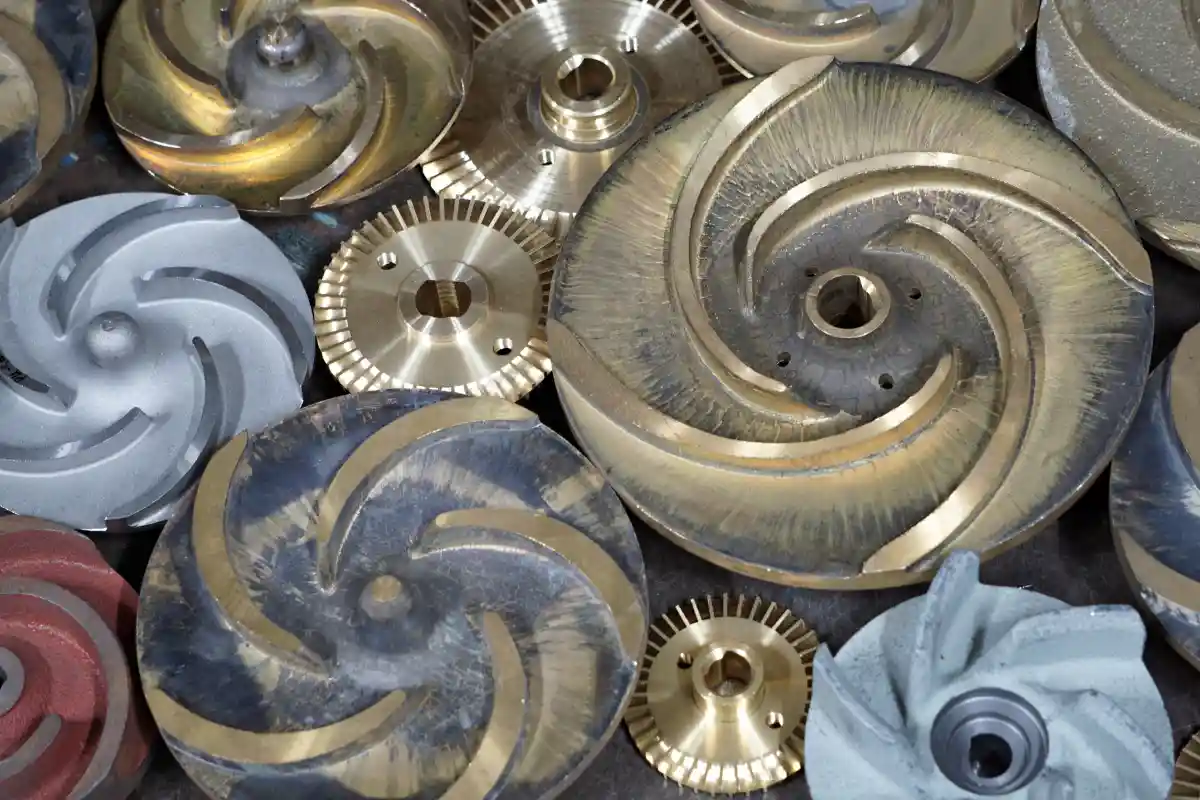
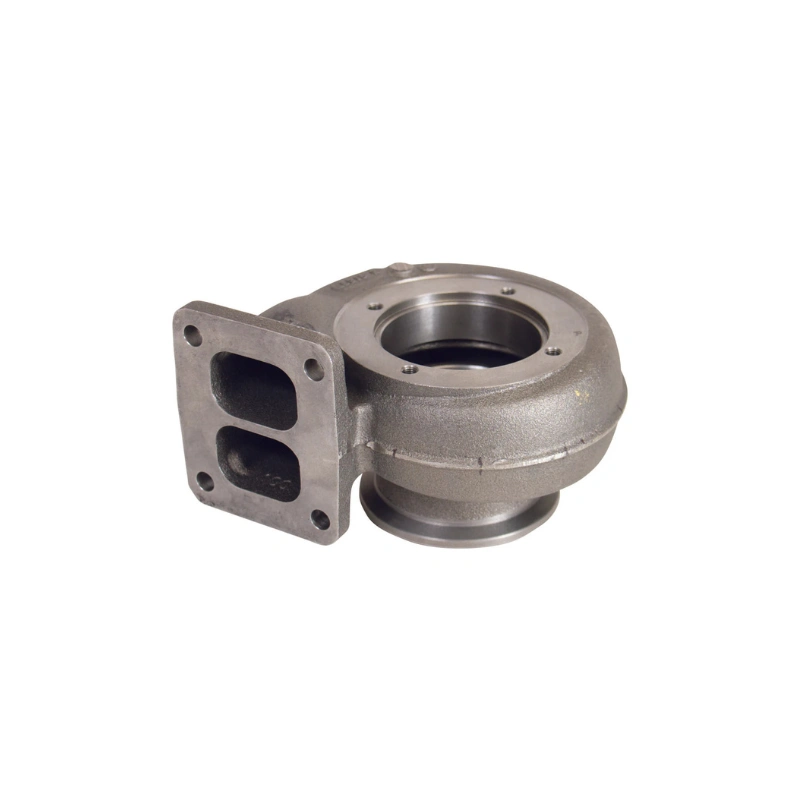
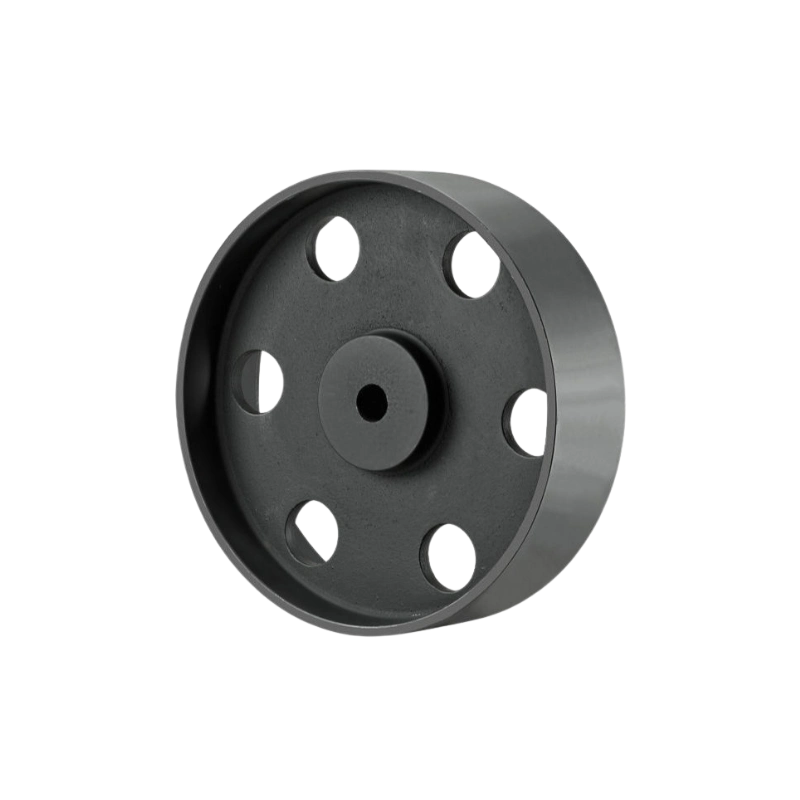
Le moulage par gravité est une méthode de fonderie où le métal en fusion est dirigé vers un moule métallique réutilisable, grâce à la seule force de gravité et sans pression extérieure. Ce procédé permet d'obtenir des composants métalliques robustes, précis et d'une grande finesse de finition, ce qui explique son utilisation par les industries automobile, aérospatiale et mécanique pour garantir la constance de leur production.
Ce guide vous apprendra tout de manière simple et pratique. Vous découvrirez comment procéder étape par étape, pourquoi les industries y croient et dans quels cas il est préférable d'utiliser cette méthode de moulage plutôt qu'une autre.
Ce guide vous aidera à faire de meilleurs choix, que vous soyez étudiant, acheteur ou ingénieur.
Qu'est-ce que le moulage sous pression par gravité ?
Le moulage par gravité est une technique de production où le métal en fusion est introduit par gravité dans un moule métallique réutilisable et laissé à se solidifier. Contrairement au moulage sous pression, aucune force extérieure n'est utilisée pour presser le métal dans le moule. Ce dernier est généralement fabriqué en acier ou en fonte, ce qui permet sa réutilisation des milliers de fois. Cette caractéristique rend le procédé efficace et économique pour la production en série.
Exemple:
Imaginez que vous versez du jus dans un verre. Inutile d'appuyer : le liquide s'écoule et remplit la fissure. De même, le métal en fusion est introduit dans la cavité du moule sous l'effet de la gravité et prend forme.
Pourquoi les industries utilisent le moulage sous pression par gravité
Les fabricants apprécient ce procédé car il offre un bon équilibre entre qualité, coût et efficacité.
Principaux avantages :
- Meilleure que le moulage au sable grâce à un refroidissement contrôlé.
- Finition améliorée, réduisant l'usinage supplémentaire.
- Haute précision dimensionnelle, garantissant l'ajustement parfait des pièces.
- Moules réutilisables, ce qui réduit les coûts à long terme.
- Uniformité adaptée à la production de masse.
Exemple réel :
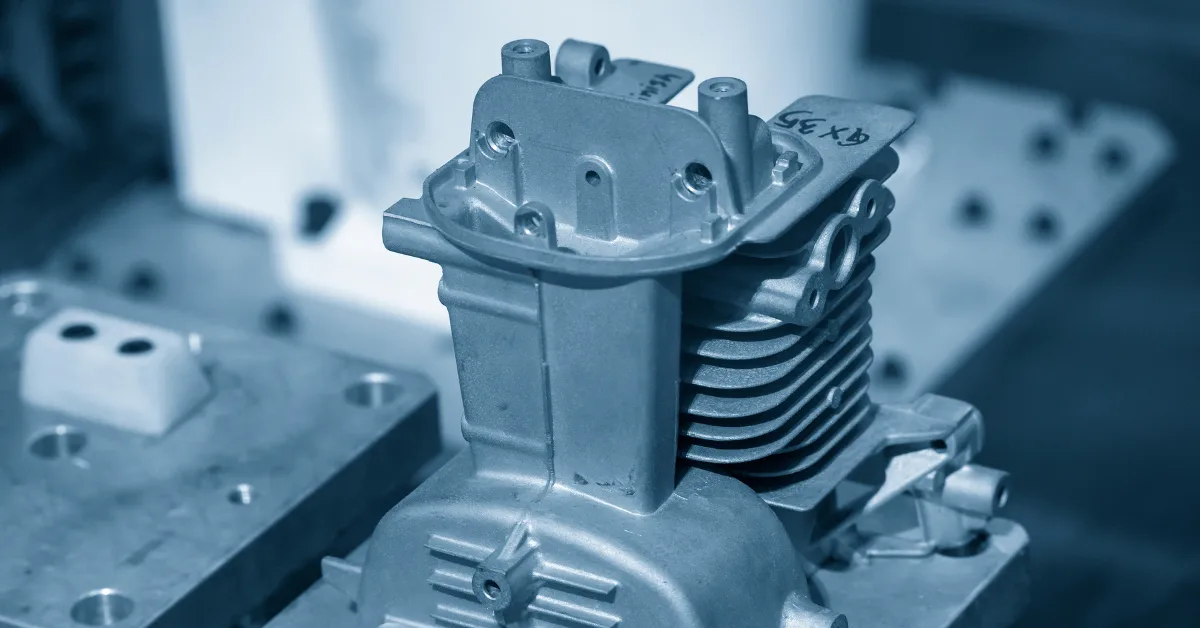
Le moulage sous pression par gravité est utilisé dans l'industrie automobile pour fabriquer des pièces de moteur en aluminium, car celles-ci nécessitent résistance et précision.
Comment fonctionne le procédé de moulage par gravité ? (Guide étape par étape)
Je vais décomposer le processus en étapes simples pour vous permettre de comprendre clairement comment les fabricants transforment le métal en fusion en pièces finies.
Étape 1 : Préparation du moule
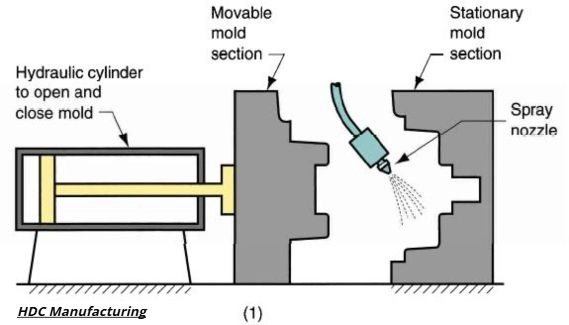
Tout d'abord, le moule métallique est soigneusement lavé afin d'éliminer tout résidu des cycles précédents. Une fois propre, un revêtement résistant à la chaleur est pulvérisé à l'intérieur du moule.
Pourquoi cette étape est importante :
- Empêche le métal en fusion d'adhérer au moule.
- Améliore la finition du produit final.
- Garantit la protection contre les moisissures et prolonge leur durée de vie.
- Assistance au contrôle thermique de la coulée.
Conseil d'expert :
Une épaisseur de revêtement appropriée améliore la qualité des produits et la résistance des moules.
Étape 2 : Préchauffage de la matrice
Les fabricants de moules préchauffent le moule avant d'y verser le métal en fusion.
Pourquoi le préchauffage est important :
- Évite les chocs thermiques (qui pourraient provoquer des fissures).
- Assure un flux de métal régulier et uniforme
- Minimiser les problèmes tels que les fermetures à froid et les vides.
Véritables perspectives :
Un moule froid pourrait entraîner une solidification trop rapide du métal et la formation d'une pièce défectueuse.
Étape 3 : Verser le métal en fusion par gravité
Vient maintenant l'étape cruciale : le métal en fusion est versé dans la cavité du moule.
Métaux courants utilisés
- Alliages d'aluminium (le plus couramment utilisé)
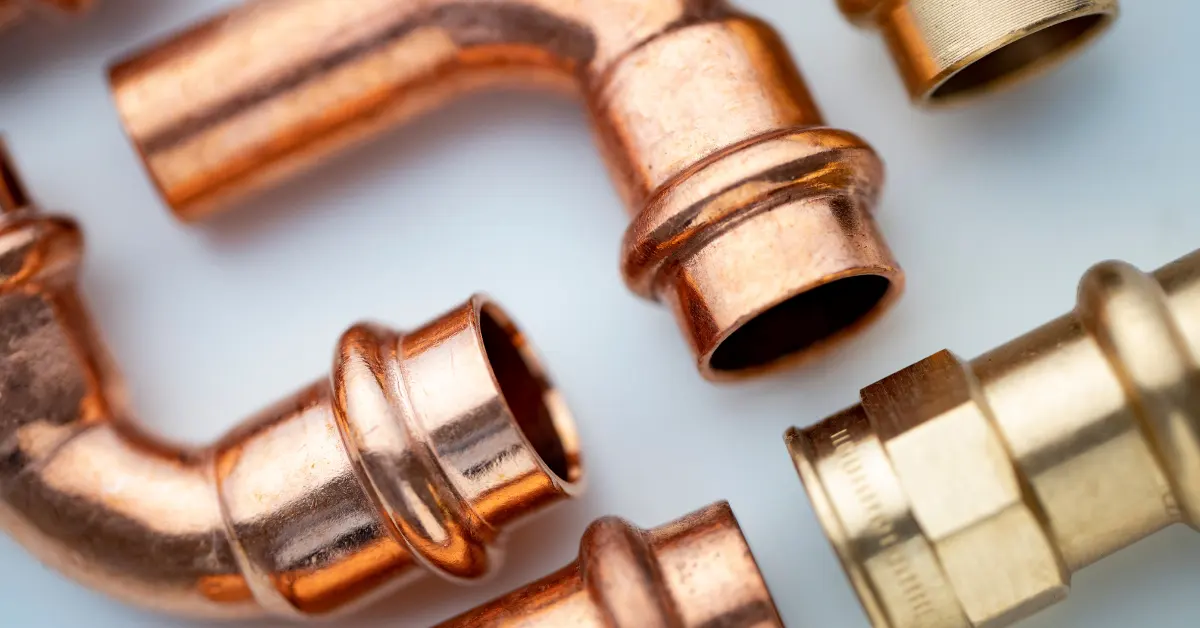
- Alliages de cuivre
- Alliages de magnésium
Pourquoi l'aluminium est populaire :
Il est léger, résistant à la corrosion et puissant, idéal pour les composants automobiles et industriels.
Étape 4 : Refroidissement et solidification
Une fois le moule rempli, le métal en fusion commence à refroidir et à se solidifier.
Facteurs importants qui affectent la qualité
- vitesse de refroidissement
- Température du moule
- Type de matériau
Pourquoi le refroidissement contrôlé est important
- Améliore la force mécanique
- Réduit les défauts de retrait
- Assure une structure uniforme
Conseil d'expert :
Un refroidissement lent permet d'éviter les défauts internes invisibles à l'œil nu.
Étape 5 : Démoulage et finition
Une fois solidifiée, la pièce est ouverte et extraite du moule. Viennent ensuite les opérations de finition.
Opérations de finition courantes :
- Ébavurage (élimination des bavures)
- Polissage de surface
- Usinage de précision
- Traitement thermique (le cas échéant)
Exemple réel :
L'usinage peut être effectué après la coulée afin d'obtenir les dimensions précises des pièces automobiles.
Composants clés utilisés dans le moulage sous pression par gravité
Les outils et les éléments du processus sont les suivants :
| Composant | Fonction |
| Moule métallique (matrice) | Il façonne le produit final et le rend précis. |
| Four | Fait fondre le métal à la température souhaitée |
| Matériau de revêtement | L'adhérence est évitée et la finition de surface est améliorée. |
| Circuit de refroidissement | La température et la vitesse de refroidissement sont contrôlées. |
| Équipement de manutention | Déplace les moules et les pièces moulées en toute sécurité. |
Informations complémentaires sur les composants
- Matériau du moule : Généralement en acier ou en fonte pour plus de durabilité.
- Type de four : Fournaise électrique ou à gaz selon l'échelle de production.
- Systèmes de refroidissement : Des canaux d'air ou d'eau permettent de mieux le refroidir.
Pourquoi c'est important :
La qualité de ces pièces influe directement sur la qualité du produit final, le rythme de production et le coût.
Types de dés à gravité Méthodes de coulée
Tous les procédés de moulage par gravité ne fonctionnent pas de la même manière. Les fabricants appliquent différentes méthodes en fonction de la conception des pièces, des spécifications de qualité et des volumes de production. Voici les cinq principaux procédés de moulage par gravité que vous devez connaître :
Moulage en moule permanent (Moulage sous pression par gravité standard)
Il s'agit du type de moulage par gravité le plus simple et le plus courant. Dans ce procédé, le métal en fusion est versé par gravité dans un moule métallique réutilisable, et l'opération est répétée plusieurs fois jusqu'à épuisement du métal.
Principales caractéristiques
- Compatible avec les moules en métal dur (acier ou fonte)
- Fabrique des composants standardisés et reproductibles.
- Plus résistant que le moulage au sable
Idéal pour
- séries de production moyennes à élevées
- Pièces automobiles telles que les carters de moteur.
Exemple réel :
Le moulage permanent est couramment utilisé pour fabriquer des jantes en aluminium et des composants de moteurs, car ces matériaux exigent fiabilité et précision.
Coulage par gravité incliné
Dans cette technique, le moule est incliné progressivement au fur et à mesure que le métal en fusion y est versé, au lieu d'être versé par le haut. Ce procédé de coulée contrôlée permet un remplissage optimal du moule par le métal.
Avantages
- Écoulement de métal fluide
- Réduit l'emprisonnement d'air (moins de bulles)
- Réduit les défauts tels que les turbulences
- Améliore la qualité du moulage en général
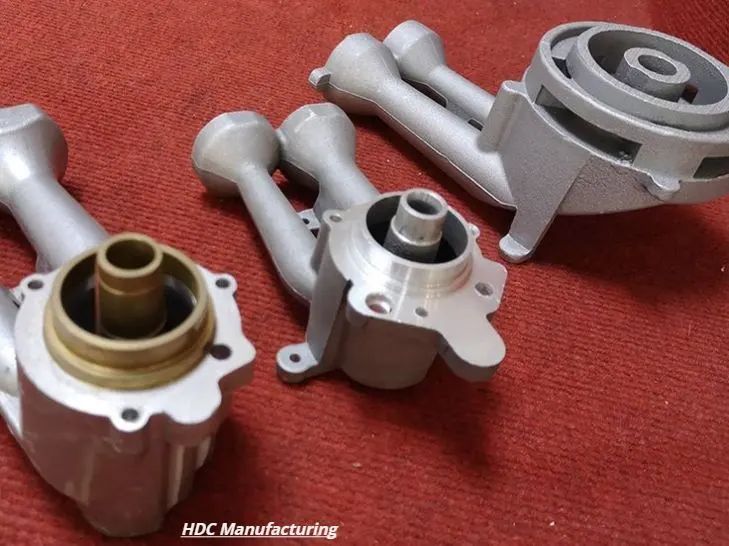
Idéal pour
- formes complexes
- Composants de haute qualité
Conseil d'expert
Le coulage incliné est efficace lorsqu'on exige moins de défauts internes et que la structure doit présenter une intégrité élevée.
Coulage par gravité assisté par le vide
Il s'agit d'une forme plus sophistiquée de coulée par gravité, où un système de vide est utilisé pour créer un vide dans la cavité du moule avant la coulée. Ceci facilite le remplissage du moule avec le métal en fusion.
Principaux avantages
- Réduit la porosité (trous d'air dans le métal)
- Améliore la force interne
- Améliore l'aspect de surface
Idéal pour
- Composants de précision
- Pièces aérospatiales et de haute performance.
Pourquoi c'est important
Même de petites poches d'air peuvent fragiliser une pièce. Coulage sous vide contribue à résoudre ce problème.
Moulage semi-permanent
Cette technique combine l'utilisation de moules métalliques et de noyaux en sable ou jetables. Le moule extérieur est réutilisable, tandis que les noyaux intérieurs peuvent être changés après chaque coulée.
Principales caractéristiques
- Permet des formes internes plus complexes
- Résistance du moule métallique maintenue
- options de conception flexibles
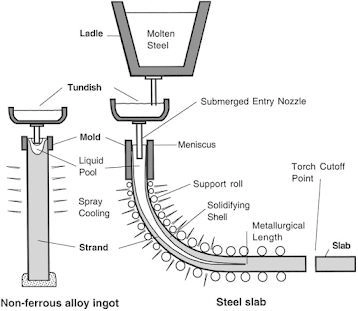
Exemple réel
Cette méthode est couramment utilisée dans les carters de pompes ou les pièces de moteurs, qui comportent des passages internes.
Coulage par gravité à basse pression (méthode hybride)
Il s'agit d'une approche quelque peu différente. Elle applique une faible pression pour faciliter l'action de la gravité, forçant ainsi le métal en fusion à pénétrer doucement dans le moule par le fond. Ce n'est pas une méthode pure. coulée par gravité bien qu'elle soit fréquemment comparée ou combinée aux méthodes gravimétriques par l'industrie.
Principales caractéristiques
- Remplissage régulé et constant
- Meilleure répartition des matériaux
- Haute efficacité de production
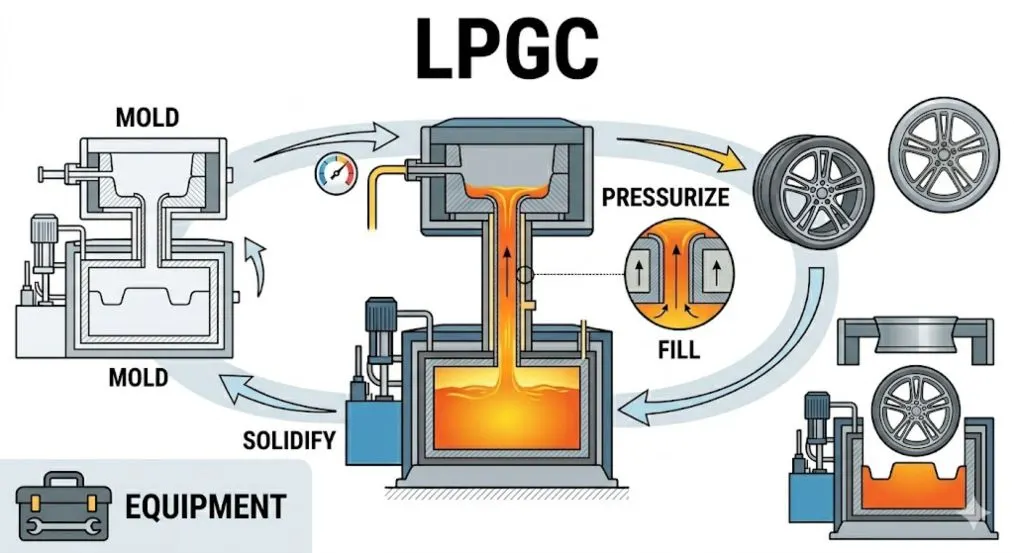
Idéal pour
- pièces automobiles de haute qualité
- Applications présentant un faible nombre de défauts
Matériaux utilisés dans Gravity Moulage sous pression
Les différents métaux sont plus efficaces dans certaines applications.
| Matériel | Force | Lester | Castabilité | Coût | Utilisation optimale |
| Alliages d'aluminium | Haute | Lumière | Facile | Moyen | Pièces automobiles et aérospatiales |
| Alliages de cuivre | Très élevé | Moyen | Modéré | Haute | Pièces électriques et industrielles |
| Alliages de magnésium | Moyen | Très léger | Facile | Moyen | Aérospatiale et électronique |
| Alliages de zinc | Moyen | Moyen | Très facile | Faible | petites pièces de précision |
| Fonte | Très élevé | Lourd | Modéré | Faible | Machinerie lourde |
Avantages et inconvénients de Moulage sous pression par gravité
Avantages
- Haute résistance : La résistance des pièces est supérieure à celle obtenue par moulage en sable grâce au refroidissement contrôlé.
- Meilleure finition de surface : Vous obtenez des surfaces propres et lisses, ce qui vous évite des travaux supplémentaires.
- Efficacité à long terme du traitement : Les moules sont les plus chers, mais leur durée de vie est plus longue.
- Qualité constante : Chaque section est quasiment identique.
- Adapté à une production moyenne à élevée : Idéal pour les industries nécessitant une production répétitive.
Désavantages
Il n'existe pas de processus parfait. Voici quelques-unes de ses limites.
- Outillage initial coûteux
- Limité à certains métaux
- Non applicable aux conceptions très complexes
- Moins rapide que le moulage sous pression
Moulage par gravité vs autres méthodes de moulage (Comparaison complète)
La connaissance des points de comparaison vous permettra de choisir la bonne approche.
| Fonctionnalité | Moulage sous pression par gravité | Moulage en sable | Moulage sous pression | Moulage d'investissement |
| Type de moule | Métal (réutilisable) | Sable (à usage unique) | Métal (réutilisable) | Moule en cire et céramique |
| Finition de surface | Lisse | Rugueux | Très doux | Excellent |
| Force | Haute | Inférieur | Modéré | Haute |
| Précision | Haute | Faible | Très élevé | Très élevé |
| Vitesse de production | Modéré | Lent | Très rapide | Lent |
| Coût (initial) | Moyen | Faible | Haute | Haute |
| Coût (à long terme) | Faible | Plus haut | Moyen | Haute |
| Gestion de la complexité | Modéré | Haute | Haute | Très élevé |
| Idéal pour | Pièces robustes et précises | Grandes/Simples pièces | Production de masse | Pièces complexes et détaillées |
Compréhension rapide
- Utilisez le moulage par gravité lorsque vous avez besoin de résistance, d'une bonne finition et d'un bon rapport coût-efficacité.
- Optez pour le moulage au sable pour les pièces simples, grandes ou peu coûteuses.
- Optez pour la production de masse à grande vitesse avec le moulage sous pression.
- Choisissez le moulage à la cire perdue lorsque le dessin est très complexe et détaillé.
Applications industrielles du moulage sous pression par gravité
Ce procédé est très courant dans l'industrie.
Industrie automobile
- Blocs moteurs
- Culasses
- Carter d'engrenages
Exemple: Pièces de moteur en aluminium pour voitures.
Industrie aérospaciale
- Composants structuraux
- Pièces légères
Industrie électrique
- carters de moteur
- Connecteurs
Machinerie industrielle
- Pompes
- vannes
- Pièces d'équipement
Secteur de construction
- Composants matériels
- Aménagements structurels
Facteurs de coût dans les matrices à gravité Fonderie
Comprendre les coûts vous aide à mieux planifier.
| Facteur | Impact |
| Outillage | Coût initial élevé |
| Matériel | Cela dépend du métal |
| Volume | Un volume plus élevé réduit les coûts |
| Finition | Cela engendre des frais supplémentaires |
Tendances futures du moulage sous pression par gravité (2026 et au-delà)
C'est un secteur en évolution rapide.
- Automatisation : PLe nettoyage et l'enlèvement sont effectués par des robots.
- Fabrication intelligente : La température et la qualité sont contrôlées par des capteurs.
- Moulage durable : Le recyclage des métaux minimise les déchets.
- Alliages avancés: Les nouveaux matériaux améliorent les performances et la résistance.
Conseils d'experts pour de meilleurs résultats en moulage sous pression par gravité
Voici quelques conseils pratiques utilisés par les professionnels :
- Toujours bien préchauffer les moules.
- Utilisez des revêtements de haute qualité.
- Contrôlez la vitesse de versement.
- Maintenir une température constante.
- Inspectez régulièrement les moisissures.
Dernières paroles
Le moulage par gravité est une technique de fabrication courante et fiable qui permet d'obtenir des composants métalliques robustes et de haute qualité. Elle est particulièrement efficace lorsque l'on recherche une production constante, un bon état de surface et une rentabilité à long terme. En connaissant son procédé, ses avantages et ses contraintes, vous pourrez choisir la solution la plus adaptée à votre projet.
Chez DC Manufacturing, nous nous spécialisons dans la fourniture de solutions de moulage par gravité de haute qualité Pour répondre à vos exigences. Notre technologie de pointe, notre contrôle qualité rigoureux et notre expérience du secteur garantissent que chaque pièce vous donnera entière satisfaction. Vous recherchez la meilleure solution de fonderie pour votre entreprise ou vous avez un projet en cours de planification ? Nous contacter Aujourd'hui, nous vous aiderons à trouver la meilleure solution de fonderie pour votre entreprise.
FAQ sur le moulage par gravité (Réponses d'experts)
À quoi sert le moulage sous pression par gravité ?
Il est utilisé pour fabriquer des composants métalliques robustes et précis dans les secteurs de l'automobile, de l'aérospatiale et de l'industrie.
Quel métal est le plus adapté au moulage sous pression par gravité ?
Le plus courant est l'aluminium en raison de sa solidité, de sa légèreté et de sa résistance à la corrosion.
Le moulage sous pression par gravité est-il coûteux ?
Le coût initial de l'outillage est élevé, mais la production à long terme est économique.
En quoi le moulage par gravité diffère-t-il du moulage sous pression ?
En moulage par gravité, il n'y a pas de pression externe, tandis qu'en moulage sous pression, le métal est forcé dans des moules à grande vitesse.
Le moulage par gravité peut-il produire des formes complexes ?
Elle permet de réaliser des formes moyennement complexes, mais pas aussi complexes que la fonderie à cire perdue.
Quels sont les secteurs industriels qui utilisent le plus le moulage sous pression par gravité ?
Il est utilisé dans les industries automobile, aérospatiale, électrique et mécanique.
Le moulage par gravité est-il respectueux de l'environnement ?
Oui, car les moules peuvent être réutilisés et les métaux recyclés.