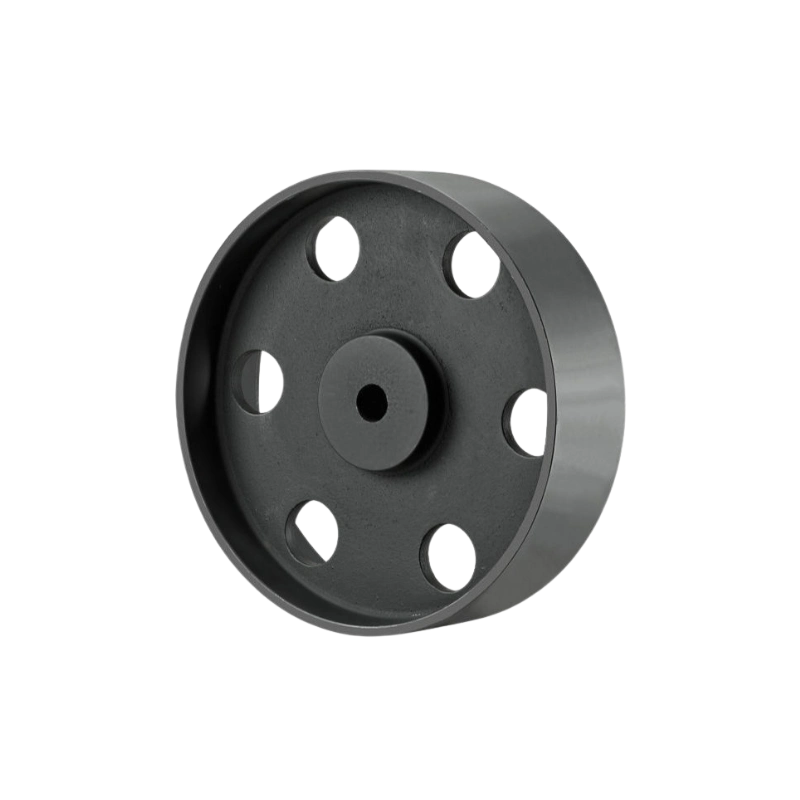
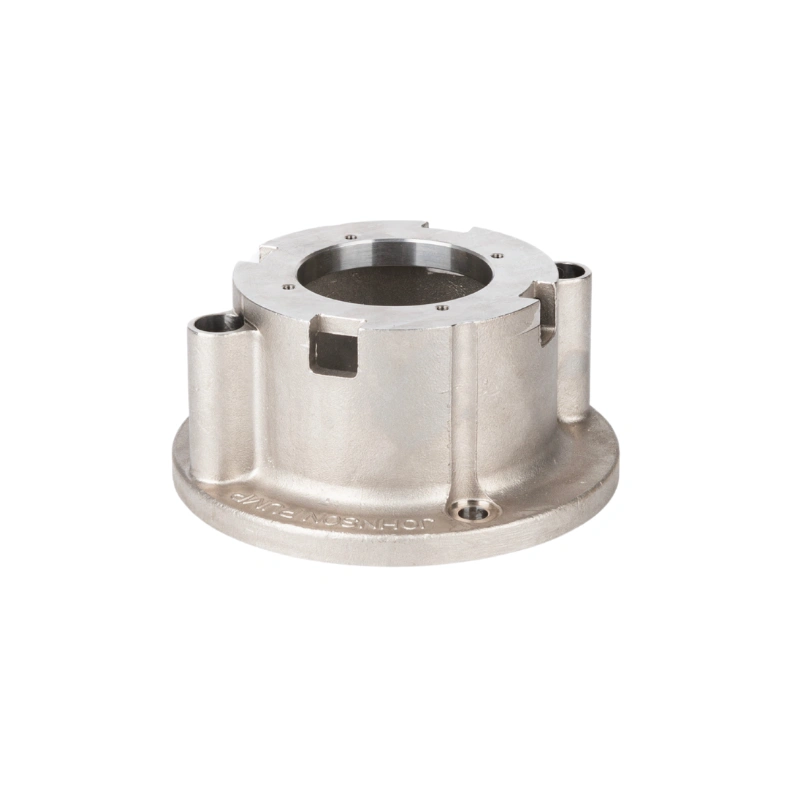
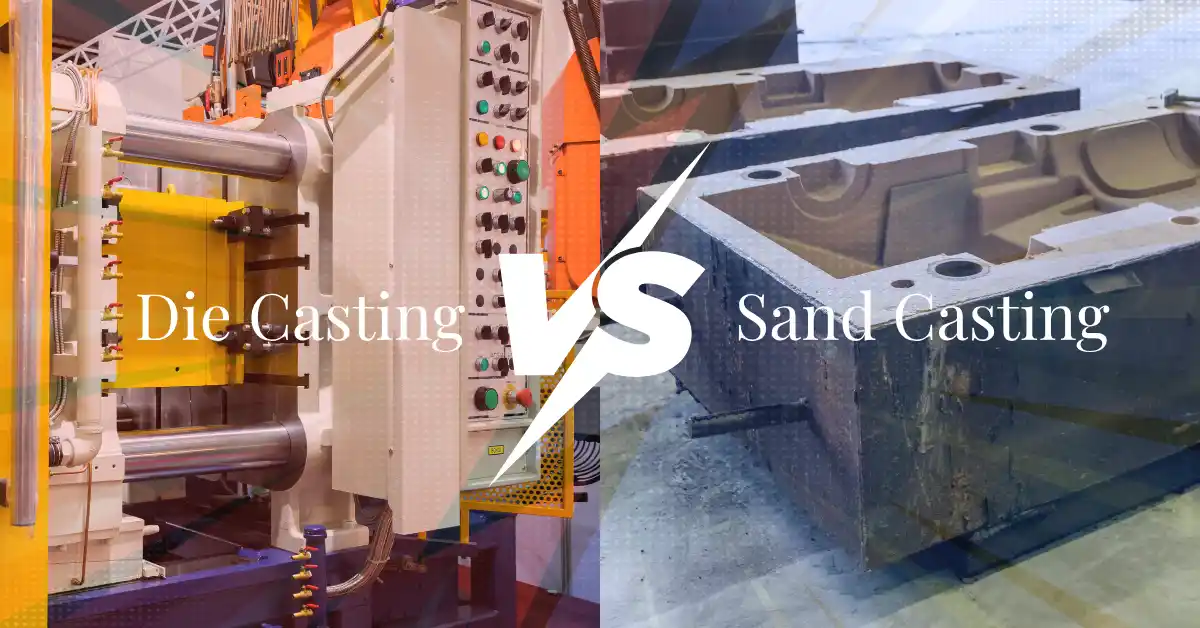
Lorsqu'on s'intéresse à la fabrication des métaux, on découvre rapidement deux procédés typiques : le moulage sous pression et le moulage au sable. De prime abord, ils peuvent sembler identiques. Après tout, ils consistent tous deux à verser du métal en fusion dans un moule. Mais en y regardant de plus près, les différences deviennent évidentes – et significatives.
Pour déterminer la méthode à adopter dans votre projet, inutile de recourir à un jargon technique complexe. Une explication simple et claire suffit pour vous guider et vous permettre de faire votre choix en toute confiance. Vous trouverez précisément cela ici.
À la fin de ce guide, vous saurez :
- Fonctionnement de chaque processus
- Quelle est la différence entre eux ?
- Lequel de ces éléments convient le mieux à votre projet ?
Nous allons le décomposer de la manière la plus simple possible.
Qu'est-ce que Moulage sous pression?
Considérez le moulage sous pression comme un procédé de fabrication rapide et très précis.
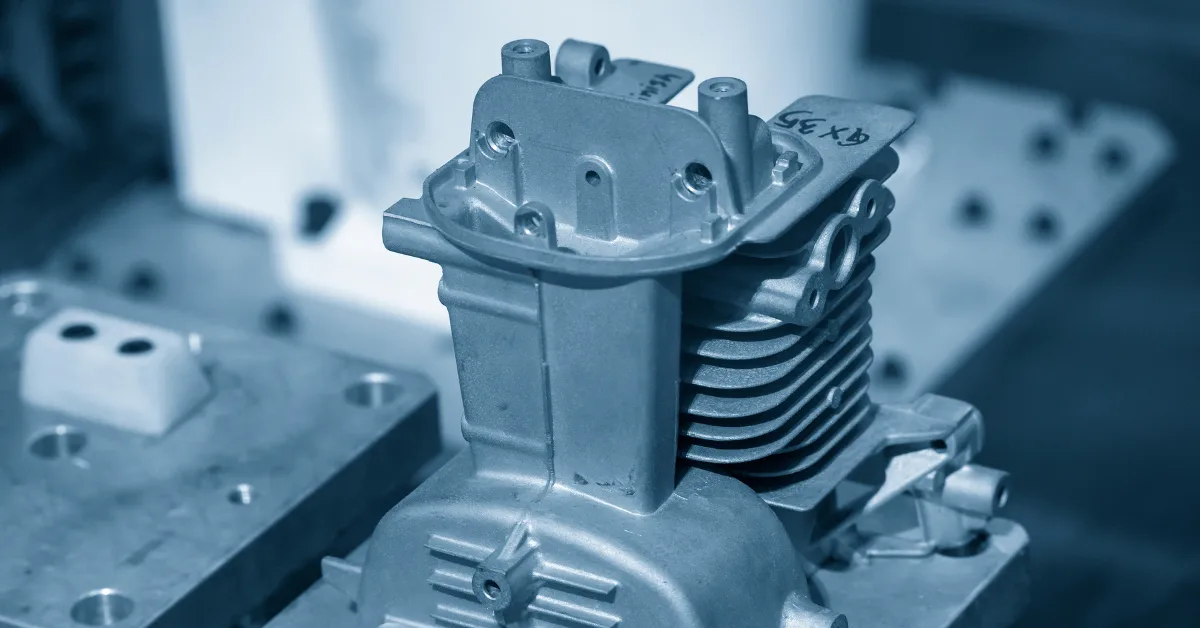
Ce procédé consiste à injecter du métal en fusion dans un moule en acier haute pression et très résistant (appelé matrice). Le moule reste solide et réutilisable, ce qui le rend idéal pour la production en série d'une même pièce.
Comment fonctionne le moulage sous pression (étape par étape)
Voici comment cela fonctionne :
- Vous fabriquez un moule en acier (matrice) à la forme précise de votre pièce.
- La machine chauffe du métal (généralement de l'aluminium, du zinc ou du magnésium).
- Il injecte du métal en fusion dans le moule sous haute pression
- Le métal est refroidi rapidement dans le moule.
- La machine s'ouvre et la pièce finie est libérée.
Et ce processus se répète des milliers, voire des millions de fois.
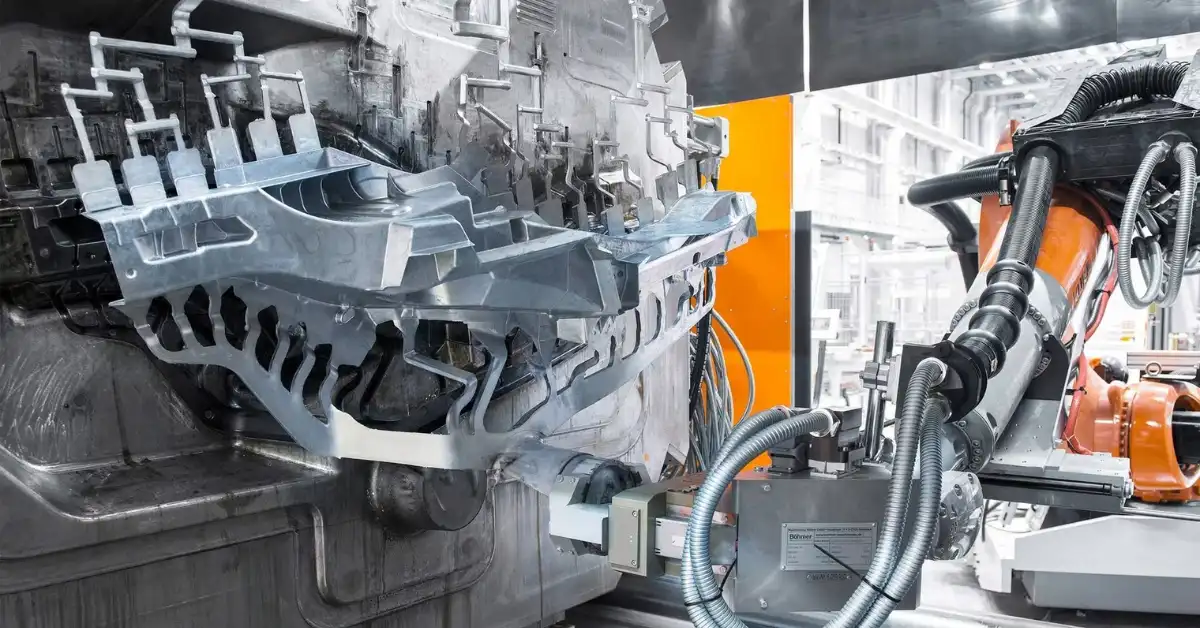
Qu'est-ce qui rend le moulage sous pression si particulier ?
- Finition de surface extrêmement lisse.
- Tolérances serrées et haute précision.
- vitesse de production rapide
- Idéal pour la production de masse.
En termes simples : Le moulage sous pression est la solution idéale pour la production en grande série de pièces identiques et de haute qualité. En savoir plus ici : https://www.diecasting.org
Qu'est-ce que Moulage en sable?
Nous aborderons ensuite le moulage au sable. Cette technique utilise du sable pour fabriquer le moule et se révèle ainsi beaucoup plus flexible et économique pour certains projets.
Fonctionnement du moulage au sable (étape par étape)
Voici le processus :
- Vous réalisez un patron (un modèle de votre pièce).
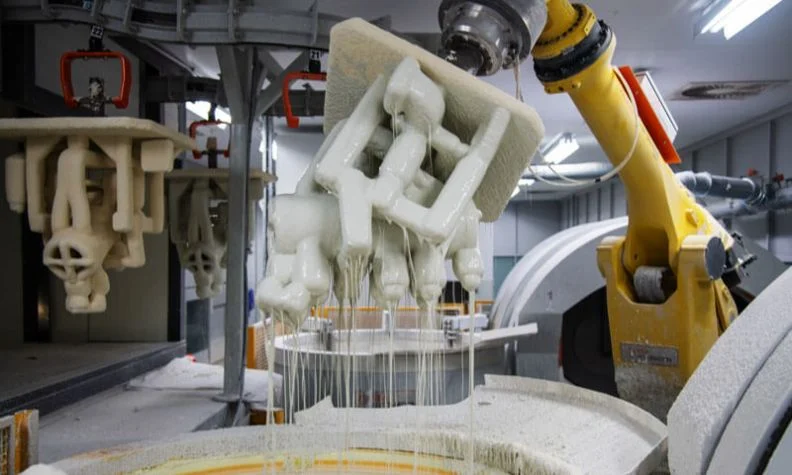
- Le gabarit est rempli de sable autour des ouvriers pour créer un moule.
- Ils enlèvent le motif et il ne reste qu'une forme creuse.
- Ils remplissent le moule en sable de métal en fusion.
- Le métal refroidit et se solidifie.
- Ils délogent le moule en sable pour obtenir la pièce.
Contrairement au moulage sous pression, le moule est détruit après chaque utilisation.
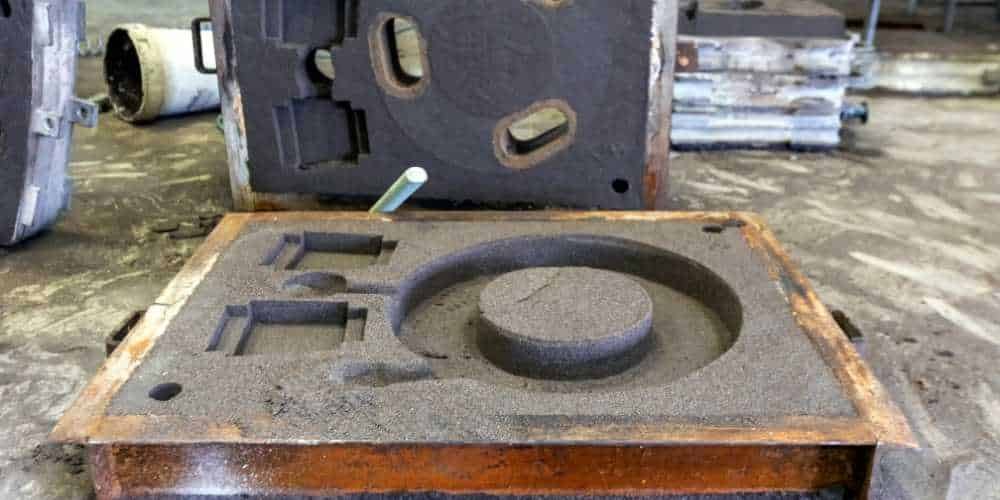
Qu'est-ce qui rend le moulage au sable si particulier ?
- Faibles coûts d'installation
- Fonctionne sur la plupart des métaux (fer, acier, aluminium).
- Convient aux composants lourds et volumineux.
- options de conception flexibles
En résumé, le moulage au sable est idéal pour les grandes pièces ou les petites séries de production.
Moulage sous pression vs moulage au sable : tableau comparatif rapide
Pour aller encore plus loin, nous pouvons comparer et opposer :
| Fonctionnalité | Moulage sous pression | Moulage en sable |
| Type de moule | Moule permanent en acier | Moule à sable jetable |
| Coût d'installation | Haute | Faible |
| Volume de production | Élevée (production de masse) | Faible à moyen |
| Finition de surface | Lisse | Rugueux |
| Précision | Très élevé | Modéré |
| Options matérielles | Limité (non ferreux) | Large (ferreux + non ferreux) |
| Taille de la pièce | De petite à moyenne taille | Du petit au très grand |
| Vitesse | Très rapide | Ralentissez |
Si vous souhaitez une comparaison plus axée sur l'ingénierie, cette ressource d'Engineering Toolbox explique en détail les propriétés de moulage : https://www.engineeringtoolbox.com
Principales différences entre le moulage sous pression et le moulage en sable
Nous allons maintenant examiner plus en détail ce qui différencie réellement ces deux approches.
1. Coût et outillage
C'est généralement la première chose qui vous préoccupe.
- Moulage sous pression : Il vous faut des moules en acier coûteux. C'est très onéreux au départ.
- Moulage en sable: Vous utilisez des moules en sable, qui sont peu coûteux et simples à réaliser.
Conclusion simple :
Le moulage au sable est économique pour la production de quelques pièces. Pour des volumes de production importants, le moulage sous pression devient plus avantageux financièrement par pièce. Vous pouvez également consulter des comparatifs de coûts sur Thomasnet. https://www.thomasnet.com/articles/custom-manufacturing-fabricating/die-casting-vs-sand-casting/
2. Volume de production
- Moulage sous pression : Idéal pour une production à grande échelle.
- Moulage en sable: Idéal lorsqu'une petite quantité est requise ou lorsqu'un prototype est nécessaire.
Exemple:
Lorsque vous avez besoin de faire fabriquer 100 000 pièces pour un téléphone → utiliser le moulage sous pression.
Lorsque vous avez besoin de 50 pièces de machine → Le moulage au sable est préférable.
3. État de surface et précision
- Moulage sous pression : Lisse, presque prêt à l'emploi.
- Moulage en sable: Grossier, nécessite fréquemment un usinage.
Cela est pertinent lorsqu'il est important d'être à la fois attrayant et précis.
4. Compatibilité des matériaux
- Moulage sous pression : Fonctionne avec les métaux non ferreux (aluminium, zinc)
- Moulage en sable: Cela peut se faire avec presque tous les métaux, comme le fer et l'acier.
Lorsque votre pièce nécessite de l'acier, vous avez le choix entre le moulage au sable.
5. Taille et complexité des pièces
- Moulage sous pression : Iun bon compromis pour les pièces complexes de petite à moyenne taille.
- Moulage en sable: Idéal pour la manipulation de pièces volumineuses et lourdes.
Exemple:
Blocs-moteurs → moulage au sable
Boîtiers électroniques de petite taille, moulés sous pression.
6. Délai de préavis
- Moulage sous pression : installation lente, mais production rapide.
- Moulage au sable : Installation rapide, mais fabrication plus lente.
On peut le concevoir de la manière suivante :
Moulage sous pression = démarrage lent, arrivée rapide.
Moulage en sable = démarrage lent, arrivée rapide.
Avantages du moulage sous pression
Nous allons examiner les raisons pour lesquelles la plupart des industries privilégient le moulage sous pression.
1. Haute précision
Vous obtenez des pièces aux tolérances serrées. Cela se traduit par une réduction des erreurs.
2. Surface lisse
La plupart des pièces nécessitent une finition minimale, voire aucune.
3. Production rapide
Une fois le moule préparé, vous pouvez fabriquer des pièces très rapidement.
4. Cohérence
Toutes les pièces semblent presque identiques.
Inconvénients du moulage sous pression
Ce n'est pas parfait. Voici les inconvénients :
- Coût initial d'outillage important.
- Options de matériaux limitées
- Ne convient pas aux pièces de très grande taille
Avantages du moulage au sable
Nous allons maintenant aborder le moulage au sable.
1. Faible coût
Vous n'avez pas besoin d'utiliser des moules coûteux.
2. Capacité de traitement des pièces de grande taille
Vous êtes capable de fabriquer des composants de très grande taille.
3. Flexibilité des matériaux
Vous pouvez utiliser du fer, de l'acier, de l'aluminium, etc.
4. Liberté de conception
Il est efficace pour les conceptions sur mesure.
Inconvénients du moulage au sable
- Finition de surface rugueuse
- précision inférieure
- Nécessite des finitions supplémentaires.
Quand faut-il choisir le moulage sous pression plutôt que le moulage au sable ?
Il s'agit de la section la plus importante.
Choisissez le moulage sous pression Quand:
- Vous avez besoin d'un volume de production important.
- Vous désirez des pièces lisses et précises.
- Vos pièces sont de petite à moyenne taille.
- Vous utilisez de l'aluminium ou du zinc.
Choisissez le moulage au sable Quand:
- Vous avez besoin de composants volumineux ou lourds.
- Vous avez un budget limité
- Vous produisez de petites quantités
- Vous avez besoin de pièces en acier ou en fer
Exemples concrets
Nous pouvons aller encore plus loin et donner quelques exemples concrets.
Exemples de moulage sous pression
- Composants automobiles (boîtes de vitesses, supports)
- Cadres pour ordinateurs portables et téléphones
- Boîtiers de lumière LED
Ces produits exigent précision et cohérence.
Exemples de moulage au sable
- Blocs moteurs
- pièces de machines industrielles
- composants d'équipement lourd
Ce sont des produits volumineux qui ne nécessitent pas de surfaces lisses.
Conseils d'experts Choisir la méthode de moulage appropriée
Voici quelques conseils pratiques qui peuvent vous aider à prendre une décision plus rapidement :
1. Pensez d'abord à la quantité.
Posez-vous toujours la question : De combien de pièces ai-je besoin ?
- Volume important → moulage sous pression.
- Volume faible → moulage au sable
2. Vérifiez votre budget
Lorsque votre budget est limité, vous ne devriez pas dépenser beaucoup d'argent en outillage.
3. Examinez la taille de la pièce
Les composants de grande taille ne peuvent généralement pas être moulés sous pression.
4. Tenir compte des coûts de finition
Parfois, un moulage bon marché s'avère coûteux une fois terminé.
5. Planifier la mise à l'échelle future
Le moulage sous pression peut s'avérer un choix judicieux à long terme si votre produit est produit à plus grande échelle. Pour des conseils de conception, vous pouvez également consulter ce guide technique utile de la NASA : https://ntrs.nasa.gov
Moulage sous pression ou moulage au sable : lequel est le meilleur ?
Il n'y a pas de gagnant ici.
Il est basé sur vos exigences :
- Besoin d'être rapide et précis ? → Moulage sous pression
- Besoin de faibles coûts et de flexibilité ? → Moulage au sable
L'option la plus appropriée dépend de votre projet, plutôt que de la technique elle-même.
Erreurs courantes à éviter
Vous souhaitez être épargné des problèmes habituels.
1. Ignorer le volume
Le choix du moulage sous pression en petites séries est un gaspillage d'argent.
2. Négliger l'état de surface
Le moulage en sable peut nécessiter un usinage supplémentaire.
3. Absence de planification à long terme
Les changements tardifs sont plus coûteux.
Réflexions finales : Choisir entre le moulage sous pression et le moulage au sable
Vous avez maintenant une compréhension claire de Moulage sous pression contre moulage au sable.
Vous êtes parfaitement informé du fonctionnement de chaque processus, de ses spécificités et de ses cas d'utilisation. Ces informations vous permettront d'éviter des erreurs coûteuses et de choisir la bonne approche dès le départ.
À Fabrication HDC, nous aidons les entreprises à sélectionner solution de moulage appropriée En tenant compte des exigences spécifiques de votre projet, nous ne privilégions aucune approche : nous vous guidons simplement vers la solution la plus adaptée à votre produit, votre budget et vos délais. Si vous planifiez un projet et souhaitez bénéficier de l’expertise de nos spécialistes, contactez notre équipe dès aujourd’hui. Ensemble, créons une solution performante, économique et évolutive.
FAQ : Moulage sous pression vs moulage au sable
Voici quelques-unes des questions les plus fréquentes et les plus populaires.
1. Quelle est la principale différence entre le moulage sous pression et le moulage au sable ?
Le moulage sous pression utilise un moule en acier permanent fonctionnant sous haute pression, tandis que le moulage en sable utilise un moule en sable temporaire fonctionnant par gravité.
2. Lequel est le moins cher : le moulage sous pression ou le moulage au sable ?
Le moulage au sable est moins coûteux pour les petites séries. En production de masse, le moulage sous pression est moins cher par unité.
3. Quelle méthode permet d'obtenir une meilleure finition de surface ?
Le moulage sous pression permet de créer des surfaces plus polies et lisses.
4. Le moulage au sable peut-il produire des pièces de haute précision ?
C'est possible, mais cela nécessite généralement un usinage supplémentaire pour obtenir un haut niveau de précision.
5. Pourquoi le moulage sous pression est-il plus rapide que le moulage au sable ?
Grâce à la réutilisabilité du moule et à l'automatisation du processus.
6. Quelle méthode est la meilleure pour les grandes pièces ?
Le moulage au sable est plus efficace pour les pièces lourdes et volumineuses.
7. Quels matériaux sont utilisés dans le moulage sous pression ?
Principalement de l'aluminium, du zinc et du magnésium.
8. Quels matériaux sont utilisés dans le moulage au sable ?
Pratiquement tous les métaux, comme le fer et l'acier.
9. Le moulage sous pression est-il adapté aux prototypes ?
Généralement non, car le coût de l'outillage est élevé.
10. Quelle méthode est la plus répandue ?
Ce sont deux applications populaires, mais destinées à des secteurs et à des usages différents.