With a 13-year history in the domain of OEM metal craftsmanship, HDC Manufacturing emerges as a stalwart leader in the realm of precision machining services. The specialized acumen demonstrated in handling 1018 carbon steel underscores our steadfast dedication to delivering unparalleled quality and bespoke solutions.
Operational from our cutting-edge manufacturing facility, HDC Manufacturing distinguishes itself through the seasoned expertise of our engineers and the astute creativity of our highly skilled design team. Their utilization of an extensive array of manufacturing techniques, such as CNC processing, sheet metal manipulation, and casting, manifests a comprehensive strategy that ensures every project benefits from a nuanced comprehension of the distinctive traits inherent in 1018 carbon steel.
The hallmark of HDC Manufacturing lies in an unyielding commitment to efficiency and dependability, a fact substantiated by our impeccable track record of successful projects that serves as a testament to our pursuit of excellence. The incorporation of sophisticated 4-axis and 5-axis CNC machining centers further amplifies our capacity to meet the most intricate requisites of your 1018 carbon steel machining endeavors.
Qu'est-ce que l'acier au carbone 1018 ?
1018 carbon steel is a low-carbon alloy, containing approximately 0.18% (by weight) of carbon. For carbon steel, it is one of the most commonly available grades, and it is recognized as highly weldable, machinable, and versatile. Being rich in carbon content, it presents the good strength and ductility features, which make it extensively used in a number of fields, such as machinery parts, automotive components, structural sections and shafts. The 1018 carbon steel is generally subjected to cold drawing or cold roll in order to further enhance its mechanical properties and surface texture. It is commonly employed in manufacturing and fabrication processes where the desirable characteristics of strength, machinability, and affordability exist in a balance.
Pourquoi ce type d’acier au carbone est-il nommé 1018 ?
L'acier au carbone 1018 est nommé en fonction de sa composition et de sa normalisation au sein du système de l'American Iron and Steel Institute (AISI). Le « 10 » dans 1018 désigne la nuance de base de l'acier au carbone, tandis que le « 18 » indique sa teneur approximative en carbone de 0,181 TP3T. Cette désignation alphanumérique fournit un moyen standardisé d'identifier et de classer les aciers au carbone en fonction de leur composition et de leurs propriétés, facilitant ainsi la communication et la compréhension au sein de l'industrie.
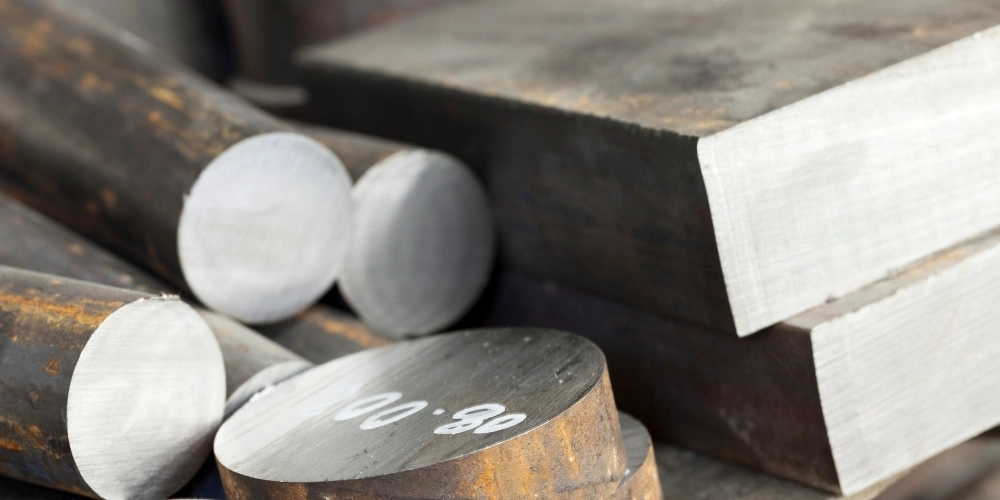
Quels sont les autres noms de l’acier au carbone 1018 ?
Other names for 1018 carbon steel include: Other names for 1018 carbon steel include:
- AISI 1018 : Bien que nominé selon la désignation AISI, ou « 1018 » impliquant des propriétés et une composition.
- UNS G10180 : Il s'agit de la désignation UNS (Unified Numbering System) de l'acier au carbone 1018, destinée à distinguer les produits aux États-Unis.
- SAE-AISI 1018: This designation combines the SAE (Society of Automotive Engineers) and AISI (American Iron and Steel Institute) specifications, which are used in engineering and product environments.
- C1018 : Il s'agit de la désignation standard de l'acier au carbone 1018, souvent utilisée dans l'industrie et le commerce car c'est la manière la plus simple de décrire le matériau.
Ces termes sont quelque peu interchangeables et sont souvent utilisés comme synonymes du même type d'alliage d'acier à faible teneur en carbone, apprécié pour sa polyvalence, sa soudabilité et son usinabilité.
Avantages et inconvénients de l'acier au carbone 1018

Carbon steel 1018 has some pros and cons. Specifically, it is easy to weld and machine which makes it the top pick for different applications serving the various industries. Not only is it affordable but also an option that saves you your costs. Nevertheless, 1018 steel has certain disadvantages for the high malleability, as compared with higher carbon and alloy steels. It possesses the feature of corrosion and may, possibly, become brittle in highly stressed constituents. Such features may need some precautionary measures or protection. Conversely, the material’s drawbacks include its tendency to lose strength with time and its inability to resist large amounts of stress. Nevertheless, its versatility and fabrication simplicity make the material perfect for numerous applications whose moderate strength and ductility are sufficient.
Composition chimique de l'acier au carbone 1018
1018 carbon steel, as a versatile, adaptable, medium-low carbon steel, demonstrates excellent weldability, formability, machinability, and strength compared with lower carbon steel in a normalized and hot forged state. It is popular among cold-rolled steels and regarded as the premier material choice of carburized gears, such as pins, pinions, spindles, ratchets, and other machinery parts. The common 1018 carbon steel material properties are as follows:

| Composant | Wt.% |
| Carbone (C) | 0,14 – 0,20 |
| Fer (Fe) | 98,81 – 99,26 |
| Manganèse (Mn) | 0,60 – 0,90 |
| Phosphore (P) | 0,0 – 0,04 |
| Soufre (S) | 0,0 – 0,05 |
L'influence de divers éléments sur les propriétés de l'acier au carbone 1018
The 1018 carbon steel properties are affected by various elements prevailing in its composition majorly iron and carbon and minimum content of manganese, phosphorous and sulfur. The carbon content gives a range of values (0.18% is typical) for hardness, strength, and machinability; the higher the carbon content, the higher the hardness, but lower ductility and weldability. Manganese is added to improve the hardenability and the strength, and phosphorus is added to better machinability but can reduce ductility too much if in excessive amount. On the upside, sulfur aids in machinability, but turns out to be brittle if it is present too much. In totality, these features or elements determine the mechanical properties of 1018 steel making it one of the most versatile and common materials in industry.
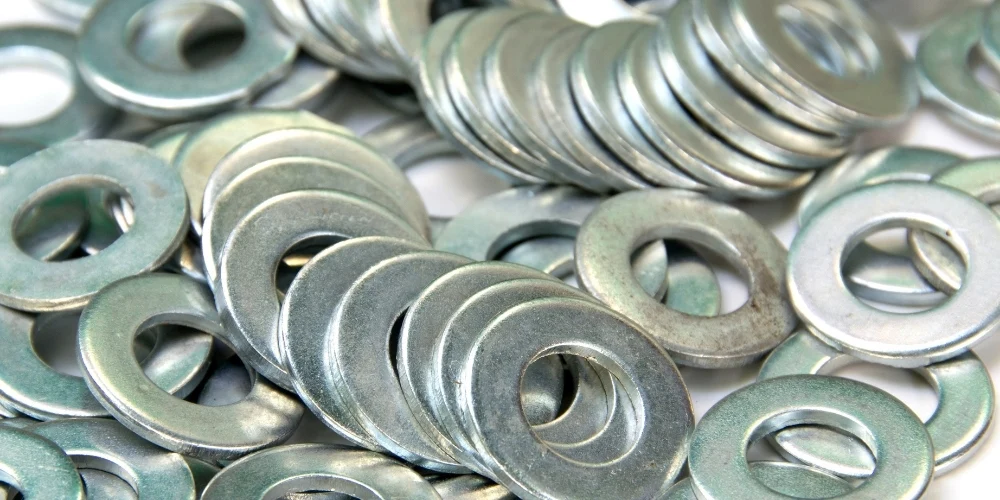
Propriétés mécaniques de l'acier au carbone 1018
| Propriétés mécaniques | Métrique | Anglais |
| Résistance à la traction ultime en acier 1018 | 440 MPa | 63800 psi |
| Limite d'élasticité à la traction de l'acier 1018 | 370 MPa | 53700 psi |
| Allongement à la rupture | 15 % | 15 % |
| Réduction de la superficie | 40 % | 40 % |
| Dureté de l'acier 1018, Brinell | 126 | 126 |
| Dureté de l'acier 1018, bouton | 145 | 145 |
| Dureté de l'acier 1018, Rockwell B | 71 | 71 |
| Dureté de l'acier 1018, Vickers | 131 | 131 |
| Module d'élasticité de l'acier 1018 | 193 GPa | 28000 ksi |
| Module de masse | 159 GPa | 23100 ksi |
| Module de cisaillement | 77,2 GPa | 11200 ksi |
| Coefficient de Poisson | 0.29 | 0.29 |
Propriétés physiques de l'acier au carbone 1018

| Propriétés physiques | Métrique | Anglais | commentaires |
| Densité | 7,87 g/cc | 0,284 lb/in² | |
| 1018 Usinabilité de l'acier | 78% | 78% | |
| Module d'élasticité de l'acier 1018 | 205 GPa | 29700 ksi | |
| Propriétés électriques | |||
| Résistivité électrique | 0,0000159 ohm-cm | 0,0000159 ohm-cm | Température 0,000 °C/32,0 °F, état recuit |
| 0,0000219 ohm-cm | 0,0000219 ohm-cm | Température 100 °C/212 °F, état recuit | |
| 0,0000293 ohm-cm | 0,0000293 ohm-cm | Température 200 °C/392°F, état recuit | |
| Propriétés thermiques | |||
| La capacité thermique spécifique | 0,486 J/g-°C | 0,116 BTU/lb-°F | Température >=100°C/212°F, recuit |
| Conductivité thermique | 51,9 W/mK | 360 BTU-in/hr-ft²-°F | estimé sur la base de matériaux similaires |
Matériaux équivalents à l'acier au carbone 1018
| UE | FR | 1.0479 S275 | ||||
| Etats-Unis | SAE 1018 AISI 1018 UNS G10180 | |||||
| Allemagne | VACARME | 1.0419 RSt44-2 RSt 44-2 | ||||
| Japon | JIS | SWRCH18A SWRCH18K SWRCH16A SWRCH16K SWRCH19A | ||||
| France | AFNOR | 14-13-12E | ||||
| Angleterre | BS | 43A | ||||
| Chine | Go | ML3 | ||||
| Suède | SS | 2320 | ||||
| Russie | GOST | St 3-sp St3sp | ||||
Acier au carbone 1215 vs acier au carbone 1018

Dans le domaine des aciers au carbone, l'acier 1215 et l'acier 1018 constituent des entités distinctes, marquées par des différences de composition et de propriétés inhérentes. Remarquable pour son usinabilité exceptionnelle, attribuée à l'introduction du plomb, l'acier 1215 a cependant tendance à présenter une résistance inférieure à celle de son homologue, l'acier 1018. D'un autre côté, l'acier 1018 présente une usinabilité louable associée à une résistance élevée, ce qui le rend adapté à diverses applications, allant de l'usinage général à la construction de composants structurels. La décision entre les deux pivote sur des besoins spécifiques, privilégiant l'acier 1215 pour les pièces de précision à grand volume, tandis que l'acier 1018 s'avère polyvalent pour les applications qui privilégient un mélange harmonieux de résistance et d'usinabilité.
Acier au carbone 1045 vs acier au carbone 1018
L'acier 1045, caractérisé par un quotient carbone élevé, revendique une puissance accrue et une résistance accrue à l'usure. À l'inverse, l'acier 1018, caractérisé par une teneur en carbone réduite, offre une plus grande facilité d'usinage mais a tendance à céder à une résistance moindre. La décision entre les deux repose sur des exigences spécifiques, le 1045 Steel gagnant la faveur des applications exigeant une vigueur inébranlable et une robustesse durable, tandis que le 1018 Steel s'aligne sur des scénarios donnant la priorité à la facilitation de l'usinage.
Méthodes de traitement adaptées à l'acier au carbone 1018
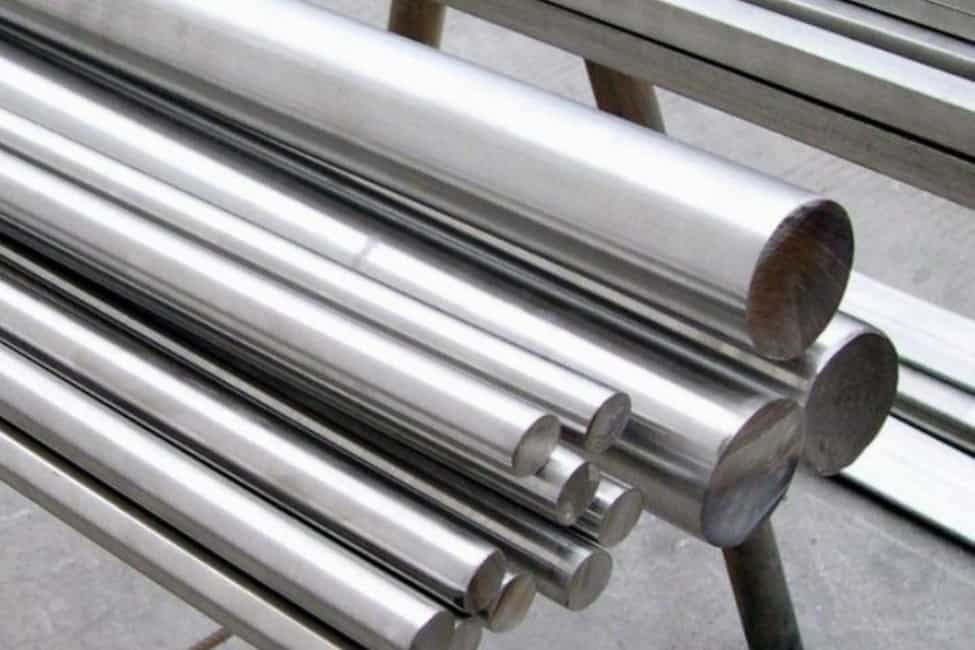
1018 carbon steel has more than one suitable processing methods because of its great machinability and some strength. These operations include turning, milling, drilling, and tapping, whereby the machines can perform them with little or no tool wear. Besides that, welding techniques like SMAW, GMAW, and GTAW can be used even though at times preheating and post-weld heat treatment might be required to ensure the quality of the welds. The cold working processes (cold drawing and rolling) that enable for more accurate dimensioning and shape related to mechanical properties in its final state. Toughness, however, is not the purpose of heat treatment, yet annealing can be leveraged to improve machinability or to refine its microstructure. Additionally, surface treatments like carbonizing, nitriding or blackening will substantially increase abrasions and corrosion resistance as well as improving aesthetics. Using these multipurpose methods of processing makes 1018 steel a prime choice for various applications across various industries.
Applications courantes de l'acier au carbone 1018
- Automobile: Entretoise de roue, Garde de bloc, Couvercle de soupape, Bride d'admission, Écrou de roue, Pommeau de levier de vitesse
- Aérospatial
- Équipement médical
- Mobilier et décoration : Charnière de piano, Charnière à souder, Charnière de barillet, Des vis
- Moto: Pignon, Roues, Moyeu de roue, Protection de radiateur, Repose-pieds, Pince triple, Extrémité de barre
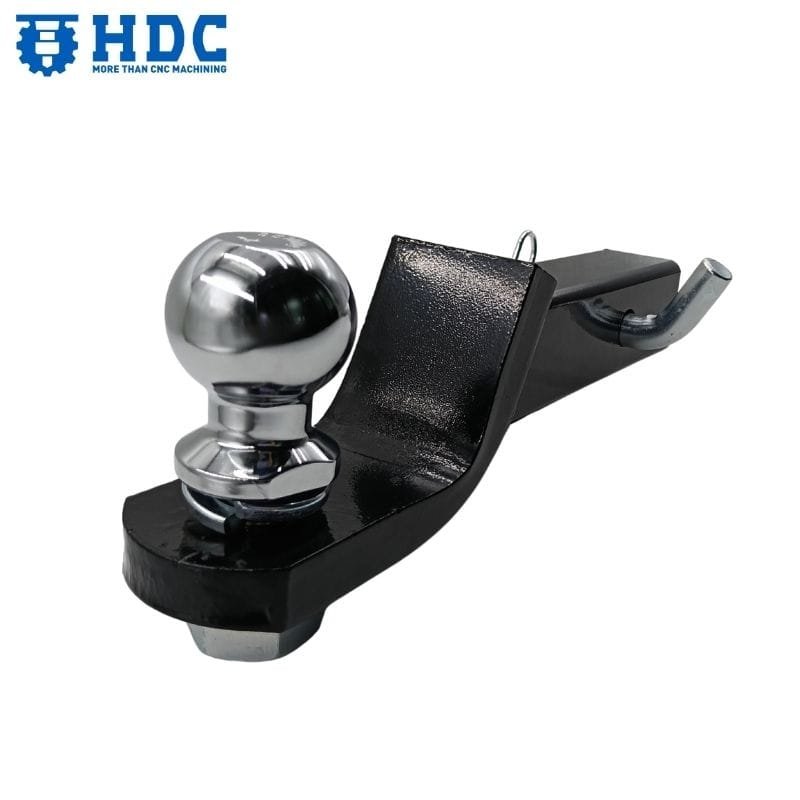
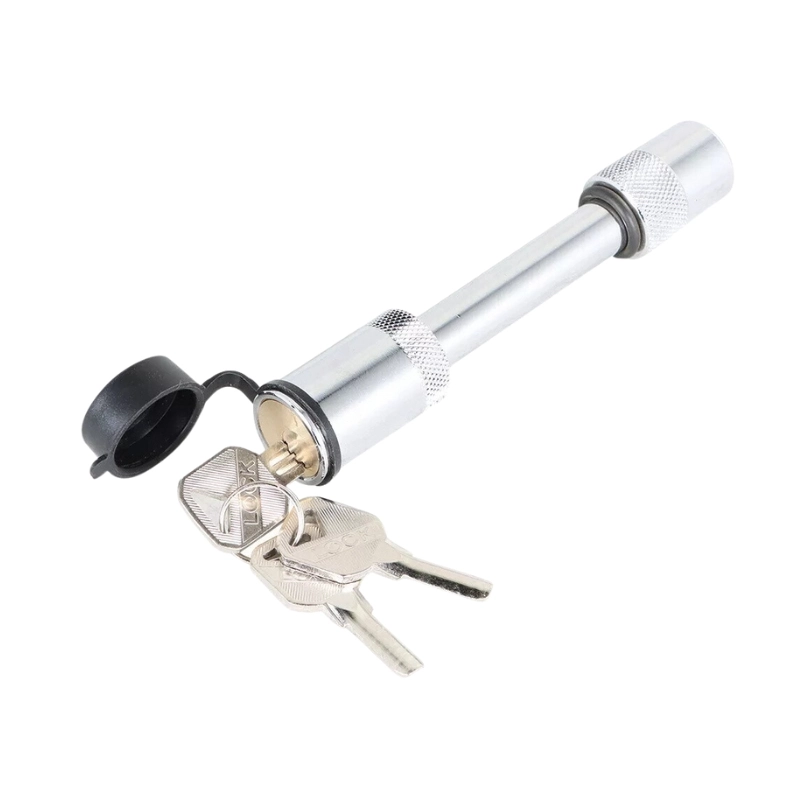
- Bande-annonce: Coupleur, Cric de remorque, Tube récepteur, Verrou de remorque à palette, Crochet d'attelage, Support à bille
- Vélo: Potence de vélo, Moyeu de roue, Pédalier
- Kart : Pignon de kart, Entretoise pour kart, Moyeu de roue de kart, Aller au volant de kart