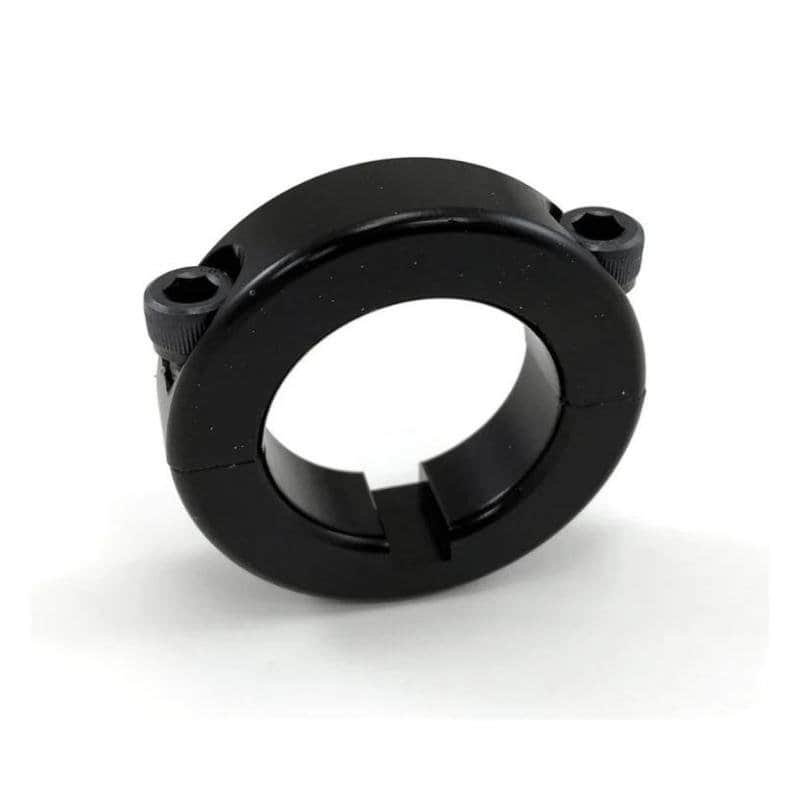
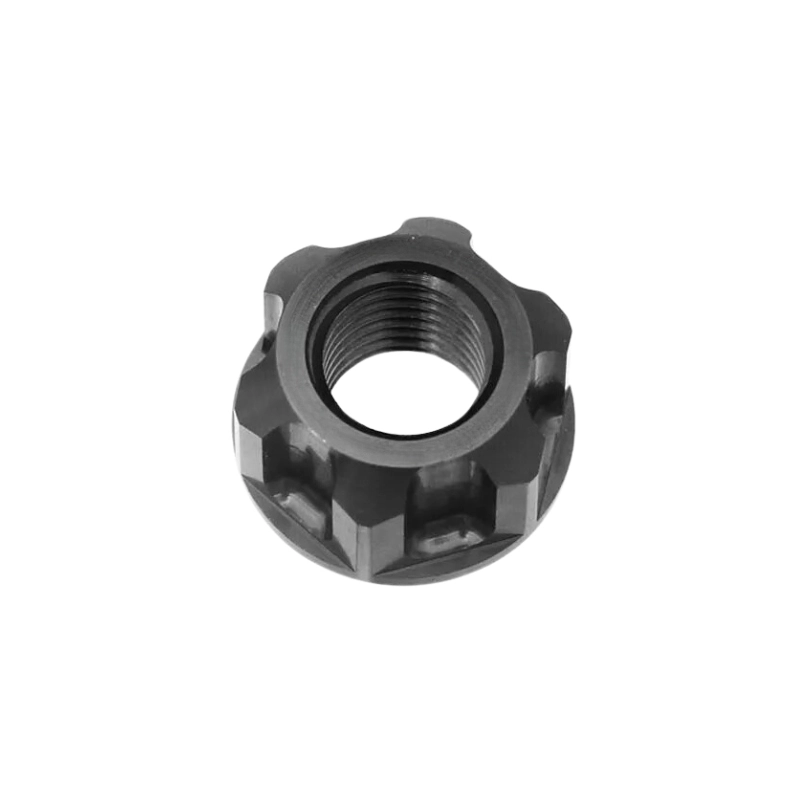
L'acier inoxydable 321, également connu sous la désignation ER312, est un type d'acier inoxydable fréquemment utilisé dans divers secteurs. Mais savez-vous exactement de quoi il s'agit ? Connaissez-vous la composition de l'acier inoxydable 321, ses applications et les méthodes employées ?
Si vous n'en savez pas plus et que vous souhaitez approfondir le sujet, vous êtes au bon endroit. Notre article du jour est entièrement consacré à vous permettre de comprendre l'acier inoxydable 321 mieux que quiconque !
À la fin de cet article, vous connaîtrez l'acier inoxydable 321 sur le bout des doigts !
Qu'est-ce que l'acier inoxydable de qualité 321 ?
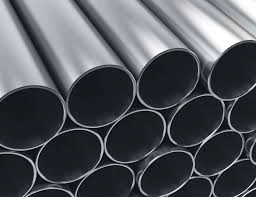 Source: Métaux avancés Smiths
Pour faire simple, l'acier inoxydable 321 est un acier inoxydable austénitique Conçu pour les applications impliquant la chaleur et le soudage, ce matériau contient du chrome et du nickel, ainsi que du titane ajouté pour assurer sa stabilité à haute température.
L'acier inoxydable 321 est facile à former et à souder, et conserve sa robustesse même à très basse température. Il ne peut être durci par traitement thermique et est naturellement amagnétique.
En savoir plus: Maîtriser la précision avec l'usinage CNC de l'acier inoxydable
Composition et propriétés de l'acier inoxydable 321
Source: Acier d'Angang
L'un des aspects les plus importants à connaître concernant ces alliages est leurs propriétés. Comme de nombreux alliages, l'acier inoxydable 321 présente des avantages et des atouts indéniables, ce qui permet de déterminer facilement s'il convient ou non à un usage spécifique.
Résistance et durabilité
L'acier inoxydable 321 offre une résistance optimale pour la plupart des applications industrielles, notamment dans les environnements à haute température. Il conserve mieux ses propriétés mécaniques que les autres nuances courantes lorsqu'il est exposé à des températures élevées, contribuant ainsi à prévenir une détérioration prématurée du matériau.
Résistance chimique
Ce grade supporte bien de nombreux produits chimiques organiques et inorganiques à des températures modérées. Il est couramment utilisé dans les environnements où l'exposition à des acides ou à des substances réactives est prévue, à condition que les conditions soient contrôlées et non excessivement agressives.
Résistance à la corrosion
En général, l'acier 321 se comporte de manière similaire à l'acier 304 ; il se distingue après soudage ou exposition à la chaleur. Grâce à teneur en titane, La corrosion est considérablement réduite, ce qui le rend plus fiable dans les applications qui restent dans des plages de températures plus élevées.
Résistance à la température
L'acier inoxydable 321 est conçu pour résister à la chaleur ; nous n'en dirons pas plus. Il offre des performances optimales en service intermittent jusqu'à environ 900 °C et en production continue jusqu'à près de 925 °C. Il constitue donc un excellent choix pour les pièces soumises à des cycles répétés de chauffage et de refroidissement.
Soudabilité
Le soudage de l'acier inoxydable 321 est relativement simple. La présence de titane dans sa composition chimique contribue à prévenir la formation de carbures pendant le soudage, réduisant ainsi le risque de corrosion dans la zone affectée thermiquement. Dans la plupart des cas, aucun traitement thermique après soudage n'est nécessaire.
Usinabilité
Comme la plupart des aciers inoxydables austénitiques, le 321 peut être plus difficile à usiner que l'acier au carbone. Cependant, avec un outillage adapté, des vitesses de coupe appropriées et un refroidissement adéquat, il est tout à fait possible de le fabriquer et de l'utiliser pour la plupart des besoins en pièces sur mesure.
Applications
Grâce à sa stabilité thermique et à ses performances de soudage, l'acier inoxydable 321 est largement utilisé dans les échangeurs de chaleur, les systèmes d'échappement, les pièces de four, les équipements de traitement chimique et les composants aérospatiaux où les hautes températures font partie du fonctionnement quotidien.
À lire également : Acier inoxydable 303 vs 304 : sont-ils identiques ?
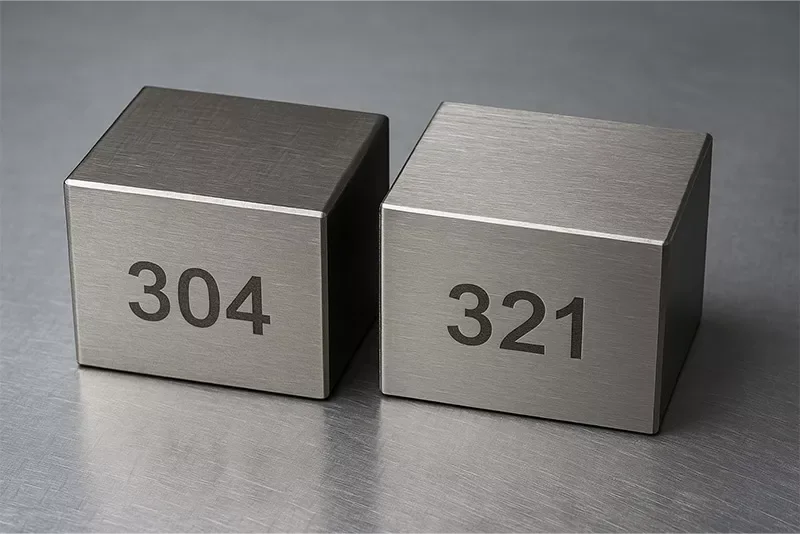
Acier inoxydable 321 contre 304
 Source: KongFang Métal
Les aciers inoxydables 321 et 304 sont tous deux des aciers inoxydables austénitiques utilisés dans de nombreuses applications quotidiennes et industrielles. À première vue, leur aspect et leur comportement sont similaires. Cependant, ils sont conçus pour des conditions et des situations différentes, notamment en présence de chaleur ou de soudage. Voici donc un aperçu de leurs différences :
| Fonctionnalité | Acier inoxydable 304 | Acier inoxydable 321 |
| Type d'acier inoxydable | Acier inoxydable austénitique | Acier inoxydable austénitique (stabilisé au titane) |
| Composition chimique | Chrome, nickel | Chrome, nickel, titane |
| Résistance à la chaleur | Bon pour un usage général | Plus adapté aux fortes chaleurs soutenues ou répétées |
| Performances de soudage | Bon, mais pourrait nécessiter un remplissage à faible teneur en carbone. | Excellente stabilité après soudage |
| Force à température ambiante | Même | Même |
| Résistance à haute température | La chute est plus rapide en cas d'exposition à la chaleur. | Maintient mieux sa force au fil du temps |
| Applications | Équipements alimentaires, cuves, garnitures, tuyauterie | Échangeurs de chaleur, systèmes d'échappement, pièces aérospatiales |
| Coût et disponibilité | Moins cher, largement disponible | Coût plus élevé, légèrement moins fréquent |
En fin de compte, la différence entre le 321 et le 304 se résume à la façon dont le matériau sera utilisé au fil du temps, et non seulement à ses performances lors de l'installation.
Si l'application se déroule à des températures normales et que le coût est un facteur important, l'acier inoxydable 304 est souvent le choix le plus pratique. En cas de soudage et d'exposition répétée à la chaleur, l'acier inoxydable 321 offre une sécurité accrue en réduisant les risques de corrosion à long terme.
Équivalent en acier inoxydable 321
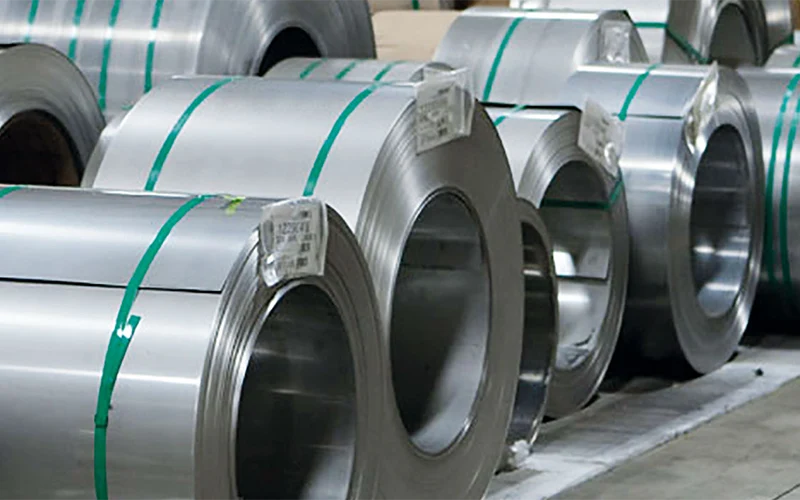
 Source: Solutions pour bandes métalliques
Maintenant que nous savons que le 312 est un alliage basé sur le 304, nous pouvons donc dire qu'il est équivalent à EN 1.4541, AISI 321 et UNS S32100.
S'il s'agit de niveaux de notation alternatifs, les suivants ont été jugés les meilleurs et les plus adaptés :
- Acier inoxydable de qualité 304 H
- 347
- Grade 304 L
L'acier inoxydable rouille-t-il ?
Contrairement à une idée répandue, l'acier inoxydable peut rouiller. Bien qu'il présente une excellente résistance à la corrosion, il finira par rouiller dans certaines conditions. Après tout, on le qualifie d'“ inoxydable ” et non d'“ anti-taches ”.”
Fournisseurs d'acier inoxydable 321 : Pourquoi les aciers 321 de HDC Manufacturing sont les plus fiables
Nombreux sont ceux, notamment les chefs d'entreprise, qui savent que dans l'industrie sidérurgique, rien ne vaut le retour d'information, la qualité des produits et la rapidité d'exécution. Chez HDC Manufacturing, nous possédons toutes ces qualités, et ce, avec brio.
Des organisations et des entreprises du monde entier nous font confiance pour répondre à leurs besoins. Qu'il s'agisse d'acier inoxydable, d'acier titane, de cuivre ou même de plastique, ou encore de services d'usinage CNC et de fabrication métallique, notre équipe est le partenaire idéal.
L'expertise, le savoir-faire et l'engagement sans faille de HDC Manufacturing vous garantissent une expérience commerciale exceptionnelle. Contactez-nous pour obtenir un devis gratuit !