Panoramica
Q235 è un acciaio flessibile a basso tenore di carbonio con una struttura in carbonio, comunemente usato senza trattamento termico poiché distruggerà il trattamento termico della saldatura. Grazie alla sua buona plasticità, tenacità, saldabilità e resistenza, in particolare alle prestazioni ad alto costo, è ampiamente utilizzato nelle strutture edili e ingegneristiche, come piastre, barre d'acciaio, tubi d'acciaio saldati e altre parti. 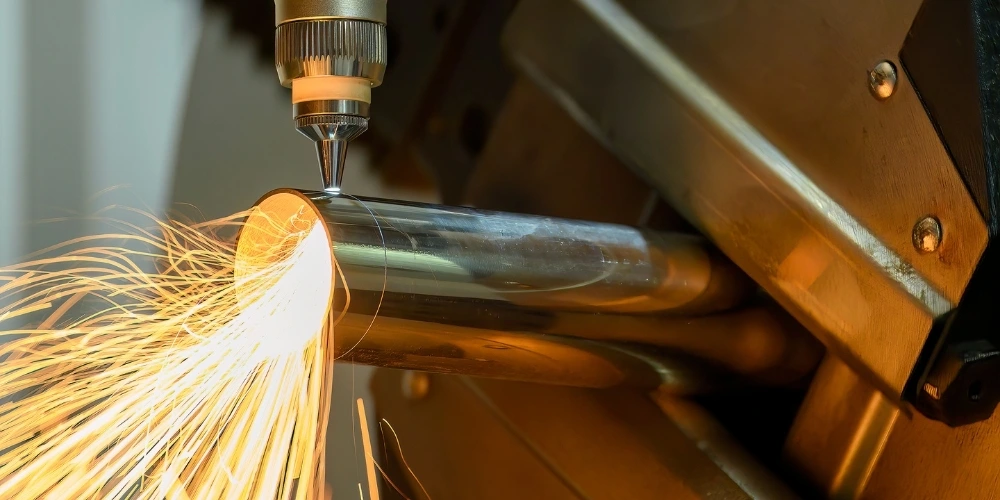
Cos'è l'acciaio al carbonio Q235?
In China, Q235 carbon steel, which has a low carbon content, is often used as structural steel, combined with good welding performance. The steel is, like ASTM A36 in the US and S235JR in Europe, completely comparable. Q235 steel is usually carbonized up to 0.2% level, which is combined with manganese, silicon, sulfur, and phosphorus, etc., as other alloying elements. It finds widespread application in construction, machinery, and manufacturing industries in a variety of structural components like beams, columns, and plates, due to its reasonable strength, ductility, and low-cost. Q235 carbon steel can be processed by other methods such as welding, machining and forming to suite specific designs.
Why is Q235 Carbon Steel Named Differently?
The name “Q235” is derived from the Chinese prizm, and it stands for the naming convention of China. Steel grades usually have a number that comes before the prefix. This number indicates the minimum yield strength of the steel. “Q” stands for “quality” and is given in the form of number that is the yield strength of at least 235 MPa. As a result the “Q235” carbon steel is a type of steel that has the minimum yield strength twenty three five mega pascals. This classification and standardization system makes use of this marking system for steel grades in manufacturing, construction, and other relevant areas in China.
Which Alloy under the AISI Standard is Similar to Q235 Carbon Steel?
L'equivalente AISI dell'acciaio al carbonio Q235 cinese è generalmente considerato AISI 1008 o AISI 1010. Questi standard americani corrispondono strettamente al Q235 in termini di composizione chimica e proprietà meccaniche, offrendo duttilità, resistenza e capacità di saldatura simili. L'AISI 1008 contiene circa 0,08% di carbonio, mentre l'AISI 1010 ha un contenuto di carbonio leggermente superiore a circa 0,10%. Questi acciai a basso tenore di carbonio sono utilizzati in varie applicazioni grazie al loro equilibrio di caratteristiche prestazionali. Tuttavia, per applicazioni specifiche, si consigliano confronti dettagliati e consultazione con le specifiche dei materiali per garantire la piena compatibilità e il rispetto degli standard richiesti.
Quali limitazioni ha l'acciaio al carbonio Q235?
Compared to other steels, Q235 carbon steel is used extensively but it shows some limitations. Also, it possesses lower yield strength putting stringent limits on its application in environments demanding high strength mechanical properties and high load baring capacity. Therefore, meeting with a high risk of corrosion, especially in corrosive environments or high humidity, needs extra safety precautions in terms of coating or galvanization. Moreover, Q235 steel might be characterized by lowered toughness, which provides the reason to assume the negative toughness of the steel in low temperatures or under impact charges. Weldability concerns involving weld cracking and porosity are the issues that must be carefully addressed during the welding processes. It is also possible that smoothing steps such as additional machining or finishing are needed to achieve the desired surface finish as roughness makes the performance of high-quality steels. In spite of the above limitations, Q235 carbon steel is still widely used in some of the industries but you have to bear in mind that it is not appropriate for specific scenarios.
Composizione chimica dell'acciaio al carbonio Q235
| Componente | Peso % |
| Carbonio (C) | 0,0 – 0,22 |
| Manganese (Mn) | 0,0 – 1,40 |
| Fosforo (P) | 0,0 – 0,045 |
| Zolfo (S) | 0,0 – 0,05 |
| Silicio (Si) | 0,0 – 0,35 |
| Ferro (Fe) | 98,81 – 99,26 |
L'influenza della composizione elementare sulle proprietà dell'acciaio al carbonio Q235

The explicit dependence of Q235 carbon steel on the elemental composition of its constituents is an established fact. Carbon content is the source of hardness, strength, and weldability, but Q235 steel has a relatively low content to provide decent strength combined with ductility. Manganese is used to give hardenability and overall mechanical properties, while silicon makes up the high strength and hardenability. Phosphorus and sulfur content are kept at minimum to ensure ductility and to avoid breakages. Besides that, trace elements such as copper, nickel, chromium, and vanadium are also involved in governance of corrosion resistance as well as the mechanical strength. Very high accuracy of control of these factors ends up with specific properties of Q235 steel that makes it applicable to a wide variety of uses.
Proprietà meccaniche dell'acciaio al carbonio Q235
| Grado | Forza di resa | Resistenza alla trazione | Allungamento % |
| Q235 Acciaio | 235 Mpa | 370-500 Mpa | 26 |
Proprietà fisiche dell'acciaio al carbonio Q235
| Proprietà fisiche | |
| Densità, g/cm3 (lb/in3) | 7.85 (0.284) |
| Punto di fusione, °C (°F) | 1450-1530 (2640-2800) |
| Capacità termica specifica, J/(Kg·K) | 470 a 20 °C (68 °F) |
| Resistività elettrica, μΩ·m | circa 0,15 (20 °C) |
| Modulo elastico, GPa (ksi) | 200 (29 x 103) |
| Conducibilità termica, (W/m·K) | 53-49 (0-100 °C) |
| Coefficient of thermal expansion, (10-6/K) | 11,3-11,6 a 20-100 °C (68-212 °F) |
| Modulo di Young, GPa (ksi) | 200 (29 x 103) |
| rapporto di Poisson | 0.24-0.28 |
Metodi di lavorazione dell'acciaio al carbonio Q235

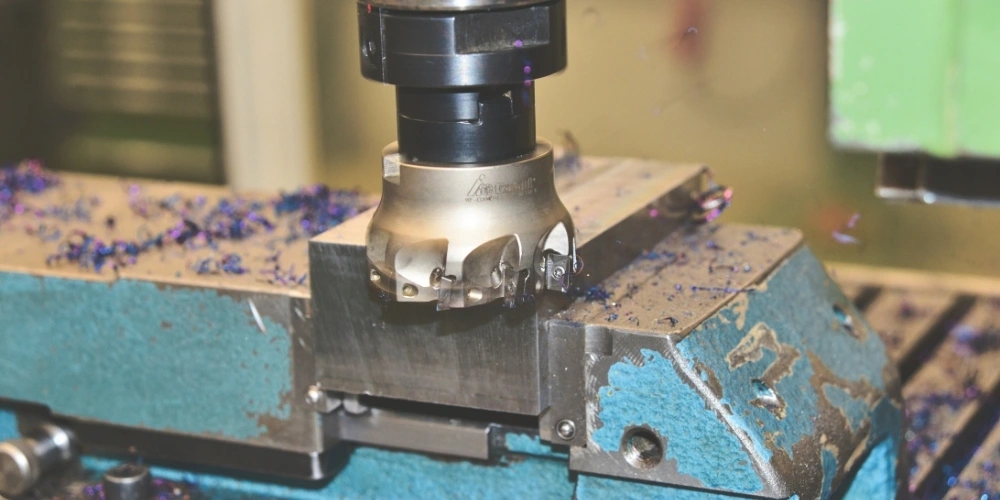
Q235 carbon steel can be machined, welded and formed using the standard techniques, which is a great advantage when looking for high quality machined parts at unmatched prices. Machining is ensuring the shaping by means of drilling, milling, or turning, whereas welding methods facilitate the joining. The cold forming processes by means of bending and stamping make highly complex shapes, and the stress relieving makes de-stressing. Corrosion resistance is greatly increased by surface treatments as painting or galvanizing. These methods give the possibility to produce castings for the construction of structures, machines, and cars.
Applicazioni dell'acciaio al carbonio Q235
One of the areas where Q235 carbon steel is widely used is its diverse applications across various industries due these properties. It is used for making structural elements such as beams, columns and plates in construction due to its strength and favorable weldability. The production of machinery requires the use of Q235 for a variety of pieces such as gears, shafts, and fasteners, since it is machinable and so easy to afford. The automotive industries can benefit from it as a constituent of body panels and chassis due to its balance of strength and malleability. Besides, Q235 steel is also used in industry manufacturing equipments, agricultural machineries, and pipelines, due to its vast usages across different sectors which include critical applications for construction and mechanics which require reliable, low cost materials.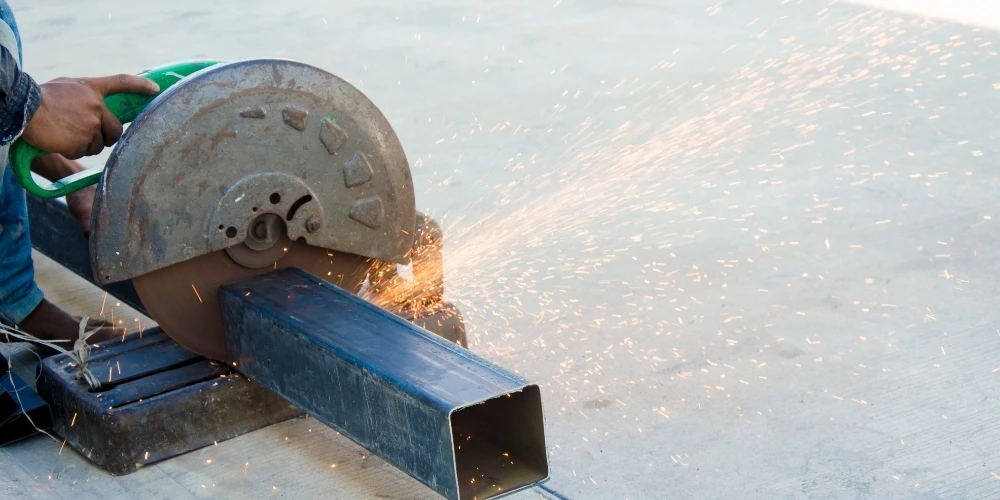
Materiali equivalenti all'acciaio al carbonio Q235
| Unione Europea | IT | ||||
| Stati Uniti d'America | – | Gr.C | |||
| Germania | DIN, WNr | 1.0028 1.0036 St34-2 USt37-2 | |||
| Giappone | JIS | SS330 STKM12A | |||
| Francia | AFNOR | A34-2 S235JRG1 | |||
| Inghilterra | BS | CEW2BK Fe360B | |||
| Vecchio europeo | IT | Fe360BFU | |||
| Italia | UNI | Fe330 Fe360BFU | |||
| Spagna | UNE | AE235B-FU | |||
| Cina | GB | A3 Q235 | |||
| Svezia | SS | 1312 | |||
| Polonia | PN | St3SX | |||
| Cechia | CSN | 11343 11373 | |||
| Austria | ONORM | St34RG St37F USt360B | |||
| Norvegia | NS | NS12-122 | |||
| Russia | GOST | 16D 18kp St3kp | |||
| Inter | ISO | Fe360B | |||