Если вы откроете практически любой механизм, внутри вы обнаружите небольшой, но мощный двигатель — шестерни. Эти механические детали бесшумно приводят в движение, передают энергию и регулируют скорость, чтобы машины могли работать синхронно. Шестерни играют важную роль в современной технике, поскольку используются во всем: от шестерен в велосипедах до сложных систем в автомобилях, на заводах и в роботах.
В рамках этого руководства вы познакомитесь с наиболее важными типами зубчатых передач и областями их применения. Каждая зубчатая передача будет описана с точки зрения ее работы, областей ее наибольшего применения и причин, по которым инженер может предпочесть ту или иную конструкцию для конкретной машины.
В итоге у вас сложится простое и ясное представление обо всем. типы снаряжения системы, которые управляют такими вещами, как небольшие инструменты или крупное промышленное оборудование.
Что такое шестерни? Простое определение.
Шестерня — это вращающийся механический элемент, имеющий зубья, которые соединяются с другой шестерней. Зубья прилегают к другой шестерне и заставляют её вращаться при вращении одной шестерни.
Это всего лишь простая мера, которая позволяет шестерням:
- Передача эмоций
- Изменить скорость
- Изменение силы (крутящего момента) в большую или меньшую сторону.
- Поворотное движение.
Представьте себе велосипед. Во время езды цепь приводит в движение шестерни, которые позволяют колесу вращаться. Эти шестерни помогают определить скорость или силу вращения педалей.
Основные термины, используемые в различных типах зубчатых передач.
Прежде чем разбираться в типах шестерен, вам следует ознакомиться с некоторыми распространенными терминами.
- Зубы: Это зацепляющиеся части шестерни, которые входят в другую шестерню.
- Презентационный круг: Теоретическая окружность, обозначающая точку контакта зубчатых передач.
- Передаточное число: Это соотношение размеров двух шестерен. Оно регулирует скорость и крутящий момент.
- Крутящий момент: Это вращательная сила, которая помогает машинам перемещать или поднимать грузы.
- Ось: Это центр вращения шестерни.
Как работают шестерни? Объяснение функций шестерен.
Шестерни работают за счет передачи движения от одного вала к другому. Когда две шестерни соприкасаются, зубья скользят друг относительно друга и вращаются. В результате этого взаимодействия могут быть изменены три важных параметра:
Скорость
- Когда малая шестерня приводит в движение большую шестерню, последняя также будет вращаться медленно.
- Когда большая шестерня вращает малую, последняя вращается быстрее.
крутящий момент
Сила, вызывающая вращение, называется крутящим моментом. Шестерни используются для замедления вращения, что увеличивает крутящий момент. Машины, такие как краны или лифты, применяют этот принцип для подъема тяжелых предметов.
Направление вращения
При соединении двух шестерен они вращаются в противоположных направлениях. Зубчатые передачи используются инженерами для регулирования направления движения в машинах.
Основные типы шестерен
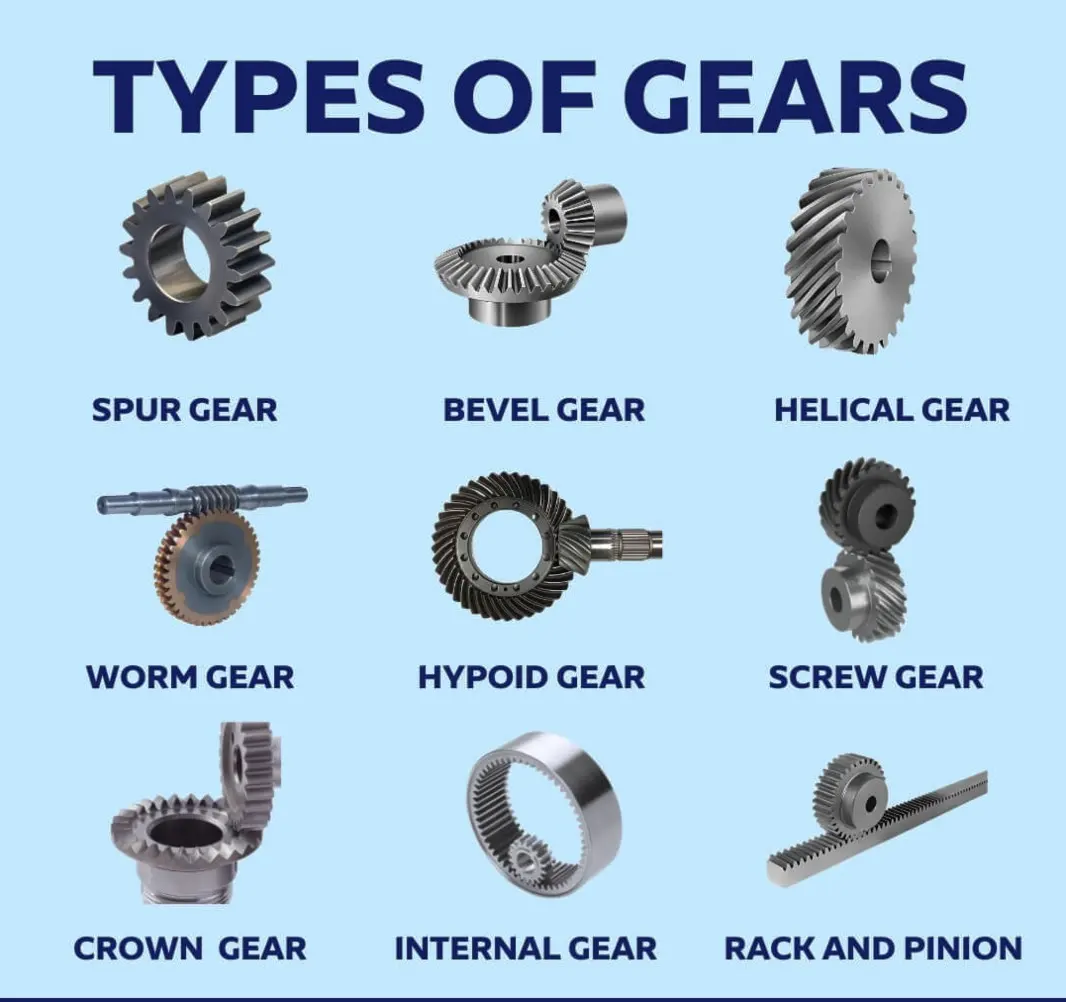
Инженеры изготавливают шестерни в самых разнообразных формах. Все они... типы шестерен Они выполняют свою работу в конкретной ситуации. Ниже показаны наиболее распространенные конструкции зубчатых передач в механических системах:
1. Прямозубые шестерни: один из наиболее распространенных типов шестерен.
Определять
Наиболее распространенный и простой тип шестерни, имеющий прямые зубья, расположенные параллельно оси вала.
Технические характеристики
Эти шестерни представляют собой шестерни с параллельными валами. Прямые зубья обеспечивают их взаимодействие по всей ширине одновременно, что исключает осевую нагрузку (отсутствие боковой силы на валу).

Как они работают
Мощность передается за счет соприкосновения зубьев двух параллельных шестерен. При этом ведущая шестерня вращается, толкая ведомую шестерню в противоположном направлении.
Приложения
Механические часы, стиральные машины, конвейерные ленты и электрические отвертки.
- Плюсы: Низкая себестоимость производства, высокая эффективность и простота проектирования.
- Минусы: При высоких скоростях издает много шума (гул шестерен) и подвержен вибрации.
2. Косозубые шестерни
Определять
Цилиндрические шестерни с зубьями, нарезанными под углом к оси вращения, образующие спиральную конструкцию.
Технические характеристики
Угол наклона спирали (обычно 15°–30°) обеспечивает более высокое соотношение зацепления, то есть в любой конкретный момент времени нагрузку несет больше зубьев, чем в прямозубых шестернях.
 Как они работают
Зубы медленно сцепляются друг с другом, один конец к другому. Это обеспечивает мирную смену власти.
Приложения
Автомобильные трансмиссии, промышленные редукторы и высокоскоростные воздуходувки.
- Плюсы: Чрезвычайно тихий, плавный в работе и обладает большей грузоподъемностью, чем зубчатые колеса.
- Минусы: Угловые зубья создают осевую нагрузку, и для предотвращения смещения вала необходимы специальные упорные подшипники.
3. Двойные косозубые (елочные) шестерни
Определять
Зубчатое колесо, используемое для соединения двух косозубых шестерен с противоположными углами, образующих форму перевернутой буквы V.
Технические характеристики
Если между двумя зеркально расположенными спиралями имеется центральная канавка, то это двойная винтовая шестерня; если зубья пересекаются в острой точке, то это елочная шестерня.
 Как они работают
Благодаря двум противоположным углам спирали, одна сторона осевого усилия компенсируется другой, что обеспечивает им невероятную устойчивость.
Приложения
Судовые силовые установки, металлургические заводы и крупномасштабная выработка электроэнергии.
- Плюсы: Обладает нулевой осевой тягой; исключительно бесшумен при высоких значениях крутящего момента.
- Минусы: Самые дорогие и сложные в производстве; их трудно правильно установить.
4. Конические зубчатые передачи
Определять
Конусообразные шестерни, используемые для передачи мощности между валами, пересекающимися друг с другом, как правило, под углом 90°.
Технические характеристики
Эти шестерни могут быть прямыми (с радиальными зубьями) или спиральными (с изогнутыми зубьями). Поверхность кувшина имеет форму не цилиндра, а конуса.

Как они работают
Когда два конуса начнут вращаться относительно друг друга, зубья сцепятся, изменяя направление вращения (например, вертикальный вал выйдет из горизонтального).
Приложения
Системы несущего винта вертолета, ручные дрели и дифференциальные приводы.
- Плюсы: Обеспечивает эффективное перемещение оси движения; спиральные типы легко справляются с высоким крутящим моментом.
- Минусы: Чрезвычайно чувствителен к положению вала; сложно исправить в случае сколов зубьев.
5. Червячные передачи
Определять
В качестве зубчатой передачи был определен винтовой червяк и зубчатое червячное колесо.
Технические характеристики
Такая система имеет высокое передаточное число редуктора (до 100:1) в очень компактном корпусе. Червяк обычно изготавливается из закаленной стали, а колесо — из бронзы.
 Как они работают
Червяк — это винт, который используется для скольжения по зубьям колеса. Это трение скольжения позволяет точно перемещать колесо, но при этом выделяется много тепла.
Приложения
Лифты, конвейерные системы, устройства для открывания ворот и подъемники.
- Плюсы: Мера безопасности, компактные размеры и бесшумность.
- Минусы: Неэффективен с точки зрения теплопотерь, требует большого количества смазки для износа.
6. Гипоидные шестерни
Определять
Шестерни специального типа; валы видны и не совпадают.
Технические характеристики
Они представляют собой комбинацию конической спиральной шестерни и червячной передачи. Смещенные оси позволяют сделать шестерню большего размера и более прочной.
 Как они работают
Передача мощности между непересекающимися валами осуществляется за счет сочетания качения и скольжения.
Приложения
Дифференциалы заднеприводных автомобилей и большегрузных автомобилей.
- Плюсы: Большая грузоподъемность позволяет разместить карданный вал ниже для достижения более низкого центра тяжести.
- Минусы: Для работы в условиях высокого давления и сложных производственных процессов требуется специальное гипоидное масло.
7. Реечные шестерниТипы шестерен, преобразующих движение
Определять
Зубчатая передача, состоящая из круговой шестерни (зубчатого колеса) и прямой плоской шестерни (зубчатой рейки).
Технические характеристики
Этот механизм применяется для преобразования вращательного движения в линейное. Пройденное расстояние зависит от длины зубчатой рейки.

Как они работают
При вращении шестерни ее зубья могут скользить вдоль рейки, перемещая ее по прямой линии (или шестерню вдоль рейки).
Приложения
В системах рулевого управления автомобилей, услугах станков с ЧПУ и раздвижных дверях.
- Плюсы: Линейное движение прямое и точное; оно очень простое и надежное.
- Минусы: Ограничение хода (в зависимости от длины рейки) может привести к так называемому люфту (зазору между зубьями).
8. Внутренние шестерни
Определять
Это шестерня, у которой зубья нарезаны на внутренней поверхности кольца, а не на внешней.
Технические характеристики
Меньшая шестерня (зубчатое колесо) расположена внутри большей шестерни (кольцевого колеса). Направления вращения валов одинаковы.

Как они работают
Шестерня входит во внутренние зубья кольца. Это происходит потому, что зубья обхватывают шестерню; следовательно, площадь контакта больше по сравнению с внешними шестернями.
Приложения
Роботизированные шарниры используются в самых тяжелых областях применения, например, в космических аппаратах и при геологических исследованиях.
- Плюсы: Чрезвычайно малый размер, большая площадь контакта зубьев и, следовательно, более высокая грузоподъемность.
- Минусы: Сложно производить в больших количествах; требуется специальное оборудование для внутренней обработки с использованием резаков.
9. Планетарные шестерни
Определять
Система, включающая центральную солнечную шестерню, несколько планетарных шестерен и наружную кольцевую шестерню.
Технические характеристики
Система обладает несколькими степенями свободы. Различные скорости и направления движения могут быть достигнуты путем удержания одной части неподвижно и перемещения другой.

Как они работают
Планеты вращаются вокруг кольцевой шестерни, одновременно совершая оборот вокруг солнечной шестерни. Также можно зафиксировать различные передаточные числа для получения разных скоростных характеристик.
Приложения: Автоматические коробки передач, ветряные турбины и аэрокосмические исполнительные механизмы.
- Плюсы: Невероятная мощность при компактных размерах, очень эффективен в тяжелых условиях эксплуатации.
- Минусы: Сложнее всего спроектировать зубчатую передачу, а её обслуживание — сложное и дорогостоящее.
Терминология шестерен и технические характеристики
При проектировании зубчатых передач инженерам следует учитывать ряд важных технических характеристик, чтобы предотвратить отказ системы под нагрузкой.
- Передаточное число: Передаточное число определяет взаимодействие между входным и выходным валами. Увеличение передаточного числа увеличивает крутящий момент и уменьшает скорость вращения выходного вала. Деление числа зубьев ведомой шестерни на число зубьев ведущей шестерни дает механическое преимущество. ($Ratio = \frac{N_{out}}{N_{in}}$).
- Модуль или презентация: Этот метод используется для измерения размера зубьев шестерни. Две шестерни должны иметь абсолютно одинаковый модуль (в метрической системе) или диаметральный шаг (в дюймах), чтобы зацепиться. При наличии даже небольшого отклонения шага шестерни либо заклинят, либо сразу же сорвут зубья.
- Угол давления: Это угол передачи силы между зацепляющимися зубьями.
- Современный стандарт высокой прочности — это 20°.
- Возраст 14,5° более зрелый, молчаливый и слабый.
- Экстремально тяжелые нагрузки установлены на уровне 25° чтобы избежать поломки зубов.
- Материал шестерен: сталь/чугунВыбран благодаря высокой прочности на растяжение и применению в промышленных условиях при высоких нагрузках.
- Латунь/Бронза: Этот материал часто используется в червячных колесах для минимизации трения между стальными червяками и червячным колесом.
- Пластик/нейлон: Этот тип идеально подходит для использования в высокоскоростных системах с низкой нагрузкой (например, в принтерах), где необходимо снижение уровня шума и отсутствие необходимости в смазке.
Как выбрать подходящие типы шестерен для вашей машины
Выбор подходящего оборудования — это компромисс между производительностью и ценой.
- Грузоподъемность: Планетарные зубчатые передачи также лучше подходят для тяжелых промышленных применений, таких как подъемные механизмы, поскольку нагрузка распределяется между множеством планетарных передач, в отличие от одноступенчатой передачи, где контакт зубьев происходит только в одной точке.
- Скорость: При скорости вращения более 5000 об/мин необходимы конические зубчатые передачи с косозубыми или спиральными зубьями. Их зубья двигаются плавно, что позволяет избежать вибрации, характерной для прямозубых передач.
- Уровень шума: В офисном или медицинском оборудовании для обеспечения бесшумной работы используются косозубые или пластиковые прямозубые шестерни.
- Направление движения: В случае, если валы расположены под углом 90°, обычно используются конические зубчатые передачи. Если валы не совпадают (не находятся на одной линии), предпочтительным решением являются гипоидные зубчатые передачи.
- Ограничение по объему: Пространство ограничено, поэтому для уменьшения размеров коробки в 50 раз следует проектировать только червячную передачу или планетарный редуктор.
Распространенные области применения зубчатых передач в повседневной жизни
Шестерни — это, по сути, мышцы, обеспечивающие практически все наблюдаемые нами механические движения.
- Автомобильный: Дифференциал — это коробка передач, использующая конические или гипоидные шестерни, позволяющие колёсам поворачивать с различной скоростью при прохождении поворота.
- Промышленный: Конвейерные ленты оснащены мощными червячными передачами, которые предотвращают обратное скольжение ленты при выключенном двигателе и наличии тяжелого продукта на конвейере.
- Семья: В ручном миксере используется двигатель с коническими шестернями, которые преобразуют горизонтальное движение двигателя в вертикальное движение венчиков.
- РобототехникаНебольшие планетарные редукторы установлены на сервомоторах, чтобы обеспечить им высокий крутящий момент, необходимый для точного подъема объектов роботизированной рукой.
Советы по уходу и продлению срока службы всех типов шестерен
Шестерни можно настроить и забыть о них, но даже простое техническое обслуживание может вдвое продлить срок их службы.
- Смазка: Масло не только снижает трение, но и используется в качестве охлаждающей жидкости. В высокоскоростных системах смазка способна отводить тепло от зубьев шестерни, предотвращая их размягчение.
- Правильное выравнивание: Даже малейшее отклонение в 1 мм может привести к точечной нагрузке, при которой сила направлена к углу зуба, а не к его поверхности, и вызвать сколы зубов в очень короткий промежуток времени.
- Управление нагрузкой: Наибольший вред зубчатым передачам наносят ударные нагрузки (резкие пуски/остановки). Для предотвращения срезания зубьев можно использовать двигатель с плавным пуском.
- Регулярный осмотр: Появление точечных повреждений или царапин. Это предварительные признаки того, что смазка не сработала или нагрузка чрезмерно велика.
Заключительные мысли: Выбирайте правильные типы зубчатых передач с HDC Manufacturing.
Изучение типов зубчатых передач и принципов их использования позволяет увидеть, как работают машины, даже не замечая этого. Конструкция каждой шестерни — это решение механической проблемы, будь то плавное движение, высокий крутящий момент, компактные размеры или точное управление. Зубчатые передачи являются одной из важнейших составляющих техники, поскольку сегодня доступны как сложные планетарные системы, так и простые прямозубые шестерни.
В Производство HDC, Мы специализируемся на производстве высококачественных зубчатых передач для различных отраслей промышленности. Наша деятельность включает в себя: Кастинг, ковка, ЧПУ обработка, а также электроэрозионную обработку, что позволяет нам изготавливать прочные шестерни с точными допусками в условиях жестких условий эксплуатации. Если вам требуются кованые шестерни или любые другие кованые механические детали, изготовленные на заказ, вы можете ознакомиться с нашим предложением по кованым шестерням здесь:
https://hdcmfg.com/product/forging/gear/
Мы хотели бы, чтобы вы связались с нашей командой, чтобы обсудить потребности вашего проекта и изучить возможности использования наших производственных знаний для помощи в разработке вашего следующего инженерного проекта.
Часто задаваемые вопросы о различных типах снаряжения
Какие типы шестерен встречаются чаще всего?
Наиболее часто используются несколько типов зубчатых передач, таких как прямозубые, косозубые, конические, червячные, реечные, внутренние, гипоидные и планетарные передачи.
Какой тип зубчатой передачи лучше всего подходит для применений с высоким крутящим моментом?
Планетарные и косозубые шестерни хорошо подходят для работы с высокими крутящими моментами благодаря распределению нагрузки на несколько зубьев.
В чём разница между прямозубыми и косозубыми передачами?
Цилиндрические зубчатые передачи имеют прямые зубья и хорошо работают на низких скоростях. В винтовых зубчатых передачах используются зубья с углом наклона, что обеспечивает плавную работу и бесшумность.
Зачем в подъемных системах используются червячные передачи?
Червячные передачи обеспечивают значительное снижение скорости и огромный крутящий момент. Существует также множество конструкций с самоблокировкой, исключающей реверсирование.
Где используются планетарные редукторы?
Планетарные редукторы широко используются в автоматических трансмиссиях автомобилей, робототехнике, аэрокосмической технике и ветрогенераторах, поскольку они обеспечивают высокий крутящий момент и требуют компактных размеров.