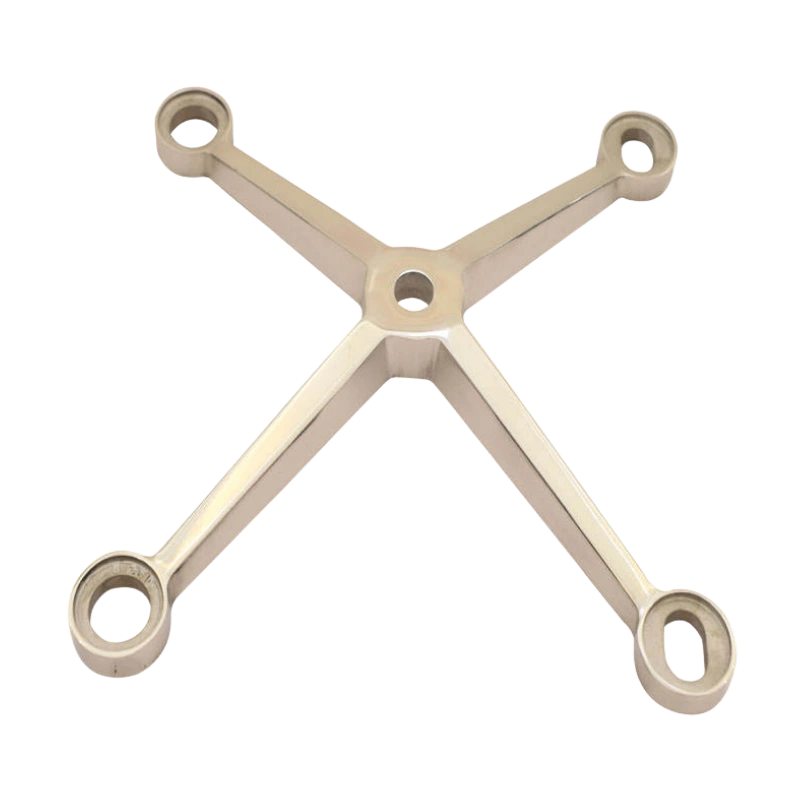
Material selection is one of the few die-casting decisions that changes almost everything else at once. It affects tool life, wall thickness capability, cycle time, part weight, corrosion behavior, plating options, machining effort, and whether the casting is being used for appearance, structure, wear, or thermal performance. That is why serious buyers do not start with the process alone. They start with the alloy family that best fits the part’s job. In North American die casting, the four dominant alloy groups are aluminum, magnesium, zinc, and zinc-aluminum, with copper alloys used more selectively for demanding wear, corrosion, and high-property applications.
Why alloy choice comes before almost everything else
A die casting process can be tuned. A mold can be optimized. Secondary machining can solve some dimensional problems. But the alloy still sets the envelope. If the part must be extremely light, magnesium moves into the discussion quickly. If the part must be economical, precise, and easy to plate, zinc usually deserves a serious look. If the part needs a strong balance of weight, corrosion resistance, moderate temperature capability, and broad market familiarity, aluminum is often the default. If the part needs unusually high hardness, wear resistance, or copper-alloy behavior, copper die casting becomes relevant, but usually as a niche choice rather than the standard answer.
This is also why generic material requests like “use die-cast alloy” are not useful in an RFQ. The right commercial discussion is about what the part must do و which alloy family supports that at the required annual volume. A part that is structurally modest but tolerance-sensitive may point to zinc. A large, thin-wall housing that still needs decent structural properties may point to aluminum. A high-value lightweight automotive component may justify magnesium. The best material is usually the one that lowers total delivered cost, not just the alloy with the lowest raw-metal price.
Aluminum die casting alloys: still the default for many industrial parts
Aluminum remains the most common structural die-casting material family in global production. The die-casting alloy references used across the industry describe aluminum as a lightweight structural metal with a density around 2.7 g/cc, and note that the majority of die castings produced worldwide are made from aluminum alloys. ASTM B85 covers aluminum-alloy die castings and specifically states that thirteen of the most commonly used die-casting compositions are included in the specification.
For buyers, aluminum’s main strength is balance. It offers a useful combination of low weight, corrosion resistance, good thermal and electrical conductivity, reasonable elevated-temperature capability, and familiarity across automotive, industrial, electronics, and general mechanical applications. This is why common alloys such as 380, 383, 384, and 390 remain so widely used. European Aluminium’s technical material notes another practical point that buyers often miss: in pressure die casting, iron is not simply treated as an unwanted impurity. A minimum iron content is often intentionally specified because it reduces the tendency of aluminum alloys to solder to the die surface. That means die-casting alloys are selected not only for part performance, but also for process behavior.
Aluminum becomes especially attractive when the part must be light, moderately strong, dimensionally stable, and reasonably heat tolerant. It is often the most practical answer for housings, covers, brackets, automotive components, thermal parts, and large or medium-sized castings where zinc would be too heavy and magnesium would be either too specialized or too expensive relative to the application. The tradeoff is that aluminum generally does not reach the ultra-fine castability and plating convenience of zinc, and it is not the lightest option available.
Zinc die casting alloys: precision, finish, and economics at scale
Zinc die casting alloys are often the most commercially efficient choice when the part is small to medium in size, needs very good dimensional precision, and benefits from surface finish or plating. ASTM B86 covers commercial zinc and zinc-aluminum alloy foundry and die castings and identifies the common alloy families used in industry, including Alloy 3, Alloy 5, Alloy 7, Alloy 2, and the ZA grades. The International Zinc Association positions zinc die-casting alloys as strong, durable, and cost-effective engineering materials and emphasizes their combination of strength, toughness, rigidity, bearing performance, and economical castability.
For buyers, zinc’s main advantage is not just low melting temperature. It is the total package: fine detail, strong castability, dimensional repeatability, long die life, excellent plating response, and a material system that often allows features to be cast very close to finished form. This makes zinc especially attractive for hardware, connector bodies, locks, housings, decorative-functional parts, appliance components, and small mechanical assemblies where the economics of high-volume precision matter more than mass reduction.
The limitation is weight. Zinc is much denser than aluminum and magnesium. That makes it less attractive for larger automotive and industrial structural parts where mass matters. Zinc also tends to lose its commercial advantage when the part gets physically large enough that material weight and shot size begin to dominate cost. In those cases, buyers often move toward aluminum unless the design is so precision-driven that zinc’s casting advantages still outweigh the weight penalty.
Magnesium die casting alloys: the lightweight structural option
Magnesium is the lightest commonly used structural die-casting metal. NADCA’s alloy references and the die-casting design resources describe magnesium with a density around 1.74 g/cc and position it as the lightest of the major die-casting alloy families. ASTM B94 covers magnesium-alloy die castings, confirming that magnesium has its own established material specification route in production die casting.
That lightweight advantage is the core reason buyers consider magnesium. If the design is weight-sensitive and still needs a metal component with useful stiffness and strength, magnesium can be an excellent answer. It is particularly relevant in transportation, electronics housings, portable equipment, and some automotive applications where every gram matters. NADCA’s magnesium-alloy guidance also notes that different magnesium alloy families are selected according to the real service requirement: some alloys are specified where creep resistance is critical, while others are used when impact resistance or ductility are more important. That is a useful reminder that “magnesium” is not one material choice any more than “aluminum” is.
The tradeoffs are equally important. Magnesium is not automatically the right answer just because it is light. Buyers need to think about corrosion management, finishing compatibility, cost, supply familiarity, and whether the part truly benefits from the mass reduction. In many ordinary industrial housings, aluminum still wins because it gives a better balance of supply stability, cost, and general-purpose performance. Magnesium tends to make sense when lightweighting is part of the commercial justification, not just a technical curiosity.
Copper die casting alloys: niche, expensive, but valuable when justified
Copper-alloy die castings sit in a very different category from aluminum, zinc, and magnesium. ASTM B176 establishes the requirements for copper-alloy die castings and lists the covered UNS alloy families. In practical sourcing work, copper die castings are chosen far less often, but they remain important when the buyer needs the specific combination of hardness, wear resistance, corrosion resistance, or copper-alloy functionality that the lighter alloy groups do not deliver.
The best way to think about copper die casting is as a specialty route. It is not usually the first recommendation for mainstream housings or general consumer parts. It becomes relevant when the part is in a wear-heavy, corrosion-sensitive, or thermally demanding environment and the cost of the alloy is justified by the application. Copper Development Association property references show how copper casting alloys remain important in bearings, machine parts, and friction/wear applications, which is the right mental model for buyers evaluating this family.
The tradeoff is straightforward: copper alloys are usually more expensive, heavier, and less likely to be the best production answer unless their specific property advantages are needed. Buyers should only move into copper die casting when the application genuinely demands what copper alloys do well.
ZA alloys: the middle ground many buyers overlook
ZA alloys deserve separate attention because buyers often treat them as “just zinc.” ASTM B86 includes ZA-8, ZA-12, and ZA-27 alongside the standard zinc die-casting alloys, and the die-casting design guidance treats zinc-aluminum as its own useful family. In practical terms, ZA alloys occupy a middle space where the buyer wants more strength or different mechanical behavior than standard zinc alloys provide, but still wants to stay in a zinc-based die-casting system.
This is useful when the part is more load-bearing than decorative hardware but still benefits from zinc-family casting behavior. It is not the right answer for every project, but it is often a good reminder that the material decision does not have to be only “aluminum versus zinc.” There is a gradient inside the zinc family as well.
Why ferrous metals are not the normal die-casting answer
From a buyer’s point of view, it is usually enough to know that conventional die casting is fundamentally a non-ferrous process family. The dominant alloy groups in commercial standards and industry design guidance are aluminum, zinc, magnesium, copper, and ZA alloys. That is not accidental. These materials fit the thermal and tooling realities of die casting. Buyers looking for steel or iron behavior are usually better served by other routes such as forging, machining, investment casting, or sand/permanent-mold casting rather than trying to force the part into a die-casting process it does not commercially suit.
The material decision should match the part’s real job
The easiest way to choose among die-casting materials is to think in four buyer questions.
If the part needs a broad balance of strength, moderate weight, corrosion resistance, and general structural use, aluminum is usually the strongest starting point. If the part must be highly precise, heavily plated, cost-efficient at volume, and not overly large, zinc often wins. If the part must be as light as possible while staying metallic and structurally useful, magnesium becomes very relevant. If the part has a specialized wear, corrosion, or copper-alloy requirement, copper die casting becomes a serious but niche option.
| عائلة المواد | Main buyer reason to choose it | Main tradeoff |
| الألومنيوم | Best overall balance for structural, medium-to-large, lightweight metal parts | Not as dimensionally fine or plating-friendly as zinc |
| الزنك | Excellent precision, finish, plating, and economics at high volume | Heavy for larger parts |
| المغنيسيوم | Lowest weight among common structural die-casting metals | Usually selected only when lightweighting is truly valuable |
| سبائك النحاس | High hardness, wear/corrosion value, specialized performance | High cost and niche application fit |
| ZA alloys | Zinc-family route with higher-strength options | Less universally chosen than standard zinc or aluminum |
This table is deliberately practical rather than academic. It is meant to support process selection discussions, not replace alloy datasheets.
What a good RFQ should say about die-casting materials
The best RFQs do not just name an alloy. They explain why that alloy is being considered. If the buyer wants low mass, say so. If plating quality matters, say so. If the part is cosmetic but must still meet impact requirements, say so. If the design is heat-sensitive, electrically conductive, or wear-driven, say so. Once the part’s job is clear, the supplier can often recommend a better alloy family or a better variant inside the family than the buyer originally assumed.
This is also where standards help. If the project is aluminum, ASTM B85 is the right material-specification conversation. If it is zinc or ZA, ASTM B86 becomes relevant. If it is magnesium, ASTM B94 applies. If it is copper, ASTM B176 is the right reference point. Those standards do not replace engineering judgment, but they anchor the material discussion in recognized chemistry and production practice.
Where HDC fits in the decision
For buyers, the most useful supplier is not the one that simply says “we can die cast.” It is the one that can match the alloy family to the part’s function, then support tooling, casting, and downstream machining accordingly. HDC’s broader خدمة صب المعادن is useful for that reason, and its dedicated خدمة الصب بالقالب is even more directly relevant because it positions HDC around aluminum, zinc, and magnesium die casting with one-stop support from mold design through finishing. For aluminum-focused projects, HDC’s خدمة صب الألومنيوم is the most natural starting point because it ties process choice directly to the part’s geometry, volume, and finishing needs.
خاتمة
Die-casting material selection is not a detail to settle after the tooling quote. It is one of the first commercial decisions that should be made correctly. Aluminum is usually the best all-around answer for structural lightweight parts, zinc dominates where precision and finish matter most, magnesium is the lightweight specialist, and copper alloys remain a strong niche choice when their properties are worth the cost. Buyers make better decisions when they define what the part must do first and then let the alloy family follow from that requirement.