Aperçu
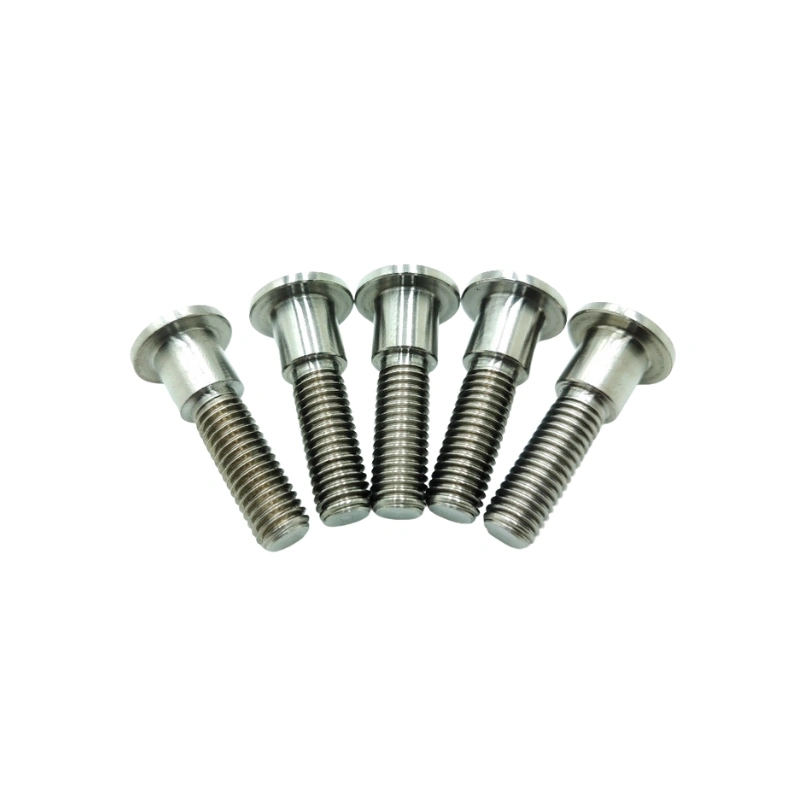
HDC Manufacturing se positionne comme un fournisseur expert de composants métalliques personnalisés, fort d'une maîtrise de plus de dix ans dans la conception de solutions métalliques sur mesure. Dotée d'installations de production sophistiquées, comprenant des centres d'usinage 4 et 5 axes ainsi que des outils de contrôle de pointe comme la machine à mesurer tridimensionnelle, HDC Manufacturing offre une gamme diversifiée d'options d'usinage, allant de Usinage CNC, fonderie, forger, et découpe au laser, à emboutissage de métal.
Découvrez les subtilités de l'usinage de l'aluminium 6060 sur notre page dédiée, où nous détaillons les nombreux paramètres et applications de ce matériau extrêmement polyvalent. Reconnu pour son excellente soudabilité, sa résistance à la corrosion et sa finition impeccable, l'aluminium 6060 s'impose comme le matériau de choix dans les industries exigeant précision et fiabilité. HDC Manufacturing excelle dans l'usinage de l'aluminium 6060, alliant technologies de pointe et vaste expérience pour des résultats exceptionnels. Notre engagement indéfectible envers la qualité et la précision fait de HDC Manufacturing le partenaire idéal pour tous vos besoins en composants métalliques sur mesure.
Découvrez les atouts de HDC Manufacturing : une convergence harmonieuse entre innovation et savoir-faire. Notre expertise dans l’usinage de l’aluminium 6060 garantit des solutions sur mesure, parfaitement adaptées à vos spécifications et aux exigences de votre secteur.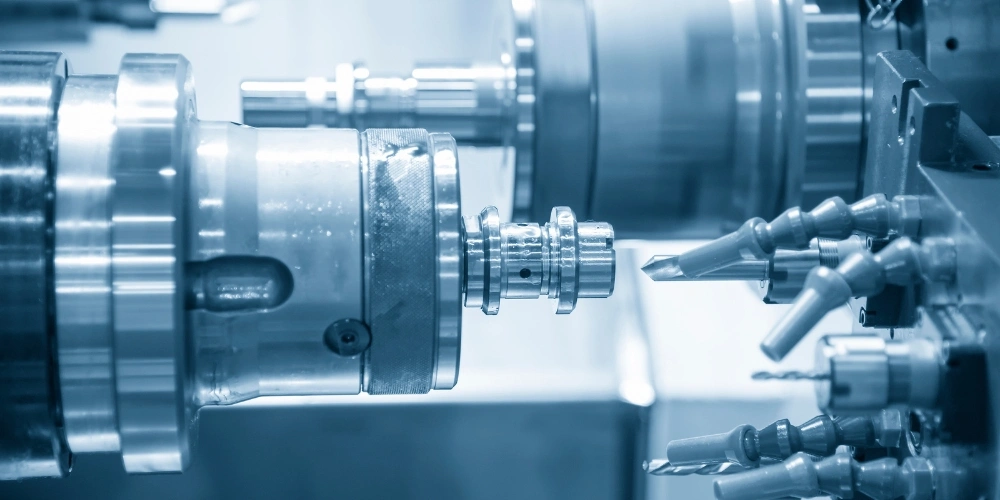
Quelles sont les séries d’alliages d’aluminium ?
Les alliages d'aluminium sont classés en plusieurs séries, chacune présentant des propriétés et des applications distinctes : Les alliages d'aluminium sont classés en plusieurs séries, chacune présentant des propriétés et des applications distinctes :
- Série 1xxx : Ces alliages, composés presque exclusivement d'aluminium, ne supportent pas les traitements thermiques. Ils sont généralement utilisés pour leurs propriétés anticorrosion et de conductivité électrique.
- Série 2xxx : Ces alliages sont réputés pour leur résistance supérieure, le cuivre étant leur principal élément d'alliage. Ils sont couramment utilisés dans l'industrie aéronautique.
- Série 3xxx : Cet alliage, principalement composé de manganèse, ne se prête pas au traitement thermique. Sa bonne formabilité et sa résistance à la corrosion en sont les principales caractéristiques.
- Série 4xxx : Ces alliages de type qui contiennent du silicium comme élément d'alliage principal sont généralement utilisés comme métal d'apport pour métal soudé.
- Série 5xxx : Le magnésium est le principal élément d'alliage de cette gamme. Ces alliages offrent une excellente protection contre la corrosion, notamment en eau salée.
- Série 6xxx : Ces alliages sont principalement composés de magnésium et de silicium. Ils sont traitables thermiquement et fréquemment utilisés dans les applications architecturales et structurelles, notamment pour les bâtiments et les ponts, grâce à leur bonne formabilité et soudabilité.
- Série 7xxx : Considérés comme les plus résistants, ces alliages ont le zinc comme principal élément d'alliage. Ils sont largement utilisés dans l'aéronautique et les grandes structures.
- Série 8xxx : Ces alliages sont généralement utilisés à des fins spécifiques et leur ingrédient principal est souvent le lithium.
Toutes les séries proposent un large spectre d'alliages conçus de manière impressionnante pour divers paramètres de performance dans une variété d'applications industrielles.
Les alliages d'aluminium sont classés en séries selon quels critères ?
Les alliages d'aluminium sont classés en séries selon les éléments présents dans leur composition chimique, notamment l'aluminium. Les critères de classification sont les suivants :
- Éléments d'alliage : Les composants intermédiaires de l’alliage, à savoir le cuivre, le magnésium, le silicium, le zinc, le manganèse et le lithium, dictent les attributs et les qualités de l’alliage.
- Propriétés et applications : Chaque type d'alliage possède des paramètres spécifiques qui le rendent adapté à des usages particuliers. Par exemple, il existe des alliages en magnésium (série 5xxx) offrant une excellente résistance à la corrosion et des alliages en cuivre (série 2xxx) offrant une haute résistance mécanique.
- Traitement thermique : Certaines séries, telles que les chaînes 6xxx et 7xxx, peuvent subir un traitement thermique et sont donc capables d'obtenir une résistance supplémentaire et d'autres caractéristiques mécaniques grâce à divers processus de traitement thermique.
- Formabilité et soudabilité : La capacité à former et à souder l’alliage est affectée par l’ajout de certains éléments d’alliage. C’est l’une des propriétés les plus importantes liées à la fabrication.
Grâce à la catégorisation de l'alliage d'aluminium en différentes séries basées sur ces critères, le travail des ingénieurs, concepteurs et fabricants est facilité en leur permettant de sélectionner l'alliage le plus adapté à leurs applications et exigences de performances particulières.
Combien de types d’alliages d’aluminium existe-t-il aujourd’hui ?
De nos jours, une grande variété d'alliages d'aluminium est disponible, classés en séries selon leurs principaux éléments d'alliage. Ces séries, allant de 1xxx à 8xxx, offrent chacune des propriétés uniques, adaptées à des applications spécifiques. Toutefois, il est difficile de fournir un nombre exact, la demande en alliages d'aluminium étant en constante augmentation du fait des développements continus. Ce matériau est aujourd'hui utilisé dans des secteurs aussi divers que l'aérospatiale, l'automobile, la construction, l'emballage et l'électronique.
L’époque et le lieu d’invention de l’aluminium 6060
L'alliage d'aluminium 6061 a été inventé en 1935 par Alcoa (Aluminum Company of America) aux États-Unis. Il a été développé comme un alliage traitable thermiquement doté d’excellentes propriétés mécaniques, ce qui le rend adapté à un large éventail d’applications dans diverses industries.
Quels sont les avantages de l’aluminium 6060 ?
L'alliage d'aluminium 6061 offre une résistance mécanique, une usinabilité, une résistance à la corrosion, une soudabilité et une aptitude au traitement thermique exceptionnelles, autant de qualités qui lui permettent d'être utilisé dans de nombreux domaines. Développé initialement par Alcoa en 1935, il présente un rapport résistance/poids remarquable, ce qui le rend idéal pour les composants structuraux des secteurs aéronautique, automobile et naval. Sa grande facilité d'usinage permet de réaliser des pièces complexes avec des tolérances précises, et il offre une excellente résistance à la corrosion en extérieur. Cette caractéristique facilite également le soudage et le traitement thermique, ce qui accroît la flexibilité des procédés de fabrication et élargit ainsi son champ d'application à divers secteurs, tant dans les biens de consommation que dans l'industrie.
Le prix de l'aluminium 6060
Le prix de l'alliage d'aluminium 6060 peut fluctuer en fonction de facteurs tels que la demande du marché, la disponibilité des matières premières, les coûts de production et les événements géopolitiques qui affectent le marché mondial de l'aluminium. En mars 2022, le prix de l'alliage d'aluminium 6060 oscillait entre $2 200 et $2 500 roupies par tonne. Toutefois, les prix étant sujets à des variations, il est important d'analyser les tendances avant de fixer un prix de marché. Le prix peut également dépendre de la forme de l'alliage (extrusions, tôles ou plaques), de la localisation du fournisseur et de sa politique tarifaire.
Composition chimique de l'aluminium 6060
L'aluminium 6060, avec une bonne résistance à la corrosion, est largement utilisé dans l'industrie de la décoration, comme les portes et fenêtres, les structures métalliques, la décoration intérieure, les cadres métalliques, les vis et les tuyaux, ont une excellente réponse à l'anodisation.
| Élément chimique | % Présent |
| Manganèse (Mn) | 0,0 – 0,10 |
| Fer (Fe) | 0,10 – 0,30 |
| Magnésium (Mg) | 0,35 – 0,50 |
| Silicium (Si) | 0,30 – 0,60 |
| Cuivre (Cu) | 0,0 – 0,10 |
| Zinc (Zn) | 0,0 – 0,15 |
| Titane (Ti) | 0,0 – 0,10 |
| Chrome (Cr) | 0,0 – 0,05 |
| Autre (chacun) | 0,0 – 0,05 |
| Autres (Total) | 0,0 – 0,15 |
| Aluminium (Al) | 97,9 – 99,3 |
L'influence de diverses compositions élémentaires sur les propriétés de l'aluminium 6060

Les propriétés de l'alliage d'aluminium 6060 sont dues à sa composition en plusieurs éléments. Le magnésium renforce l'alliage par solution solide, tandis que le silicium améliore la coulabilité et réduit les problèmes de retrait. Le cuivre contribue à la résistance et à la corrosion, mais une teneur élevée peut nuire à sa ductilité. Le manganèse affine la structure granulaire et renforce la solution solide, améliorant ainsi les propriétés mécaniques et la résistance à la corrosion. Le chrome contribue à la résistance à la corrosion et à la dureté du métal. Un excès de zinc diminue la ductilité, mais améliore la résistance et l'usinabilité. Le titane est utilisé comme affineur de grain pour améliorer les propriétés mécaniques et limiter les fissures thermiques lors de la coulée. La maîtrise de la composition est essentielle pour déterminer les caractéristiques de performance spécifiques de l'alliage d'aluminium 6060.
Propriétés mécaniques de l'aluminium 6060
Densité [kg/m³] | Intervalle de fusion [°C] | Électrique Conductivité [MS/m] | Thermique Conductivité [W/mK] | Coefficient de dilatation thermique 10-6/K | Module de Élasticité [GPa] |
| 2700 | 585-650 | 28-34 | 200-220 | 23.4 | ~70 |
Propriétés physiques de l'aluminium 6060

| Désignation et état de l'alliage | 6060-O | 6060-T1 | 6060-T4 | 6060-T5 | 6060-T6 |
| Densité, g/cm³ | 2.7 | 2,7 | 2,7 | 2,7 | 2,7 |
| Conductivité électrique (% IACS) | – | 49,5 | 48 | 54 | 54 |
| Résistance électrique spécifique (m/Wmm2) | – | 35 | 36 | 32 | 32 |
| Conductivité thermique, W/m·K | – | 195 | 187 | 209 | 209 |
| Capacité thermique spécifique (kJ/kg·K) | 898 | 898 | 898 | 898 | 898 |
| Température de liquide (°C) | 655 | 655 | 655 | 655 | 655 |
| Température du solide (°C) | 610 | 610 | 610 | 610 | 610 |
| Coefficient linéaire de dilatation thermique (CTE), 10-6/K | 23,4 | 23,4 | 23,4 | 23,4 | 23,4 |
| Nombre de Poisson, ν | 0,33 | 0,33 | 0,33 | 0,33 | 0,33 |
Matériaux équivalents à l'aluminium 6060

| européen | Standard | EN 573-3 |
| Numérique (symboles chimiques) | FR AW-6060 (AlMgSi) | |
| Allemand | Standard | DIN 1725-1 ; DIN EN 573-3 |
| Désignation (numéro de matériel) | AlMgSi0,5 (3,3206); FR AW-6060 (AlMgSi) | |
| NOUS | Standard | ASTM B221 |
| AA (UNS) | 6060 (UNS A96060) | |
| australien | Standard | AS 2848.1, AS/NZS 1734, AS/NZS 1865, AS/NZS 1866 |
| Aluminium | 6060 | |
| ISO | Standard | ISO 209 |
| Aluminium | AW-6060 | |
| Japonais | Standard | JIS H4000 ; JIS H4040 |
| Aluminium | 6060 | |
| Chinois | Standard | GB/T 3190 ; |
| Aluminium | 6060 |
Les principaux domaines d'application de l'aluminium 6060
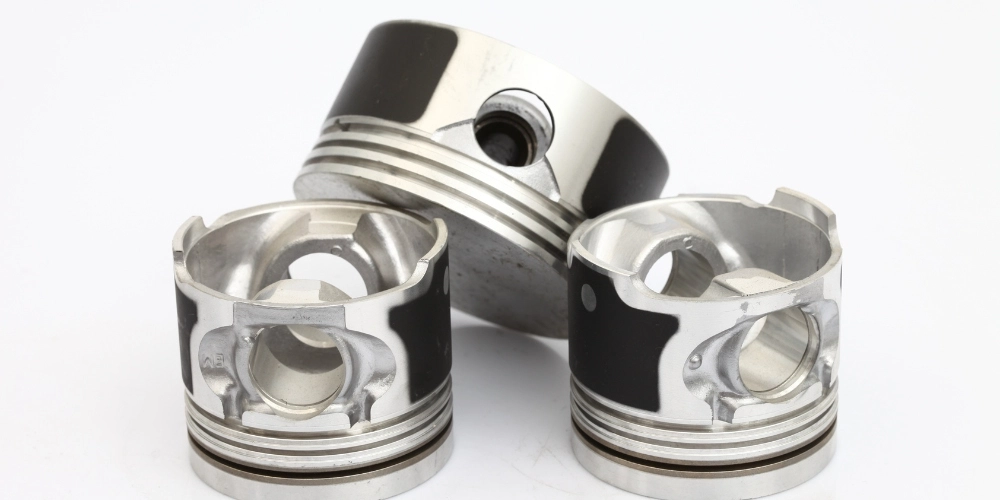
L'alliage d'aluminium 6060 est largement utilisé dans de nombreux secteurs industriels grâce à sa grande polyvalence. Il sert à la fabrication de châssis de fenêtres et d'autres éléments de construction en raison de sa robustesse et de sa résistance à la corrosion. Dans l'automobile, il allège les panneaux de carrosserie et les pièces du châssis, garantissant ainsi sécurité sans compromettre le rendement énergétique. Sa conductivité et sa faible vitesse de corrosion expliquent son utilisation fréquente en électronique. De plus, son esthétique et sa durabilité en font un matériau très prisé pour les biens de consommation tels que le mobilier et l'électroménager. Ce métal trouve également une application importante dans l'industrie, où sa résistance, son usinabilité et sa résistance à la corrosion sont mises à profit, ce qui explique son utilisation répandue dans l'automobile, l'aérospatiale, le secteur ferroviaire et d'autres secteurs manufacturiers.