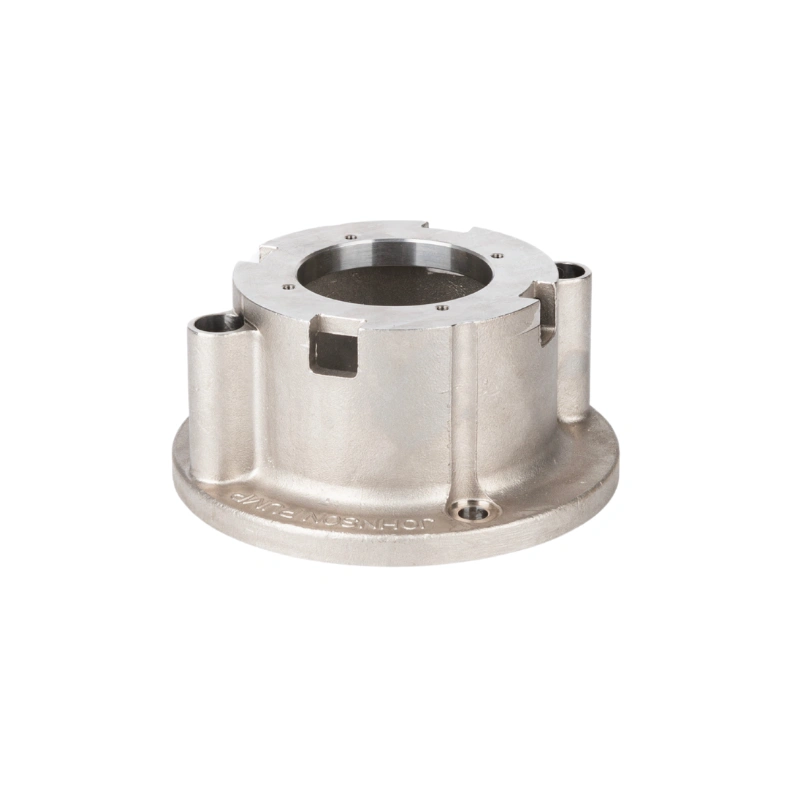
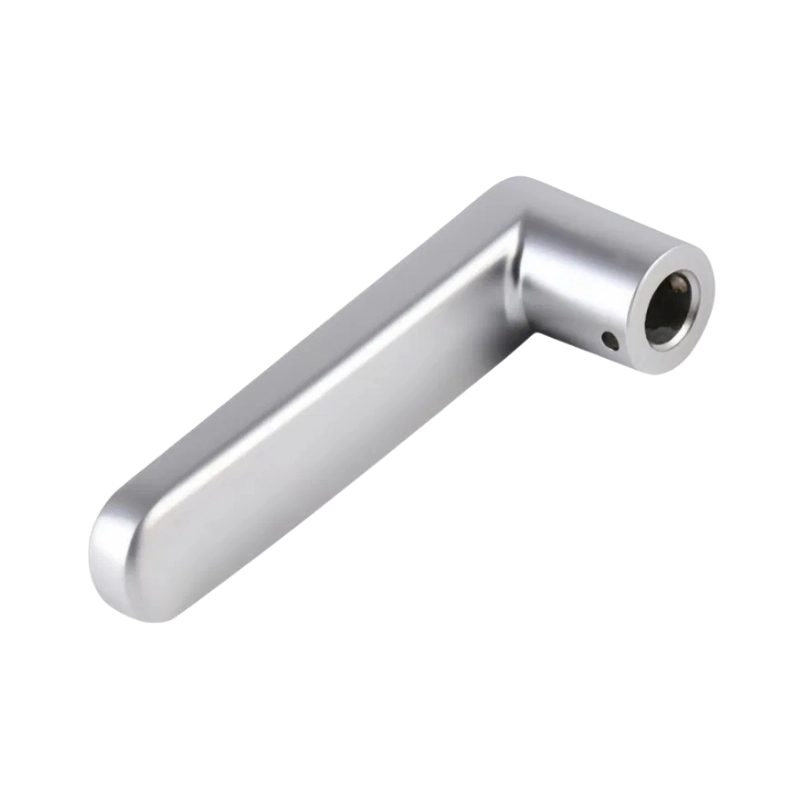
It is not only a matter of selecting a powerful material when choosing the right metal for your project in 2026. It is regarding the weight cost of handling heat or rust of the metal. The possibilities of investment casting or the lost wax process, have never been as numerous as they are now that new technologies such as AI and 3D printing have transformed the game.
Be it a spaceship or medical equipment or a super-fast automobile, this guide can guide you to use the right investment casting material in fulfilling your 2026 ambitions.
Investment Casting Materials: Quick Comparison Table
This fast comparison table assists you in identifying the moulage de précision material to use based on the project in terms of strength, corrosion resistance, heat resistance, weight and total cost.
| type de materiau | Niveau de force | Résistance à la corrosion | Résistance à la chaleur | Lester | Cost Level | Best Applications |
| Acier inoxydable | Haute | Haute | Moyen-élevé | Moyen | Moyen | Medical, Marine, Food equipment |
| Acier Carbone | Haute | Low Medium | Moyen | Moyen | Faible | Structural parts, Machinery |
| Acier allié | Très élevé | Moyen | Haute | Moyen | Moyen | Heavy equipment, Automotive |
| Alliages d'aluminium | Moyen | Haute | Moyen | Poids léger | Moyen | Automotive and Aerospace |
| Alliages à base de nickel | Extremely High, | Très élevé | Extreme | Moyen | Haute | Turbines, Aerospace |
| Alliages de titane | Très élevé | Très élevé | Haute | Very Light | Haute | Aerospace, Medical implants. |
| Bronze and Brass | Moyen | Haute | Moyen | Moyen | Moyen | Marine, Decorative and Hardware |
Introduction: Why Choosing the Right Investment Casting Material Matters
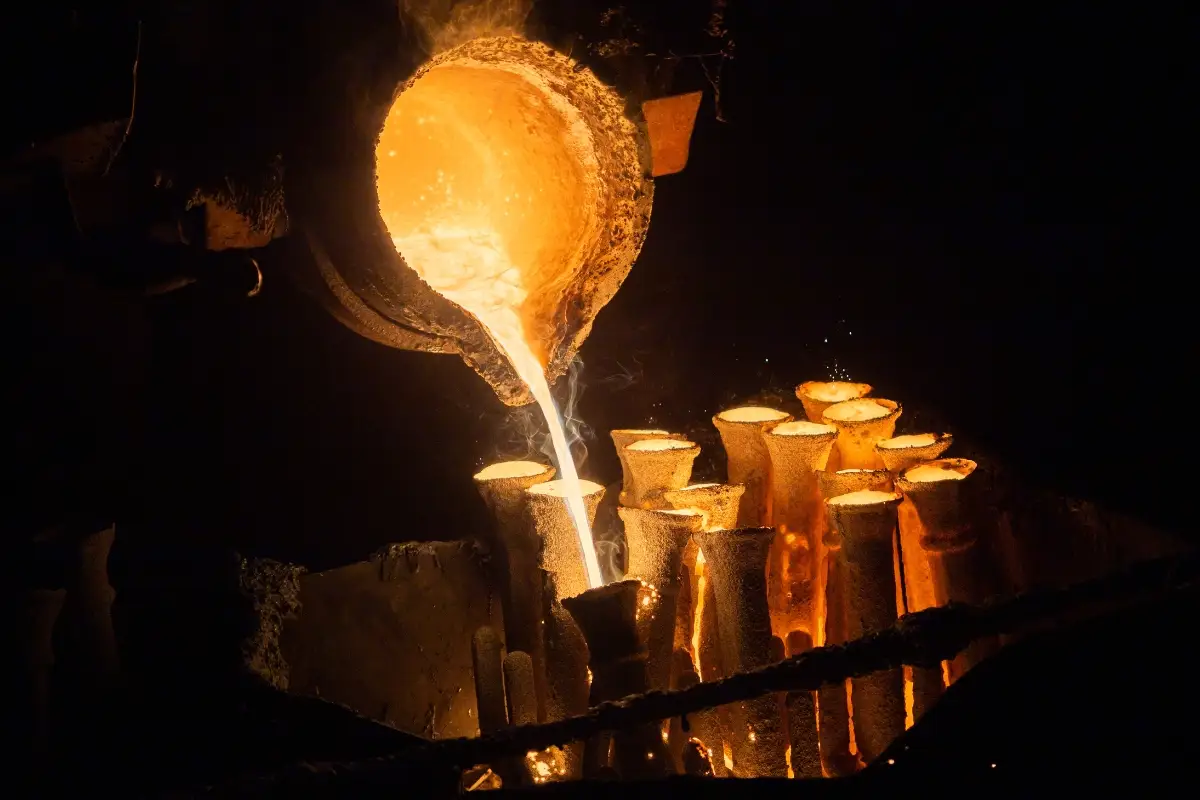
Moulage de précision, or the so-called lost wax, is a manufacturing method that is thousands of years old. Nevertheless, in 2026 it is more exact and developed than ever. It is done by making a wax shape of your part, pouring it into a ceramic shell, and then pouring molten metal into the mold.
Why Material Selection Impacts Everything
You cannot just go and pick a metal in 2026 because it is cheap. The type of material used influences:
- Coût: There are metals that are more difficult to melt or that need special molds.
- Solidité et durabilité : Will it break when the pressure is applied or will it take decades?
- Performance: Does the drone have to be lightweight or the construction tool heavy?
Growing Demand Across Key Sectors
We are experiencing a huge increase in the demand for precision casting in the aerospace, automotive (particularly electric automobiles), medical, and energy industries. These sectors are stretching the boundaries of metal.
Lightweight and Green
Lightweight alloys and sustainability are the largest trends this year. Companies are seeking methods to minimize carbon footprints and as such, recyclable alloys and energy-efficient alloy casting methods have become the priority.
What is Investment Casting?
Investment casting (also called moulage à la cire perdue) is a precision metal manufacturing process used to produce complex parts with tight tolerances and excellent surface finish.
The process works by creating a wax pattern, coating it with a ceramic shell, melting out the wax, and pouring molten metal into the cavity.
Once the metal solidifies, the ceramic shell is broken to reveal the finished casting.
Investment casting is widely used when parts require:
- Complex geometry
- Internal passages
- Tolérances dimensionnelles serrées
- Good surface finish
- Difficult-to-machine materials
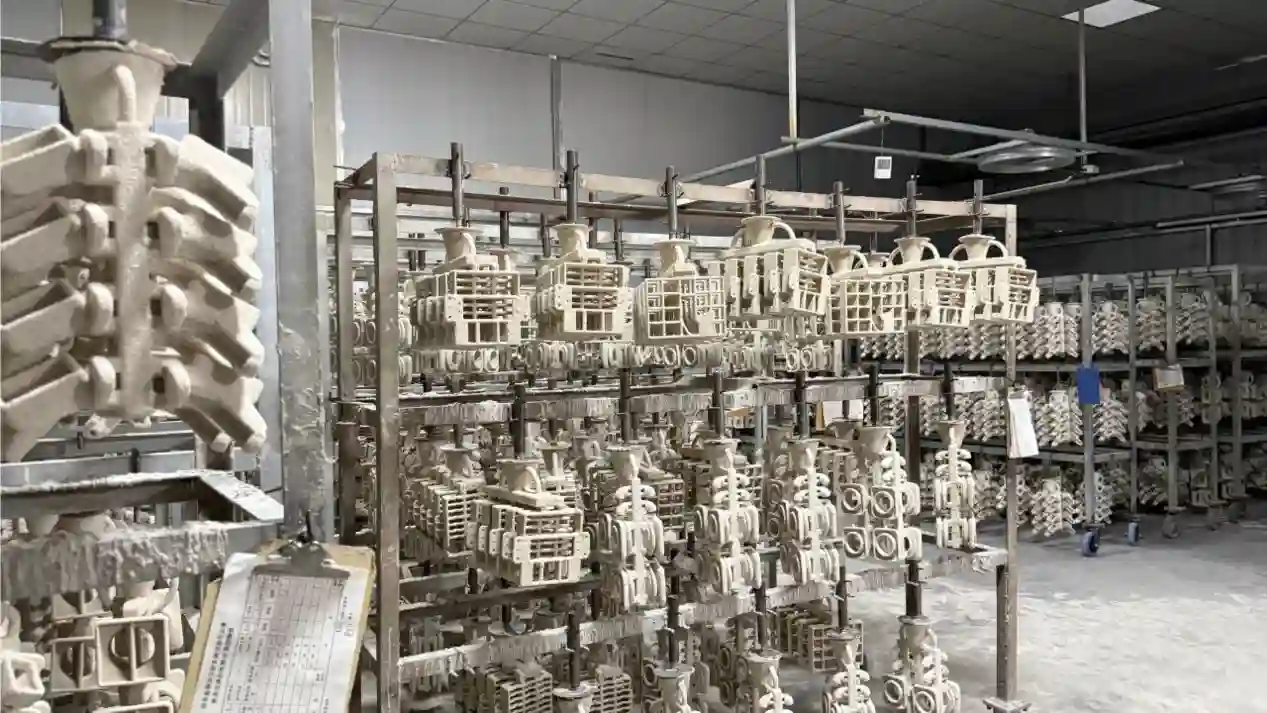 This process allows tight tolerances (very accurate measurements) and complicated geometrics, which other methods simply cannot afford.
Key Factors to Consider When Choosing Investment Casting Materials
The first thing to do before choosing a metal is to pose some questions regarding the environment of your project.
Mechanical Strength Requirements
- Tensile Strength: How far are you able to pull the metal till it breaks?
- Limite d'élasticité : What temperature does the metal begin to form permanently?
- Impact and Fatigue Resistance: Does it respond to sharp blows or millions of minuscule vibrations of time?
Corrosion and Heat Resistance
When you are going to the ocean with your part, it must be able to withstand salt (corrosion). When it goes into an engine of a car, it must be able to take high temperatures without melting or warping (oxidation resistance).
Weight and Density Considerations
Every gram is critical in the aerospace and drone industry. The gold standard of 2026 is the lightweight alloys, which possess a high strength-to-weight ratio.
Cost and Production volume
There is fluctuation in the cost of raw materials. Carbon steel is also cost effective but some exotic metals, such as titanium, can be costly. You must also consider the machinability. How much work is there after the casting of the part?
Sustainability and Environmental Impact
In the year 2026, it is a business requirement to be green. A large number of contemporary projects are now giving more focus to recyclable alloys and also processes that tend to consume less energy.
Best Investment Casting Materials for Your Project
The following is the composition of the best metals utilized in the industry today.
Acier inoxydable
Stainless steel is the multipurpose material of 2026. It is so popular, as it does not rust easily and is very tough.
- 304 stainless Steel: Can be used in general and food processing.
- 316 stainless Steel: The “Marine Grade.” These are perfect in saltwater and chemicals.
- Acier inoxydable 17-4 PH : This is a powerful alloy that is commonly applied in the medical and aerospace industries.
 Acier Carbone
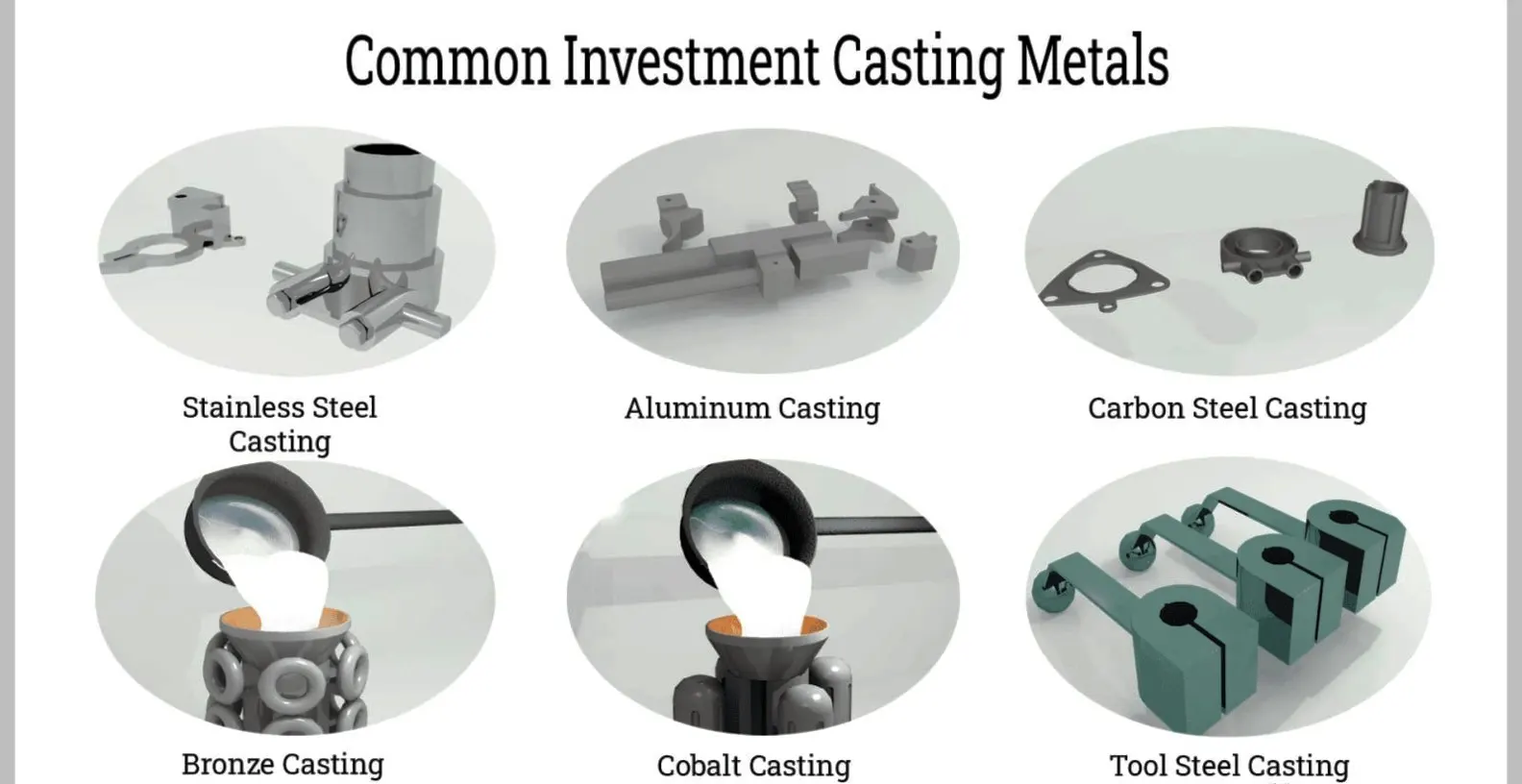
Carbon steel is the friend in need of high strength and is economical. It is applied extensively in building and construction as well as in heavy machinery. It can also be heat-treated so as to render it even more difficult.
Acier allié
Alloy steel is similar to carbon steel but it will contain boosters such as chromium or nickel. This provides it with superior wear resistance. It works well with car components that are highly abused.
Alliages d'aluminium
The master of lightweight casting is aluminum. It is machinable, and it conducts heat easily.
- A356: Very common in all structural parts.
- 6061: It is a strong and easy-to-work material.
Nickel-Based Alloys (Superalloys)
You want nickel when it is hot, really hot. Metals such as inconel are applied in jet engines and power turbines since they do not lose their strength at high temperatures.
Cobalt Alloys
In a way, these are more difficult than nickel. They are hard to wear and to gall (metals rubbing against each other and hearing). These are in medical implants such as artificial hips.
Alliages de titane
The luxurious one is titanium. It is harder than steel but far lighter. It is also biocompatible; that is, it will not be rejected by the human body and is thus suitable for medical equipment.
Bronze and Brass Alloys
These are mostly to be used in decorative objects or marine hardware. They are stylish and very resistant to water corrosion.
Other Materials Used in the Investment Casting Process
In addition to the fundamentals, there has been an increase in niche materials in 2026 to be used in extreme performance.
Acier inoxydable duplex
These are two frames in form. Their ability to blend the two different types of steel gives rise to a metal that is two times stronger than the normal stainless steel. It is required in deep-sea oil and gas pipes.
Alliages de magnésium
These are the lightest structural metals, which are even lighter than aluminum. They are also applied in the high-performance racing car and handled power tools, where even a single pound of weight counts.
Aciers à outils
These are special alloys that are utilized in the production of the dies, molds, and cutting tools that make up the remainder of the world. They still remain sharp and hard when hot.
Advanced Superalloys
The latest inventions are 2026 advanced superalloys, which are specially aimed at the next generation of nuclear and solar power plants, where parts are to last 30 or more years without maintenance.
Ceramic and Mold Materials in Investment Casting
The metal is not the only material that counts. The container that shapes that metal is the ceramic shell.
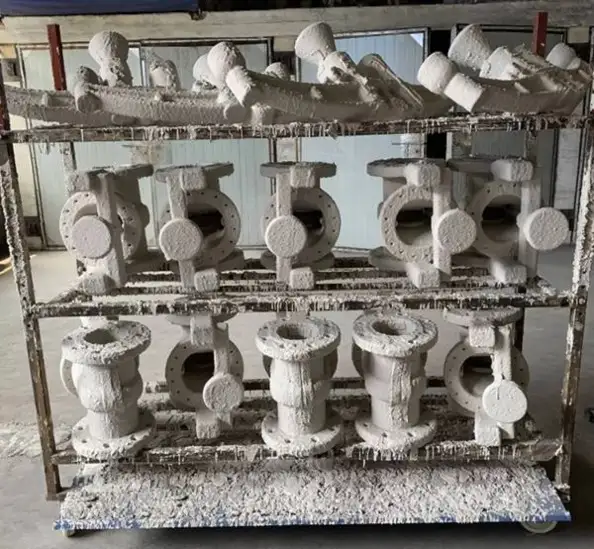
Silica and Zircon
The high grade of zircon coating is used since it does not break when it is subjected to the high temperature of molten steel.
Stabilité thermique
These types of molds do not shrink or expand when heated and give your part the ideal size to within the millimeter.
Permeability and Degassing
The contemporary molds are breathable. They allow the air and gases to escape through the ceramic walls so that it does not result in your metal having small bubbles.
Mechanical Strength vs. Knockout
This is a strong mold that can almost retain heavy liquid metal but can easily break away when the part is cooled down.
Industry-Specific Material Recommendations for 2026
| Industrie | Why These Materials? | Recommended Metals |
| Aérospatial | Focus on weight and heat | Nickel Superalloys, Aluminum and Titanium. |
| Automobile | Focus on time and large-scale production. | Aluminum Alloys, Alloy Steel and magnesium, |
| Médical | Pay attention to health and well-being. | 316 Stainless steel, Cobalt Chrome, Titanium |
| Energy/Oil | Dwelling on pressure and chemicals. | Inconel, Duplex Stainless steel |
| Marin | Narrow down to saltwater resistance. | Stainless, Bronze, Brass |
Comment Select the Best Investment Casting Material for Your Material
To make sure that you do not spend time or money in vain, follow these steps:
- Define the Load: Does the part carry weight or does it not? This is what allows analyzing whether you require high-tensile steel or light aluminum.
- Check the Heat: Will it come from fire or friction? Above 500°C requires a superalloy.
- Environment: Will it be external? In case of rain or salt, then you have to select a metal that is not corroded, such as 316 stainless.
- Weight Budget: When your product is fast-moving or flying, you need to choose Titanium or Magnesium.
- Financial Budget: There is high-performance metallurgy such as Titanium that is 5 to 10 times more costly than steel. Ensure it is a worthwhile performance.
- Talk to Experts: Casting engineers are frequently aware of so-called shortcut alloys that will save you money as they do the same work.
Common Mistakes When Choosing Investment Casting Materials
- Picking by Price Only: It may only cost you less to buy a boat part out of chep Carbon steel today but when it rusts out in six months, you will be spending twice as much to get it repaired.
- Over-Specifying: We find people putting on Aerospace grade Titanium on simple inside brackets. Stainless steel is generally sufficient unless it requires being ultra-light.
- Ignoring Machining: There are metals that are so hard that they are extremely stubborn when drilled or cut later, such as Cobalt. Always consider ways of completing the part.
Emerging Investment Casting Trends in 2026
- Hybrid Casting: 3D printers have been used to print wax patterns in hours where it took weeks before. This reduces prototyping to a large extent.
- AI-Driven Selection: We apply AI to computer simulation of the flowing of liquid metal into the mold. This removes air bubbles and low spots ever prior to pouring the metal.
- Durabilité: 2026 is the year of green casting. We are reusing more scrap recycled metals and renewable energy to drive our furnaces and reduce carbon footprints on each part.
Final Thoughts: Choose HDC Manufacturing For Your Best Investment Casting Material
The products you use today will be the things that will make your products perform brilliantly after several years. It is the opportunity to make an informed choice on whether to use an extreme heat resistance nickel superalloy or the cost-effective strength of carbon steel that is the first step toward a successful project.
À Fabrication HDC, we do not only describe ourselves as manufacturers but also as your practical partners. Our modern plant and our strong understanding of the trends of our material in 2026 will help you to identify the ideal balance of price and performance.
Would you not like us to look over your design and advise you as to the most suitable material to use in your particular application? Contact us now and we will create something amazing!
FAQs About Investment Casting Material
1. What is the strongest investment casting material?
Titanium alloys are best to use in case of a pure strength-to-weight ratio. To be very tough and resistant to heat, Nickel based superalloys such as Inconel are regarded as the strongest ones in adverse conditions.
2. Which casting alloy is best for high temperatures?
The best are nickel-based and cobalt-based alloys. They are made in a way that ensures they do not melt or lose their shape and strength in conditions such as the jet engines, where the temperature can reach up to 1000°C.
3. Is aluminum good for precision casting?
Yes, Aluminum is very fine to be cast precisely; this is because it possesses high fluidity, i.e., it is highly capable of flowing into small and delicate shapes of the mold with minimal difficulty. It is also light and does not rust.
4. What is the most cost-effective casting metal?
Carbon steel is normally the most economical. It is very strong and easy to locate, only that it needs a coating or paint to stop rust.
5. How do i choose the right alloy for aerospace projects?
Aerospace projects are typically centered on Titanium (in order to save on weight) and stainless steel 17-4 PH (cost-strength balance). This decision will be based on whether it is a part in the cold section or hot section of the aircraft.