عندما ترى مبنىً أو سيارةً أو آلةً حديثة، قد لا تفكر في عملية تصنيع المعدن الموجود داخلها. إن عملية الصب المستمر هي عملية فعّالة تُستخدم في تصنيع معظم الهياكل الفولاذية.
لقد غيّر هذا الأمر طريقة تصنيع المعادن في الصناعات. فبدلاً من إنتاج المعادن على دفعات، تقوم المصانع بإنتاجها بشكل متواصل وسلس. وهذا يعني زيادة سرعة الإنتاج وجودته، وتقليل الهدر.
سيساعدك هذا الدليل على معرفة كيفية عمل التدفق المستمر فعليًا، ولماذا تفضله الصناعات والمجالات التي يتم استخدامه فيها.
ما هي عملية الصب المستمر؟
الصب المستمر هو عملية في التصنيع يتم فيها تحويل المعدن الساخن (المعدن السائل) إلى أشكال صلبة دون انقطاع.
لا تتطلب هذه العملية صب المعدن مرارًا وتكرارًا في قوالب منفصلة، بل تسمح للمعدن بالاستمرار في التدفق. ويتجمد أثناء الحركة، مكونًا أشكالًا طويلة مثل الألواح أو القطع أو الأشكال الزهرية.
كيف تعمل عملية الصب المستمر؟
والآن سنقوم بتقسيمها خطوة بخطوة حتى تتمكن من فهمها بسهولة.
خطوة بخطوة الصب المستمر عملية
صهر المعدن
أولاً، تُصهر المواد الخام مثل خام الحديد أو الخردة المعدنية في فرن. وهذا يُشكل معدنًا منصهرًا عند درجات حرارة عالية.
يصب في وعاء التوندش
يتدفق المعدن المنصهر إلى وعاء الصب. وهذا ينظم التدفق ويوفر تدفقًا سلسًا على القالب.
يتدفق إلى القالب
يُضخ المعدن السائل من وعاء الصب إلى قالب مُبرد بالماء. هذا هو الشكل الأساسي للمعدن الذي يُنتجه هذا القالب.
بدء التصلب
عندما يلامس المعدن القالب البارد، يبدأ الجزء الخارجي منه بالتصلب، بينما يكون سائلاً من الداخل.
الانسحاب المستمر
يتم سحب المعدن إلى أسفل (أو جانبياً) بواسطة بكرات. ويزداد تصلبه كلما تقدم.
منطقة التبريد
يتم رش المعدن بالماء، مما يؤدي إلى تبريد المعدن أكثر حتى يصبح صلباً تماماً.
القطع
وأخيراً، تقوم الآلات بقطع الخيوط المعدنية الطويلة إلى الأطوال المطلوبة.
لا تتوقف العملية برمتها بل تستمر باستمرار، وبالتالي فهي عالية الكفاءة.
عملية الصب المستمر
لنفترض أنك ستصنع لوح شوكولاتة طويل:
- تقوم بملء قالب بالشوكولاتة السائلة.
- أثناء تحركه للأمام، يبرد.
- تقوم بتقطيعه إلى قطع.
هذه هي الطريقة التي يتم بها الصب المستمر باستخدام المعادن فقط.
المكونات الرئيسية لآلة الصب المستمر
ينبغي أن تكون على دراية بالمكونات الرئيسية للآلة للحصول على فكرة أفضل عن العملية.
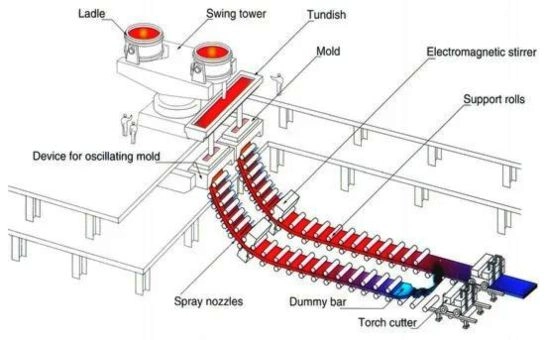
تندش
- يحمل المعدن المنصهر.
- تتدفق عناصر التحكم في القالب.
- يساعد على إزالة الشوائب.
قالب
- النحاس والتبريد بالماء.
- يشكل المعدن.
- يبدأ عملية التصلب.
نظام التبريد
- يستخدم رشاشات الماء.
- يُقسّي المعدن بالكامل.
بكرات
- افصل المعدن عن طريق السحب.
- المساعدة في التبريد.
آلة قطع
- يقوم بثني المعدن إلى الأحجام المطلوبة.
جميع مكوناتها مهمة لضمان الجودة والسرعة.
أنواع الاستمرارية صب
الصب المستمر إنها ليست مجرد عملية عادية. فهي تختلف من حيث الشكل وتصميم الآلة.
أنواع تعتمد على الشكل
صب البليت
تُنتج عملية صب القوالب قطعًا معدنية صغيرة مربعة أو مستديرة. وعادةً ما يكون المقطع العرضي لهذه القوالب أصغر من الأنواع الأخرى.
تُستخدم القوالب بشكل متكرر في صناعة:
- قضبان فولاذية
- قضبان
- الأسلاك
- قضبان التسليح (حديد التسليح)
نظراً لسهولة تشكيلها ومعالجتها، تستخدم الصناعات القوالب المعدنية في منتجاتها التي تتطلب التشكيل أو الدرفلة أو السحب. ويحظى هذا النوع بشعبية واسعة في قطاعي البناء والتصنيع.
بلوم كاستينغ
تُشكل المسبوكات الكبيرة أجزاءً كبيرة مقارنة بالقطع الخام وتكون في الغالب مستطيلة أو مربعة.
تُستخدم هذه الأزهار في صنع:
- خط سكة حديد
- العوارض الهيكلية
- مكونات معدنية شديدة التحمل
تُعدّ الألواح مناسبة لأعمال الإنشاءات الثقيلة والبنية التحتية نظرًا لسمكها وقوتها. فهي أقوى وأكثر متانة في التطبيقات واسعة النطاق.
صب الألواح
تُستخدم عملية صب الألواح لتشكيل المعادن العريضة والمسطحة. تتميز هذه الألواح بعرضها الكبير وسماكتها الصغيرة نسبياً.
تُستخدم في المقام الأول لصنع:
- صفائح معدنية
- ألواح فولاذية
- ملفات السيارات والأجهزة المنزلية.
تُعتبر الألواح المعدنية مطلوبة بشدة في الصناعات التي تتطلب منتجات معدنية مسطحة، مثل صناعة السيارات وبناء السفن وإنتاج الأجهزة المنزلية.
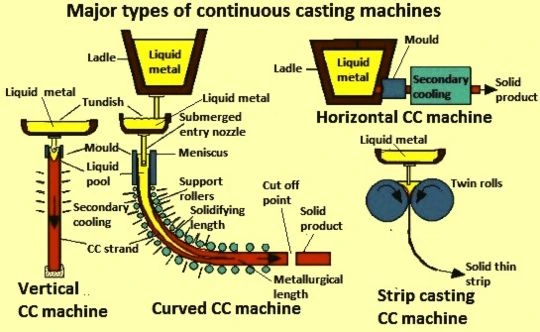
أنواع تعتمد على تصميم الآلة
الصب العمودي
في عملية الصب العمودي، يُوجّه المعدن المنصهر مباشرةً إلى أسفل القالب. ويتحرك المعدن عبر الآلة بمساعدة الجاذبية.
النقاط الرئيسية:
- تصميم بسيط وسهل.
- يحتاج إلى مبنى أو برج مرتفع.
- يتميز بتحكم جيد في التصلب.
لم يعد هذا شائع الاستخدام في الوقت الحاضر لأنه يشغل مساحة رأسية أكبر، على الرغم من أنه لا يزال له بعض التطبيقات المتخصصة.
الصب المنحني
يُعدّ الصب المنحني التصميم الأكثر شيوعاً في الصناعات الحديثة. في هذه العملية، يُسحب المعدن في البداية إلى الأسفل، ثم يسلك مساراً منحنياً، ليصبح بعد ذلك أفقياً.
المزايا الرئيسية:
- يوفر مساحة مقارنةً بالصب العمودي.
- يُمكّن من تنظيم التبريد والتصلب بشكل أكثر فعالية.
- يدعم الإنتاج عالي السرعة.
نظراً لكفاءتها وصغر حجمها، فإن غالبية آلات الصب المستمر الحالية تعتمد هذه التقنية.
الصب الأفقي
الصب الأفقي هو عملية يتدفق فيها المعدن المنصهر أفقياً بدلاً من رأسياً.
تم تصميمه ليتم تطبيقه على:
- بعض المعادن والسبائك.
- تجهيزات إنتاج أصغر.
- تطبيقات متخصصة.
على الرغم من أنها أقل انتشارًا من الصب المنحني، إلا أنها فعالة عندما يكون هناك نقص في المساحة الرأسية أو عند إنشاء أنواع معينة من المنتجات.
تطبيقات الصب المستمر
تم استخدام تقنية الصب المستمر في معظم الصناعات نظراً لكفاءتها وجودتها.
| صناعة | مثال تطبيقي |
| صناعة الصلب | إنتاج الصلب بكميات كبيرة |
| صناعة السيارات | قطع غيار المحركات، هياكل السيارات |
| بناء | المباني والجسور |
| صناعة الأنابيب | أنابيب النفط والغاز والمياه |
| الآلات الثقيلة | المعدات الصناعية |
أهم فوائد الصب المستمر
سنتناول الآن الأسباب التي تجعل صناعات مثل الصب المستمر شائعة.
كفاءة إنتاج عالية
إنها عملية مستمرة، وبالتالي توفر الوقت وتزيد الإنتاج.
تقليل نفايات المواد
هناك هدر أقل للمعادن مقارنة بالطرق التقليدية.
جودة منتج أفضل
ينتج عن عملية الصب المستمر معدن موحد ومتناسق مع عيوب أقل.
توفير الطاقة
فهو يوفر الطاقة عن طريق إلغاء الحاجة إلى إعادة التسخين.
انخفاض تكلفة الإنتاج
عدد الخطوات الأقل يعني تكلفة أقل وأرباحًا أكثر.
مناسب للأتمتة
تُستخدم أجهزة الاستشعار والأتمتة في الأنظمة الحديثة لتعزيز التحكم. وبشكل عام، تُحسّن هذه العملية كلاً من الإنتاجية والجودة.
الصب المستمر مقابل الصب الاستثماري
يخلط الكثيرون بين تقنية الصب المستمر وتقنية الصب الاستثماري، لكنهما مختلفتان تماماً.
| ميزة | الصب المستمر | الاستثمار في الصب |
| نوع العملية | مستمر | حزمة |
| الناتج | مقاطع معدنية طويلة | أشكال معقدة |
| سرعة الإنتاج | عالي | أبطأ |
| يكلف | تم تقليصها على نطاق واسع | أعلى |
| دقة | معتدل | عالية جدًا |
متى يُستخدم الصب المستمر
- إنتاج على نطاق واسع.
- أشكال بسيطة.
- هناك حاجة إلى كفاءة عالية.
متى يتم استخدام تقنية الصب الاستثماري؟
- تصاميم معقدة
- أجزاء عالية الدقة
- إنتاج بكميات صغيرة
تحديات وقيود الصب المستمر
على الرغم من أن عملية الصب المستمر عملية قوية، إلا أنها تنطوي على بعض القيود.
تكلفة إعداد عالية
الآلات والتركيب مكلفة.
معدات معقدة
يحتاج إلى مشغلين وصيانة ذوي خبرة.
مرونة محدودة
الإنتاج الصغير والمخصص ليس خياراً.
احتياجات الصيانة
لا ينبغي أن تواجه الأجهزة أي مشكلة في التشغيل.
أحدث الاتجاهات في تكنولوجيا الصب المستمر
يتم تحسين عملية الصب المستمر بواسطة التكنولوجيا.
- الأتمتة والذكاء الاصطناعي: تراقب الأنظمة الذكية درجة الحرارة والسرعة والجودة.
- تقنيات التبريد المتقدمة: يعمل نظام التبريد الأفضل على تحسين جودة المنتج.
- المراقبة في الوقت الحقيقي: يتم تحديد المشاكل في مرحلة مبكرة وتجنب العيوب.
- تحسينات صديقة للبيئة: تعمل الأنظمة الجديدة على تقليل استهلاك الطاقة والانبعاثات.
تساعد هذه الاختراعات الصناعات في إنتاج معادن عالية الجودة بأقل قدر من النفايات.
خاتمة
يُعدّ الصبّ المستمرّ من العمليات التي اكتسبت أهمية بالغة في التصنيع المعاصر، إذ يمكّن الصناعات من إنتاج المعادن بتكلفة أقل، وبسرعة أكبر، وبجودة فائقة. وتُعدّ هذه العملية أساسية في المنتجات اليومية التي نستهلكها، سواءً كانت من مصانع الصلب أو مشاريع البناء.
في تصنيع HDC, نحن ندرك كيف تؤثر تقنيات الصب المختلفة على جودة المنتجات وتكلفتها. يمكن استخدام الصب المستمر في الإنتاج على نطاق واسع، ولكننا في حالتنا نهتم بتوفير حلول عالية الدقة تعتمد على صب الاستثمار.
إذا كنت تبحث عن خيارات صب موثوقة لمشروعك، فنحن نوفر لك الدعم اللازم لنقدم لك أفضل الحلول ونضمن لك الحصول على النتائج المرجوة. تواصل معنا اليوم لمناقشة احتياجاتك والحصول على مساعدة احترافية.
الأسئلة الشائعة
ما هي استخدامات الصب المستمر؟
وهي تنتج منتجات معدنية مثل الألواح والقضبان والكتل المعدنية المستخدمة في صناعات البناء والسيارات والتصنيع.
ما هي مزايا الصب المستمر؟
إنها فعالة للغاية، وذات جودة عالية، وأقل هدراً، ورخيصة الإنتاج.
كيف يختلف الصب المستمر عن الصب التقليدي؟
في عملية الصب التقليدية، يتم صب كل قطعة في قالب منفصل، أما في عملية الصب المستمر، فيتم صب المعدن في تيار مستمر.
هل عملية الصب المستمر فعالة من حيث التكلفة؟
نعم، وخاصة في الإنتاج على نطاق واسع، لأنه يقلل من النفايات واستهلاك الطاقة.
ما هي المعادن التي يمكن استخدامها في الصب المستمر؟
يمكن استخدام الصب المستمر مع الفولاذ والألومنيوم والنحاس والعديد من السبائك.