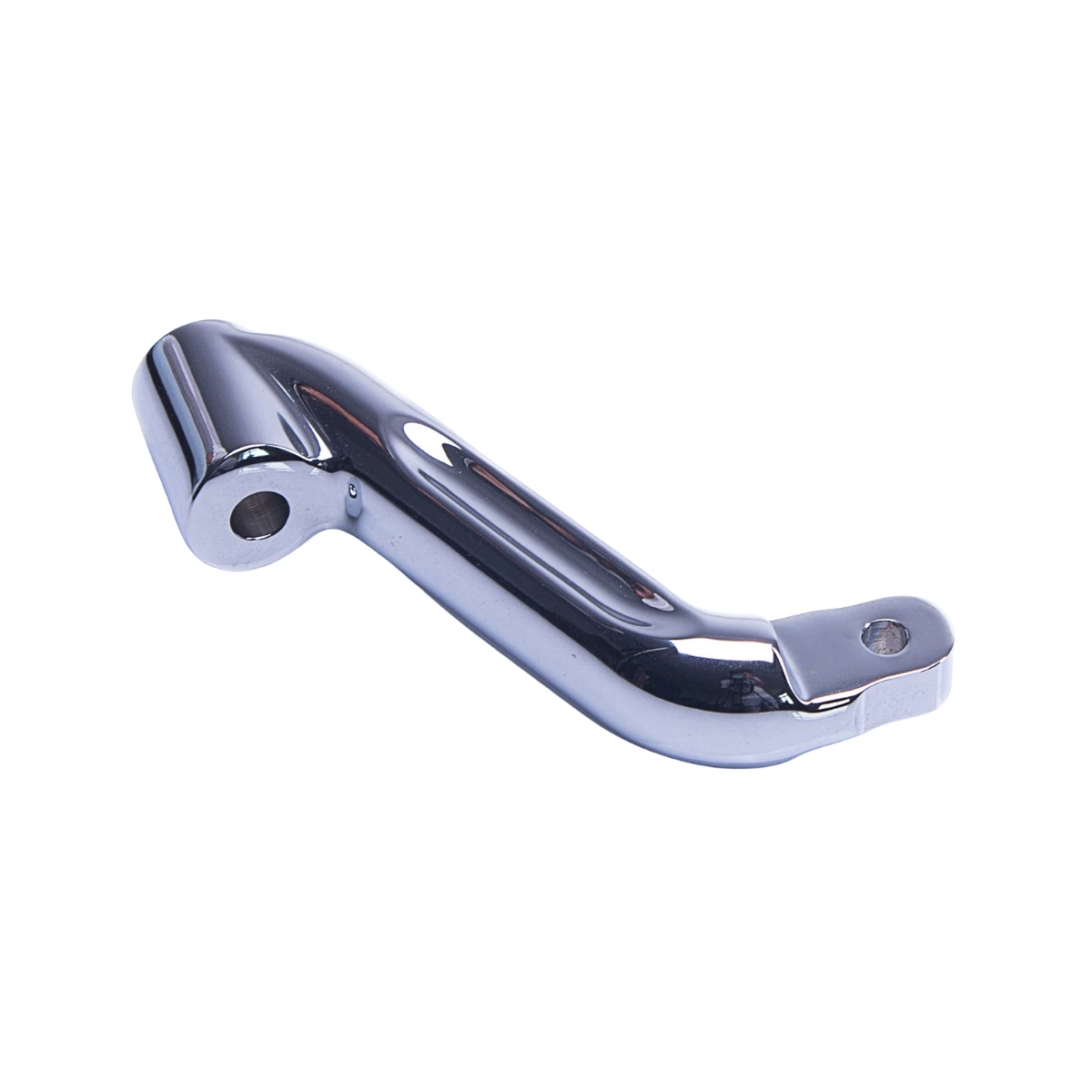
OEM Forged PTO Yoke Manufacturer
Precision close-die forging PTO yoke for truck, tractor, agricultural machinery, and more.

Precision Close-Die Forging

One-Stop Custom Solution

ISO & IATF Certified Quality





Forged PTO Yoke Parts
HDC customizes a wide range of PTO yokes for PTO shafts with various tube shapes and connection methods.
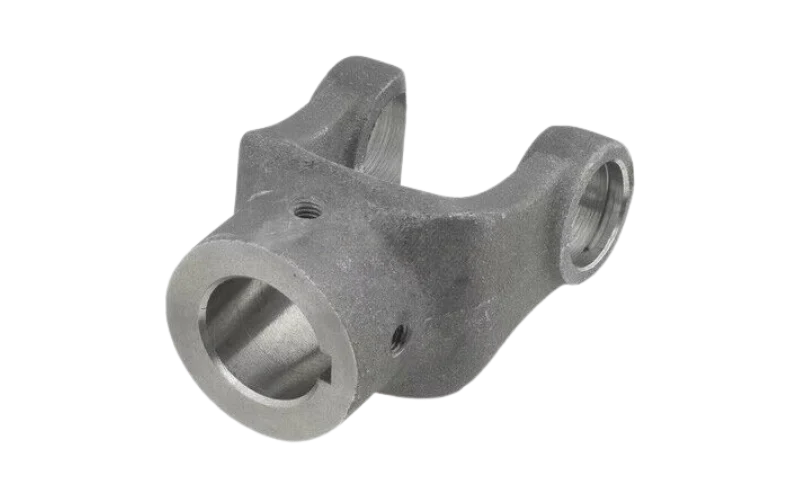
End Yoke
The end yoke is located at both ends of the PTO shaft, is used for power transmission. To achieve high wear resistance and withstand repeated torque impacts, HDC forges it with high-strength steel, such as 40Cr and 1045.
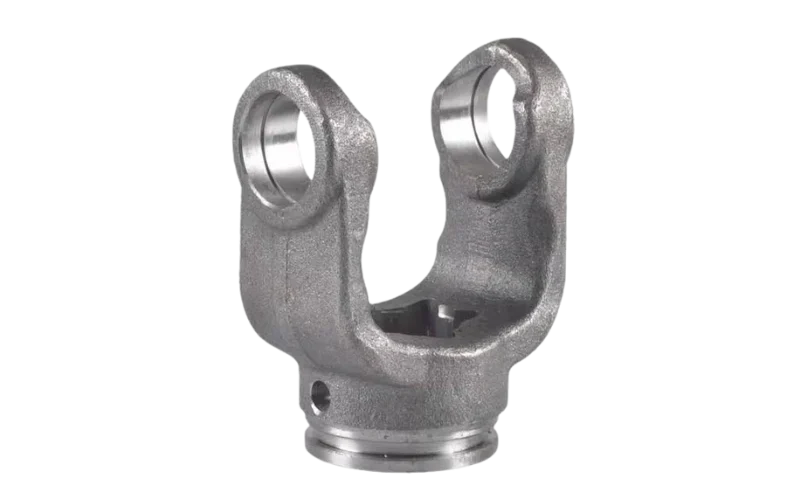
Inner Yoke
To connect to the PTO shaft profile tube and form a U-joint cross with the end yoke, an inner yoke typically has a profile bore or spline bore to ensure precision attachment. HDC implements CNC technology for precise bore machining.
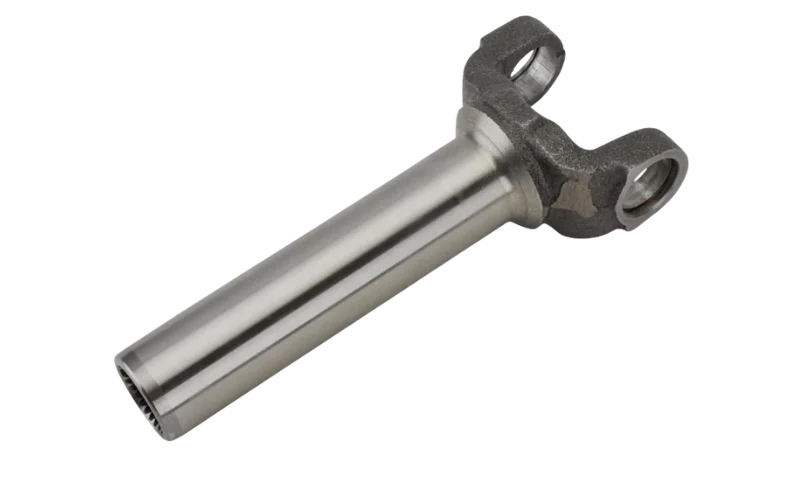
Slip Yoke
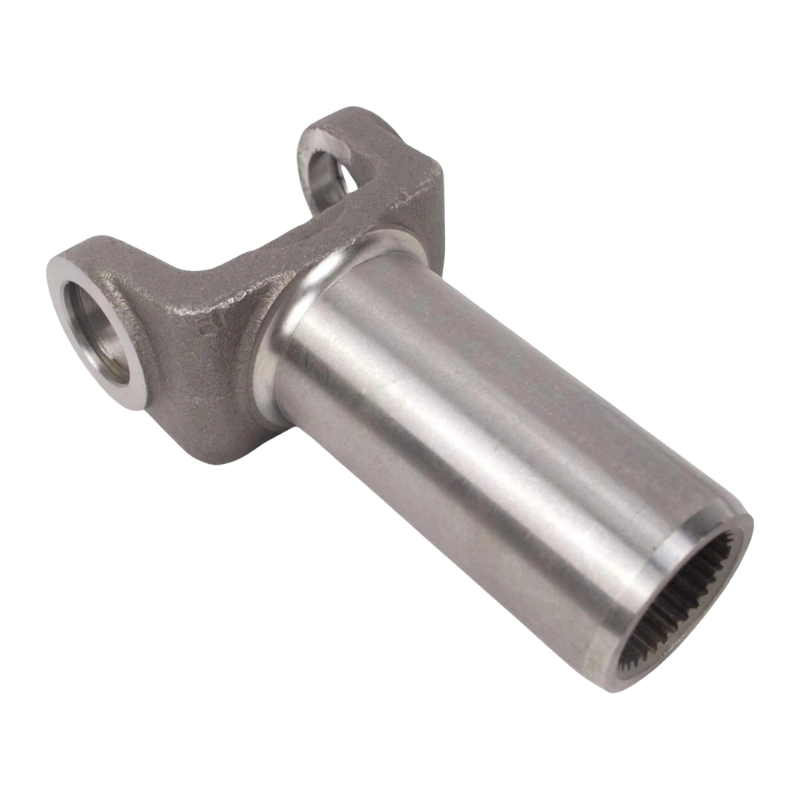
HDC forges slip yokes for high strength and finishes the spline in-house with CNC machining. This ensures tight and consistent spline engagement with the spline shaft, while providing smooth axial movement.
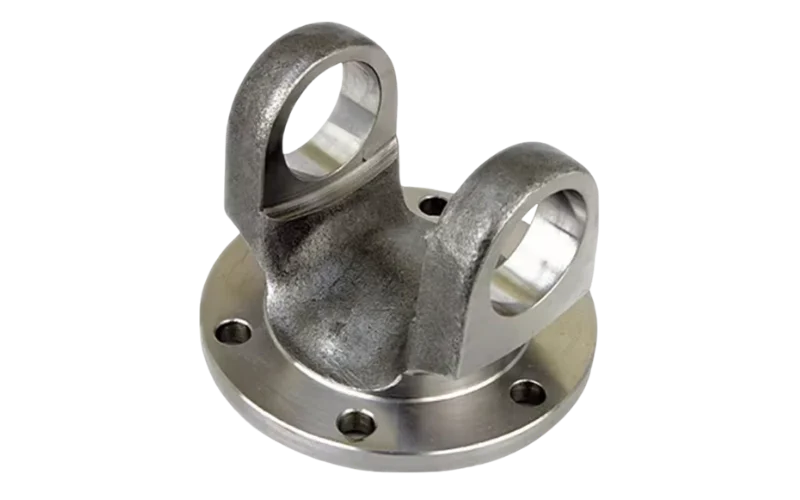
Flange Yoke
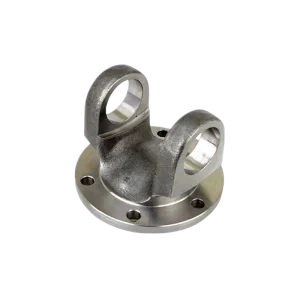
The flange yoke has a mounting plate, or so-called “flange”. It’s bolted on the input end or output end of a PTO shaft. We forge it for complex geometries, and CNC finish the mounting plate and mounting hole for precision alignment.
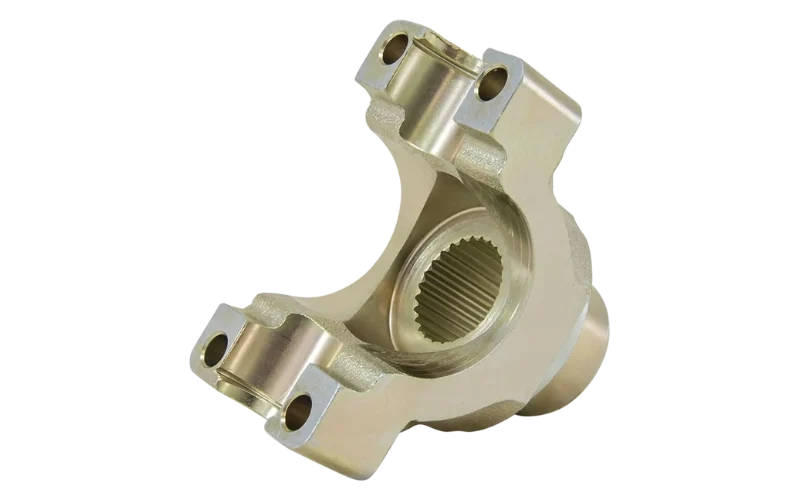
Diff Yoke
The diff yoke, or pinion yoke, serves as a connection between the driven shaft and the differential, used only in special industrial PTO drivelines. We forge it for strength and process the spline using CNC to ensure dynamic balance.
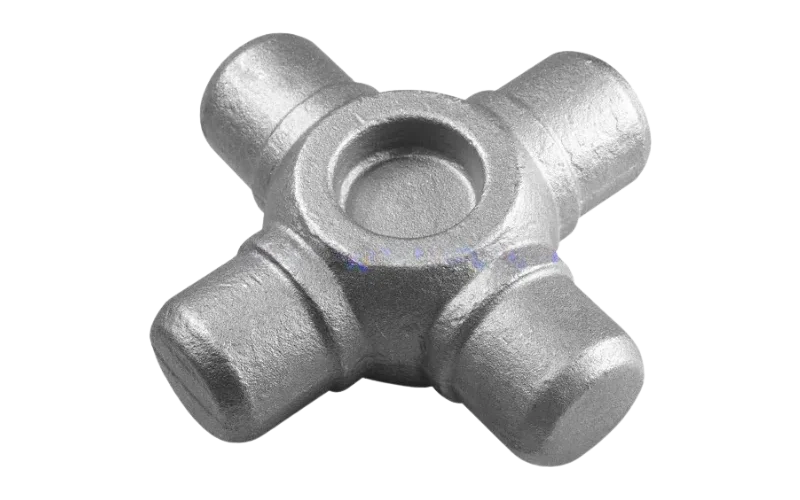
U-Joint Cross
As a core component that connects the inner yoke and the end yoke, the u-joint cross needs to withstand high impact on all ends. That’s why we forge it with special steel, such as 20Cr. HDC offers blanks or complete assemblies for cross shafts.
Why Choose HDC
Learn the key advantages of custom forged PTO yokes from HDC.
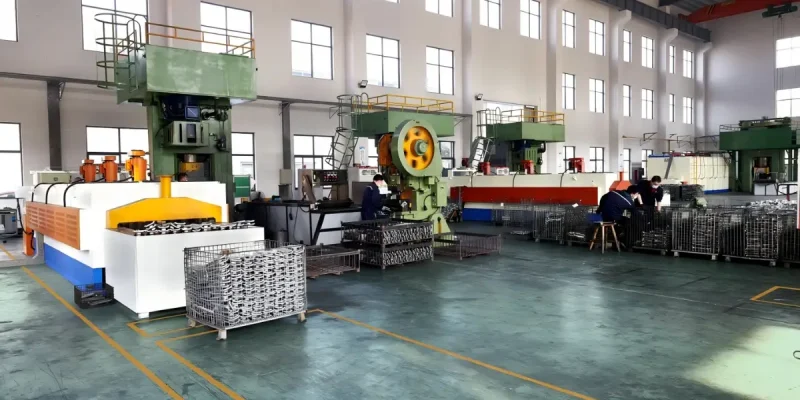

One-Stop Custom Forging & Machining Solution
From forging to precision CNC finishing, HDC delivers fully customized PTO shaft components in one stop, simplifying your supply chain and reducing lead times.

Close-Die Forging & Precision Manufacturing
We forge the PTO yoke blanks with close-die forging and machining the critical dimensions to ensure smooth, reliable torque transfer and long service life.

Flexible Customization & Wide Material Capability
HDC offers flexible customization options across a wide range of materials, spline or profile types, meeting the specific requirements of agricultural, industrial, and automotive applications.

Trusted Partner with Strong Supply Chain
With comprehensive in-house production capability and a stable supply chain built over the years, HDC ensures consistent quality and on-time delivery.
Forged PTO Yokes Manufacturing Process
Learn how HDC fabricates PTO yokes from billets to final products.

Mold Building & Blank Forging
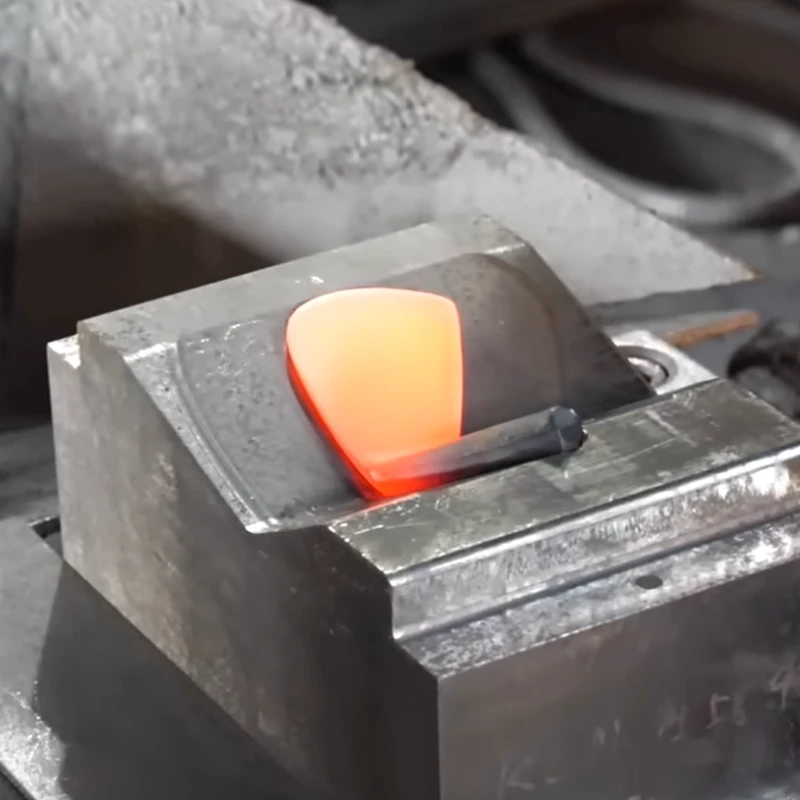
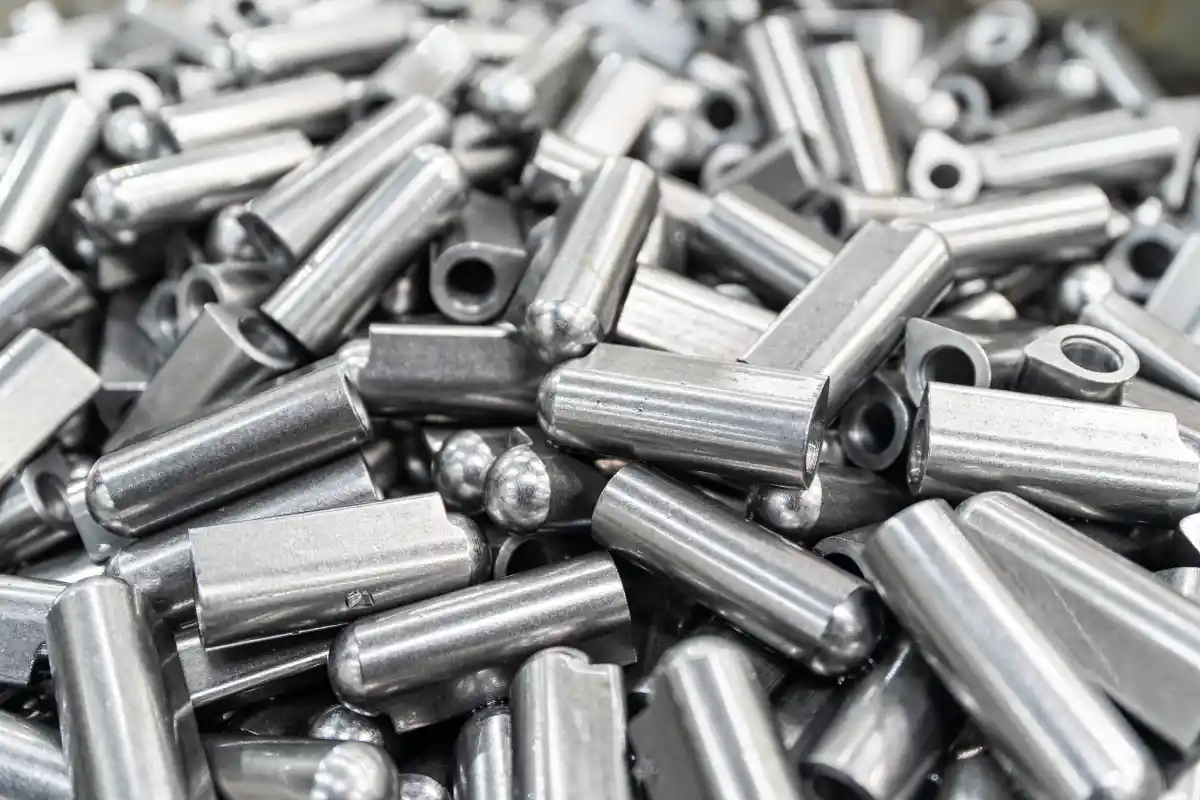
First, we build and test the mold according to your design or samples with in-house CNC machines. Next, we forge PTO yoke blanks with a forging press.
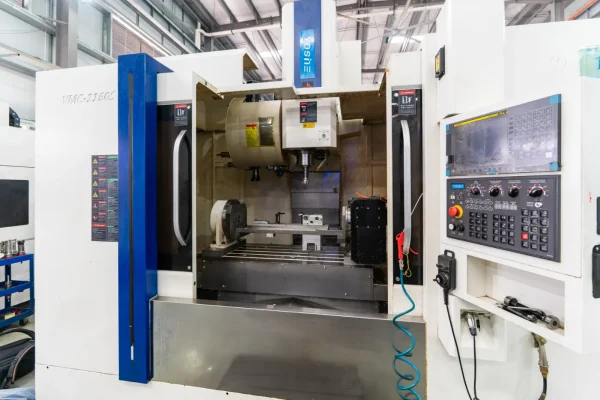
Heat Treatment & CNC Finishing
After forging, all blanks will undergo heat treatment for enhanced properties. Followed by CNC machining for critical dimensions and mounting holes.
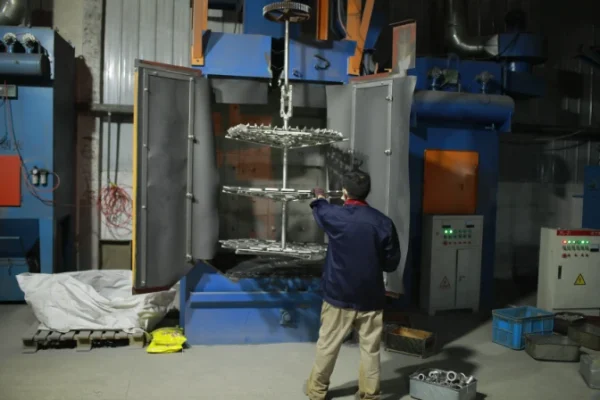
Surface Treatment
HDC implements simple surface treatments with in-house equipment, such as sand blasting and pickling. For specific surface requirements, we can achieve them with our reliable supply chain.
Check out our quality control methods for forging parts.
Forged PTO Yoke Materials
Learn about the materials we offer for custom forged PTO yokes.
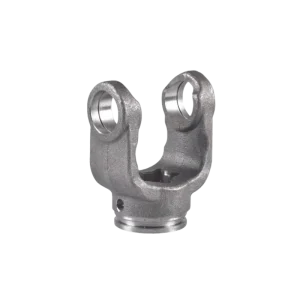
There are three main benefits of forging PTO yokes with carbon steel:
- Cost-effective: lower cost than alloy steel, suitable for mass production.
- Easy to process: easy to process by forging, milling, and welding, significantly reducing the process fee.
- Moderate strength: able to withstand torque and impact for most PTO shaft applications.
The typical carbon steel grades that HDC offers include Q235, 20#, and 45#.
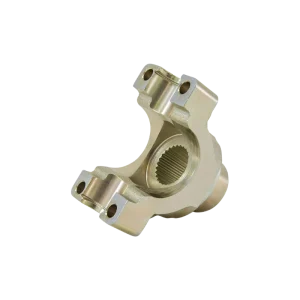
Alloy steel PTO yokes can withstand heavy-duty PTO or industrial driveline torque. After forging and heat treatment, it offers better wear resistance, fatigue resistance, structural accuracy, and stability than carbon steel. But the higher material cost and processing cost are also important factors to consider.
Commonly, HDC provides alloy steel in grades 20Cr, 20CrMo, 40Cr, and 42CrMo.
Available Finishes for PTO Yoke
Relying on a mature supply chain, HDC can provide most surfaces for PTO yokes. Below are the most commonly used types.
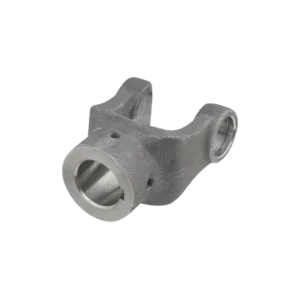
Sand blasting is applied after forging to remove the oxide layer and burr, while bringing a matte surface for the pto yokes and preparing for the following surface treatment.
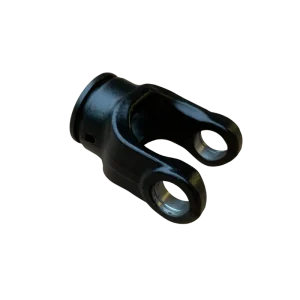
Blackening is an economical surface treatment for heavy machinery and agricultural machinery. It only provides basic rust resistance, so in most cases, it must be used in conjunction with oiling.
The primary factor that it is commonly applied to pto yokes is that it won’t change the dimensions of parts, which is very capable for transmission and connection components.
Compared to blacking, phosphating offers improved corrosion resistance and wear resistance. When applied with careful control, the slight effect on the part size can be ignored.
For PTO yokes used in agricultural machinery, which are exposed to harsh working environments involving soil, water, and oil stains, phosphating is definitely the best choice.
Technical Specifications
Explore the dimensions, weight, and more parameters of PTO yokes that HDC can customize for you.
| Weight Range | Under 30 Kg. |
| Shaft Connection Types | Round spline, involute spline, rectangular/triangular profile (Lemon, Star, Tri-lobed) |
| Spline Processing | CNC milling, CNC hobbing, broaching, or shaping depending on spline type |
| Spline Accuracy | DIN 5480 / ANSI B92.1 compliant, typical tolerance IT7–IT9 |
| Yoke Bore Types | Spline bore / Round bore / Lemon bore / Star bore |
| U-Joint Connection | Standard cross kit sizes: Series 4–6 / 6N / 44 / 48 / OEM custom sizes |
| Heat Treatment | Normalizing, quenching & tempering, carburizing or nitriding (depending on material) |
| Tensile Strength (After HT) | Carbon steel: 400–600 MPa Alloy steel (42CrMo): 950–1100 MPa |
| Dimensional Tolerance | ±0.1–0.2 mm for CNC-finished surfaces |
| Production Capacity | 30,000–50,000 pcs/month (yokes + associated components) |
| Quality Control | Raw material testing, hardness test, CMM measurement |
| OEM/ODM Support | Reverse engineering, drawing optimization, full forging–machining–surface finishing package |
Ready to Customize Your Forged PTO Yoke?
Reach out to HDC, then you get the most expert one-stop forging product solution you can find. Just send an email, our quote is free!
FAQ
What is the PTO shaft?
A PTO shaft is a rotating driveline that sends power from a tractor or machine to an attachment—such as a mower, tiller, pump, or spreader. It lets the implement “borrow” engine power so it can work without its own motor.
What is the PTO yoke used for?
The PTO yoke is the connection point of the driveline. It holds the U-joint and attaches the PTO shaft either to the tractor’s output shaft or to the implement’s input shaft.
Without the yoke, the shaft can’t transfer torque or follow movement during operation.
What is an end yoke, and how to measure it?
An end yoke is the yoke mounted directly onto the tractor PTO spline or the implement side.
To measure it correctly, you should check:
- Spline count and diameter of the bore
- U-joint cap diameter
- Ear-to-ear width(yoke width)
- Series or cross kit size
These dimensions ensure the yoke fits both the machine and the U-joint.
What are the types of PTO yoke?
PTO yokes come in several functional types, including:
- End Yoke – connects to tractor or implement splines
- Inner Yoke – works inside the telescoping tube
- Slip Yoke – allows extension and retraction
- Flange Yoke – bolts directly to gearboxes or pumps
- Clamp / Quick-Lock Yoke – fast connection for field use
- Diff / Pinion Yoke – used in differential-type inputs
- U-Joint Cross – the center piece that lets the driveline articulate
Each type serves a different position in the PTO driveline.
What does a slip yoke do?
A slip yoke allows the PTO shaft to change length while running. When the tractor turns or goes over bumps, the distance between the tractor and the implement changes. The slip yoke absorbs that movement so the driveline doesn’t bind or break.
What is a flange yoke?
A flange yoke has a bolt-on flange instead of a splined bore. It’s mainly used when the equipment has a flanged gearbox, pump, or differential. Flange yokes provide a compact and very rigid connection, especially at high torque.
What is a diff yoke?
A diff yoke (pinion yoke) connects the driveshaft to the differential’s input shaft. In PTO setups, it is less common but still used in machines involving wheel-driven power, construction machinery, or vehicles where the PTO system is integrated with the drivetrain.
How does a PTO yoke connect to the driveshaft?
A PTO yoke connects through:
- U-joint bearing caps (secured by circlips, bolts, or straps)
- Spline or profile tube (for sliding length adjustment)
- Lock pin or clamp system (for tractor-side yokes)
Together, these create a flexible yet strong connection that allows torque transmission and angular movement.
What are the types of pto shaft tube?
PTO tubes are shaped to provide both torque strength and smooth telescoping.
The most common shapes are:
- Lemon Tube (tri-oval) – light, commonly used in standard agricultural PTOs
- Star Tube (6-lobe) – higher strength and smoother sliding
- Triangular Tube – cost-effective and strong
- Splined Tube – used for precision sliding and high torque loads
The shape chosen depends on torque requirement, cost, and how smooth the telescoping action needs to be.