Man denkt im ersten Moment nicht groß über den Unterschied zwischen Edelstahl und Messing nach. Doch genau zu wissen und zu verstehen, wie sich beide Materialien unterscheiden, ist sowohl für Sie als auch für Ihr Projekt von Vorteil.
In diesem Blog vergleichen wir Messing und Edelstahl so umfassend wie möglich. Wir liefern Ihnen alle Details und lassen Sie selbst erleben, worin sich diese beiden Metalle unterscheiden und welche Gemeinsamkeiten sie aufweisen.
Messing vs. Edelstahl: Zusammensetzung
Quelle: XCB-Gruppe
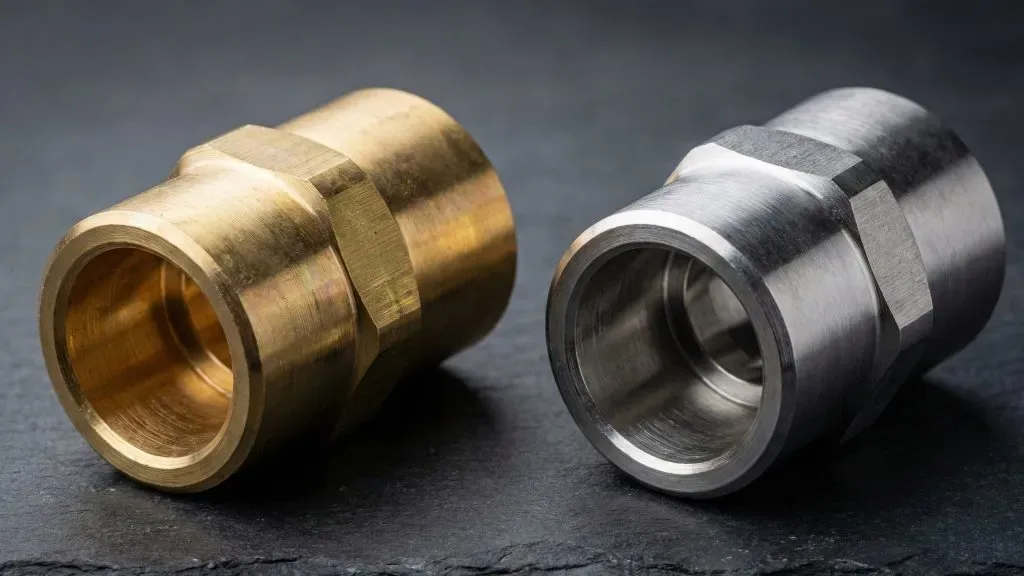
Eine der besten Möglichkeiten, die einzelnen Materialien zu identifizieren, besteht darin, ihre Zusammensetzung zu betrachten. Auf der Ebene der Zusammensetzung stellen Messing und Edelstahl im Grunde einen Vergleich zweier sehr unterschiedlicher Legierungsfamilien dar.
Messing besteht hauptsächlich aus Kupfer, während Edelstahl aus Eisen hergestellt wird. Dieser eine Unterschied prägt bereits das Aussehen, die Bearbeitungsmöglichkeiten und die Eigenschaften der jeweiligen Metalle im Gebrauch.
Um es noch genauer zu erklären: Messing ist hauptsächlich eine Kupfer-Zink-Legierung. Je nach Sorte kann der Zinkgehalt zwischen etwa 51 % und 39 % variieren. Die Änderung dieses Verhältnisses beeinflusst Festigkeit, Duktilität und Verarbeitbarkeit. Einige Messingsorten enthalten zudem geringe Mengen an Legierungselementen wie Blei, Zinn oder Nickel, um die Bearbeitungseigenschaften oder das Korrosionsverhalten gezielt zu verbessern.
Am anderen Ende des Spektrums steht Edelstahl (wie wir alle wissen), eine Eisenlegierung. Das bedeutet, er enthält mindestens 10,51 % Chrom. Viele Sorten enthalten außerdem Nickel, Molybdän, Mangan oder Stickstoff, je nach Anwendungszweck. Ein gängiges Beispiel ist Edelstahl 304 Dabei werden typischerweise etwa 18% Chrom und 8% Nickel verwendet.
Edelstahl vs. Messing: Eigenschaften, Korrosion, Leistung und mehr!
Quelle: MT Edelstahl
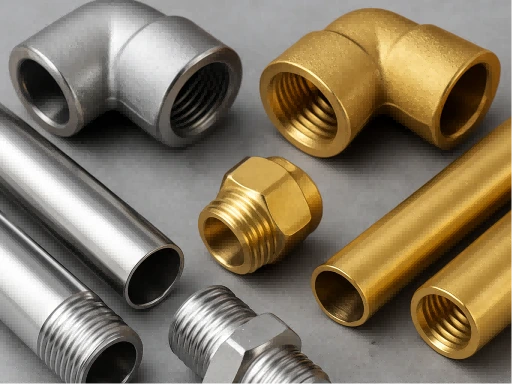
Wenn man sich mit Edelstahl und Messing auseinandersetzt, möchte man in der Regel verstehen, wie sich diese beiden Metalle im praktischen Einsatz verhalten. Sie werden zwar beide in Beschlägen, Armaturen, Industrieteilen und Dekorationsartikeln verwendet, aber ihr Verhalten kann sich stark unterscheiden.
Korrosionsbeständigkeit
Beginnen wir mit dem Vergleich der beiden Metalle anhand des wichtigsten und häufigsten Faktors – ihrer Korrosionsbeständigkeit. Diese hängt stark von der Umgebung bzw. den jeweiligen Bedingungen ab, denen das Metall ausgesetzt ist.
Edelstahl schützt sich selbst mit einer chromreichen Passivschicht, die sich bei leichten Beschädigungen auf natürliche Weise regeneriert. Deshalb eignet er sich so gut für feuchte, hygienische oder chemisch belastete Umgebungen.
Messing ist in vielen Anwendungen im Innenbereich und in Süßwasser korrosionsbeständig, jedoch können einige Sorten unter Entzinkung leiden. Dabei wird Zink ausgelaugt, was das Metall schwächt, insbesondere in bestimmten Wässern oder unter chloridreichen Bedingungen.
Daher ist Edelstahl die bessere Wahl, insbesondere in rauen, feuchten und langfristig korrosionsbelasteten Umgebungen. In allgemeinen Anwendungen kann Messing jedoch Edelstahl überlegen sein.
Lesen Sie auch: Verzinkter Stahl vs. Aluminium: Ein ausführlicher Vergleich
Hitze-/Temperaturbeständigkeit
Als nächstes auf unserer Liste der Faktoren steht die Temperatur bzw. Hitzebeständigkeit. Wenn Hitze eine Rolle spielt, ist Edelstahl in der Regel im Vorteil.
Viele Edelstahlsorten behalten ihre Struktur und Oxidationsbeständigkeit auch bei hohen Temperaturen, weshalb sie in Abgasanlagen, Prozessanlagen und Bauteilen für den Heißbetrieb eingesetzt werden.
Messing funktioniert bei normalen Betriebstemperaturen einwandfrei, aber aufgrund seines niedrigeren Schmelzbereichs, der üblicherweise zwischen 890°C und 940°C liegt, sind Hochtemperaturanwendungen oft eingeschränkt.
Elektrische Leitfähigkeit
Obwohl nicht immer, gibt es Fälle und Situationen, in denen Leitfähigkeit unerlässlich ist. Und genau hier hat Messing eindeutig die Nase vorn.
Da Messing auf Kupferbasis besteht, leitet es Wärme und Elektrizität deutlich besser als Edelstahl. Deshalb wird Messing häufig für Klemmen, Verbinder, Armaturen und Bauteile verwendet, bei denen die Leitfähigkeit eine wichtige Rolle spielt.
Edelstahl wird im Vergleich dazu oft eher wegen seiner Festigkeit und Korrosionsbeständigkeit als wegen seiner Stromleitfähigkeit oder Wärmeleitfähigkeit gewählt.
Bearbeitbarkeit
Messing gehört zu den am einfachsten zu bearbeitenden technischen Metallen, und das aus gutem Grund. Im Gegensatz zu anderen Metallen und bestimmten Sorten lässt sich Messing sauber schneiden, bildet kurze Späne und ist werkzeugschonender. Das bedeutet: Es trägt zur Reduzierung von Zykluszeiten und Produktionskosten bei.
Edelstahl hingegen ist ebenfalls eine gut zu bearbeitende Legierung. Allerdings erfordert er in der Regel schärfere Werkzeuge, geringere Schnittgeschwindigkeiten, präzisere und spezifischere Bearbeitungsprozesse sowie eine bessere Wärmekontrolle, da viele Sorten beim Zerspanen kaltverfestigt werden.
Wartung
Edelstahl ist in puncto Pflege und Wartung im Allgemeinen am pflegeleichtesten. Er behält mit einfacher Reinigung eine beständige Oberfläche und muss nur dann poliert werden, wenn die Optik von entscheidender Bedeutung ist.
Messing kann wunderschön aussehen, daran besteht kein Zweifel. Allerdings dunkelt es mit der Zeit oft nach oder läuft an, insbesondere bei Kontakt mit Luft, Feuchtigkeit oder häufiger Berührung.
Mehr lesen: Zahnradherstellung: Wie Zahnräder hergestellt werden und wie man die beste Bestellung aufgibt
Kosten
Und schließlich betrachten wir die Kosten. Diese sind etwas komplexer als es zunächst scheint. Messing kann aufgrund seines Kupfergehalts als Rohmaterial teurer sein, die Fertigungskosten können sich jedoch durch die einfachere Bearbeitung reduzieren.
Edelstahl erscheint in manchen Ausführungen günstiger in der Anschaffung, obwohl die Verarbeitung oft aufwendiger ist. Langfristig betrachtet ist Edelstahl in anspruchsvollen Anwendungsbereichen häufig die wirtschaftlichere Wahl, da er in der Regel länger hält und weniger Wartung benötigt.
Schrauben aus Edelstahl vs. Messing: Unterschiede in den Anwendungsbereichen
Eine der häufigsten Anwendungen beider Metalle sind Schrauben. Doch selbst wenn der Fokus auf Schrauben liegt, spiegelt die Materialwahl in der Regel die übergeordnete Anwendung wider.
Die Wahl zwischen Messing- und Edelstahlschrauben ist im Grunde eine Entscheidung zwischen Festigkeit und Langlebigkeit einerseits und Leitfähigkeit oder Aussehen andererseits. Dieses Muster zeigt sich in vielen Branchen.
Rostfreier Stahl
Edelstahlschrauben finden vor allem im Bauwesen, bei Schiffsausrüstung, Lebensmittelmaschinen und Außenkonstruktionen Anwendung, wo Korrosionsbeständigkeit und Belastbarkeit entscheidend sind. Darüber hinaus werden sie auch häufig in Industrieteilen, Medizingeräten und Konstruktionsbefestigungen eingesetzt, die eine lange Lebensdauer erfordern.
Messing
Messingschrauben hingegen werden häufig für Elektroinstallationen, dekorative Beschläge, Sanitärteile, Möbel und leichte Befestigungselemente verwendet. Da Messing sich leicht bearbeiten lässt und gut leitet, eignet es sich auch hervorragend für Verbinder, Klemmen, Ventile und Präzisionsteile, bei denen Aussehen oder Leitfähigkeit wichtig sind.
Warum Sie sich für HDC bei kundenspezifischen Edelstahl- und Messingteilen entscheiden sollten
Man vergleicht nicht jeden Tag Metallteile. Sollten Sie aber einmal dazu greifen müssen und nicht wissen, wo Sie diese bekommen können, können Sie sich jederzeit auf uns hier bei HDC Mfg. verlassen.
Wir von HDC Mfg sind ein erfahrener Zulieferer von Stahl- und Metallprodukten und beliefern Unternehmen verschiedenster Branchen weltweit. Unsere Erfahrung umfasst die Herstellung von Produkten aller Art. rostfreier Stahl und Messingschrauben, -stangen, -drähte, -rohre, -ventile, -leitungen und vieles mehr!
Bei uns erhalten Sie die komplexesten und filigransten Metallwerkzeuge und -teile, die Sie benötigen! Kontaktieren Sie uns und erhalten Sie einen kostenlosen Kostenvoranschlag!