Überblick
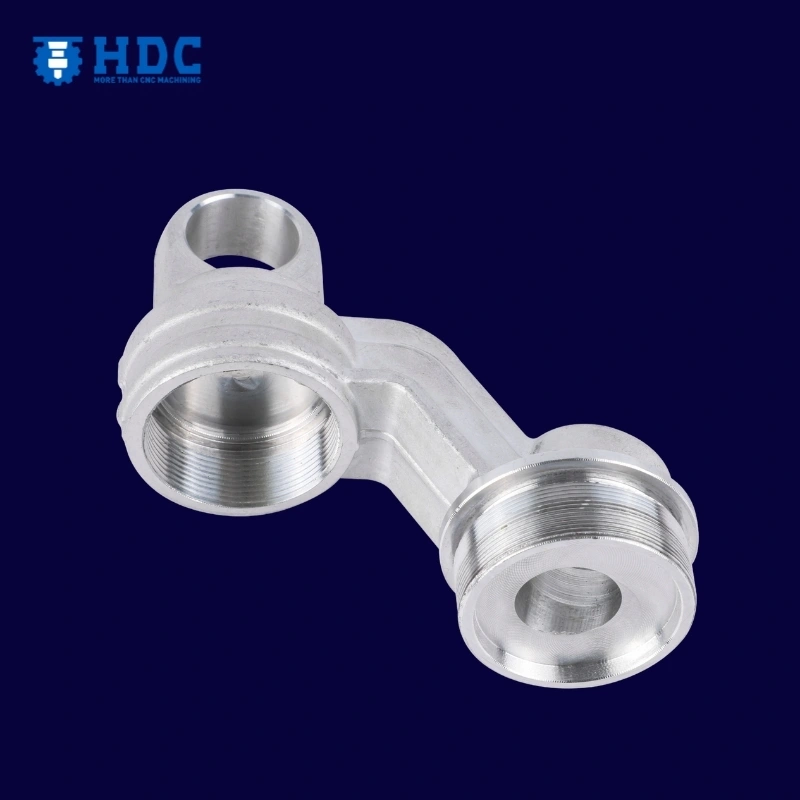
HDC Manufacturing verfügt über mehr als zehn Jahre Erfahrung im Bereich kundenspezifischer Metallkomponenten. Wir besitzen präzise 4-Achs-Bearbeitungsanlagen und 5-Achsen Werkzeugmaschinen, automatisierte CNC-Bearbeitungszentren und ein professionelles Design- und Produktionsteam. Wir können Ihnen verschiedene Bearbeitungsverfahren anbieten, darunter CNC-Fräsen, CNC-Drehen, Laser schneiden, Metallgussund mehr, um Ihre Komponenten aus Titan Grad 2 perfekt zu fertigen, maßgeschneidert auf Ihre spezifischen Anforderungen.
What is Titanium Grade 2?
Titan Grad 2 ist unlegiertes Titan. Es ist besonders ähnlich Titan Grad 1. Die Leute nennen es die „Arbeitskräfte“ des industriellen Reintitans. Im Vergleich zu Klasse 1 weist es eine höhere Festigkeit und eine hervorragende Kaltumformleistung auf. In vielen Anwendungsbereichen ist es die erste Wahl, beispielsweise in der Luft- und Raumfahrtindustrie, der Stromerzeugung, der chemischen Bearbeitung und mehr.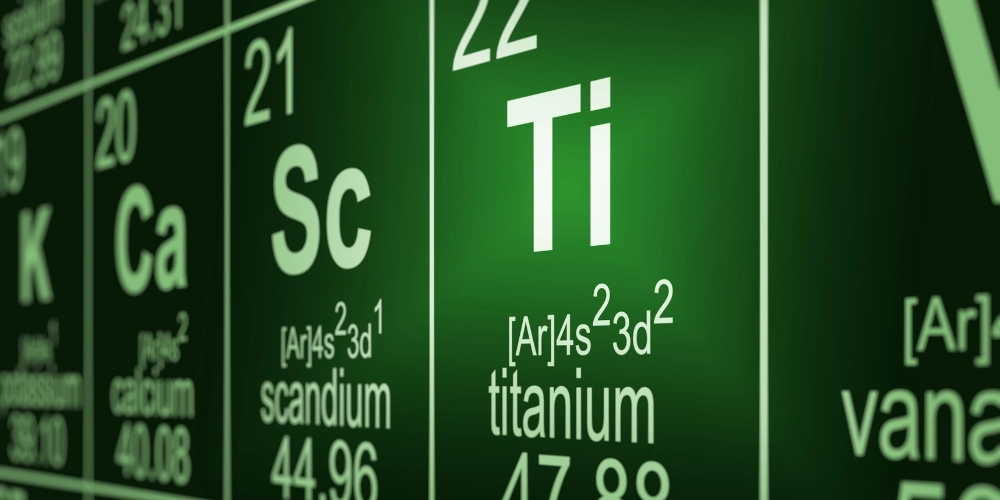
Der Unterschied zwischen Titan Grad 1 und Grad 2
Grade 1 and 2 are majorly identical titanium grades but Grade 1 typically has a bit higher oxygen content and therefore shows slightly different properties. Grade 1 titanium has lower oxygen content offering slightly higher ductility and formability where as the Grade 2 titanium has slightly higher strength owing to its slightly higher oxygen content. Grade 1 has better ductility and weldability as well as an advantage with chemical processing; while grade 2 has better strength and is preferred in aerospace, medical, and automotive applications. In sum, select one between the two qualities relies on the exact application formability, tensile strength and other mechanical performance.
Was sind die Nachteile von Titan Grad 2?
Though Titanium Grade 2 can also be considered in many ways a better choice, its disadvantages still exist. The drawback is that it is considerably weaker compared to titanium alloys like Grade 5, which mean limited use in cases that require high strength-to-weight ratios. Secondly, it can be more expensive than the other materials such as stainless steel or aluminum entities, and this might affect budget when constructing. Besides, Titanium Grade 2 can be difficult to machine due to a thermal conductivity and potential for work hardening, which results in prominent tool wear and machining costs. Again, while weldable, it needs stringent welding processes so as to prevent embrittlement or contamination which eventually can lead to impairment of its mechanical properties and corrosion resistance. Furthermore, its cold workability is rather limited, making cold-forming as well as shaping both difficult jobs and possible to lose the strength of the material by producing a crack. Despite the seamless nature of these joins, titanium grade 2 still comes with its share of limitations; yet, it remains very effective as far as corrosion resistance, biocompatibility, and lightweight usage are concerned in myriad of applications.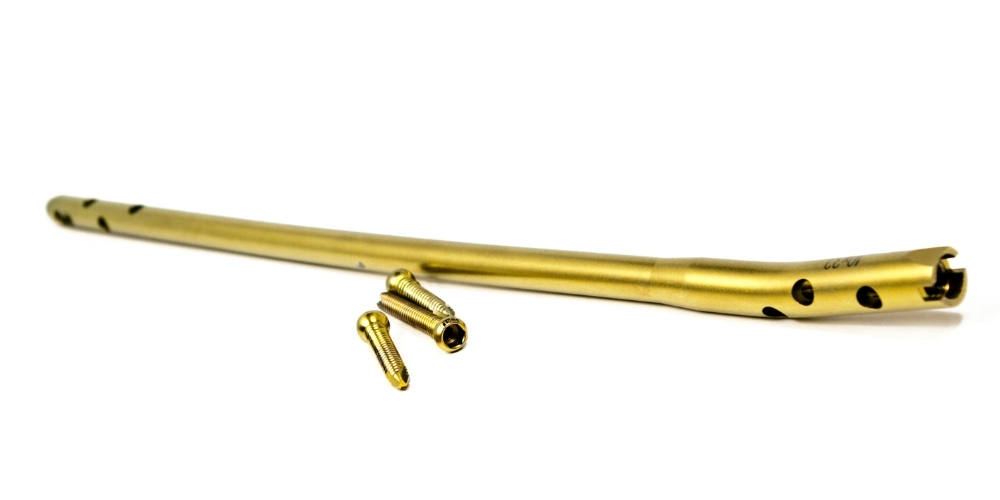
Chemische Zusammensetzung von Titan Grad 2
| Chemisches Element | Inhalt (%) |
| Titan, Ti | ≥ 98,9 |
| Eisen, Fe | 0- 0.30 |
| Sauerstoff, o | 0-0.25 |
| Kohlenstoff, C | 0-0.08 |
| Stickstoff, n | 0-0.03 |
| Wasserstoff, H | 0- 0.015 |
Der Einfluss eines geringeren Gehalts anderer Elemente auf Titan Grad 2

(Lesser amounts of other elements only make a slight difference with Titanium Grade 2), as Grade 2 titanium is a commercial pure titanium alloy whose main component is titanium with minor amounts of other elements such as oxygen, nitrogen, hydrogen, carbon, and iron. Ti-6Al-4V is made up of these elements in a very very low concentration, and thus Ti-6Al-4V have no noticeable effects on the overall properties of Grade 2 titanium. At the same time, the metal is not pure and has foreign elements which may detrimentally affect the material’s mechanical properties, including strength, ductility, and corrosion resistance. Hence, quality control of impurities and alloying elements is fundamental in order to supply high-purity and the specifically desired properties Titanium Grade 2. It should be noted that Grade 2 titanium is normally selected for its outstanding corrosion resistance as well as its biocompatibility and low density as it is applicable in various industrial fields like aerospace, pharmaceutical, and chemical processing.
Mechanische Eigenschaften von Titan Grad 2
| Eigenschaften | Metrisch | Kaiserliche |
| Zugfestigkeit | 485 MPa | 70300 psi |
| Ertragsstärke | 345 MPa | 50000psi |
| Poisson-Zahl | 0.34-0.40 | 0.34-0.40 |
| Elastizitätsmodul | 105 – 120 GPa | 15200 – 17400 ksi |
| Bruchdehnung | 28% | 28% |
| Härte (HV) | 160-200 | 160-200 |

Physikalische Eigenschaften von Titan Grad 2
| Dichte | Beta-Transus | Schmelzpunkt | Wärmeleitfähigkeit | Elastischer Widerstand |
| 4,51g/cm³ | 915 °C | 1660 °C | 21,79 W m-1 °C-1 | 0,53 µΩ/m |
Thermische Eigenschaften von Titan Grad 2
| Thermische Eigenschaften | Metrisch | Englisch |
| Schmelzwärme | 325 J/g | 140 BTU/Pfund |
| WAK, linear | 8,60 µm/m-°C @Temperatur 0,000 – 100 °C | 4,78 µin/in-°F @Temperatur 32,0 – 212 °F |
| 9,20 µm/m-°C @Temperatur 0,000 – 315 °C | 5,11 µin/in-°F @Temperatur 32,0 – 599 °F | |
| 9,70 µm/m-°C @Temperatur 0,000 – 540 °C | 5,39 µin/in-°F @Temperatur 32,0 – 1000 °F | |
| Spezifische Wärmekapazität | 0,523 J/g-°C @Temperatur 20,0 °C | 0,125 BTU/lb-°F @Temperatur 68,0 °F |
| 0,560 J/g-°C @Temperatur 200 °C | 0,134 BTU/lb-°F @Temperatur 392 °F | |
| 0,620 J/g-°C @Temperatur 400 °C | 0,148 BTU/lb-°F @Temperatur 752 °F | |
| 0,670 J/g-°C @Temperatur 540 °C | 0,160 BTU/lb-°F @Temperatur 1000 °F | |
| 0,690 J/g-°C @Temperatur 600 °C | 0,165 BTU/lb-°F @Temperatur 1110 °F | |
| Wärmeleitfähigkeit | 16,4 W/mK | 114 BTU-in/h-ft²-°F |
| Schmelzpunkt | <= 1665 °C | <= 3029 °F |
| Liquidus | 1665 °C | 3029 °F |
| Beta-Transus | 913 °C | 1680 °F |
Geeignete Methoden zur Verarbeitung von Titan Grad 2
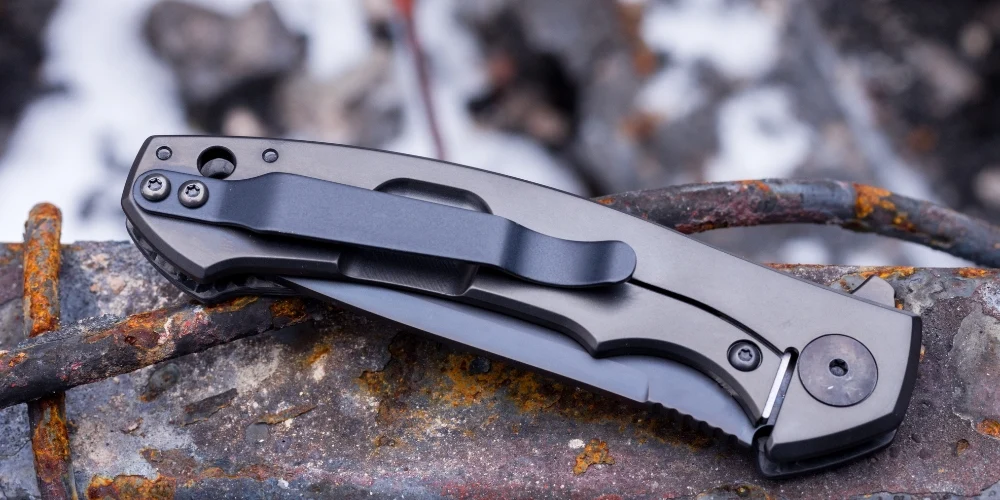
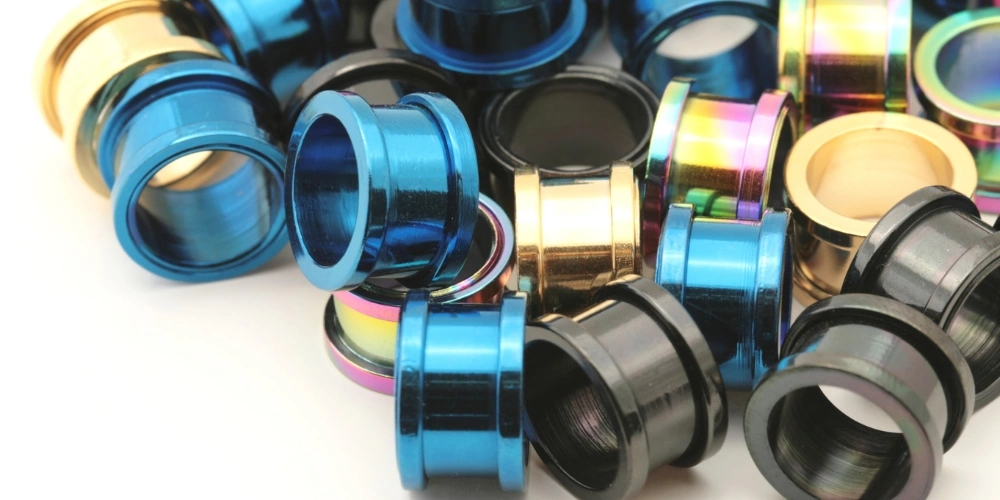
The processing of Titanium Grade 2 utilizes a set of techniques depending on its characteristics. Machining (turning and milling) is widespread but needs to take its time as the material has low thermal conductivity. Only welding technics such as GTAW or EBW lead to risks for contamination and oxidation of the material, thus, precautions have to be taken. Forming processes which can be cold and hot can be used, additional annealing might be necessary to achieve ductility. Heat treating processes (annealing and stress relief) are employed to develop desirable mechanical properties. Surface modifications, such as polishing and anodizing, provide increased corrosion resistance and appearance. By contrast, machine manufacturing techniques like SLM and EBM are very flexible with structures with complex geometries. These methods are typically used for the fabrication of parts for aerospace, medical, and chemical apparatus.
Anwendungen von Titan Grad 2
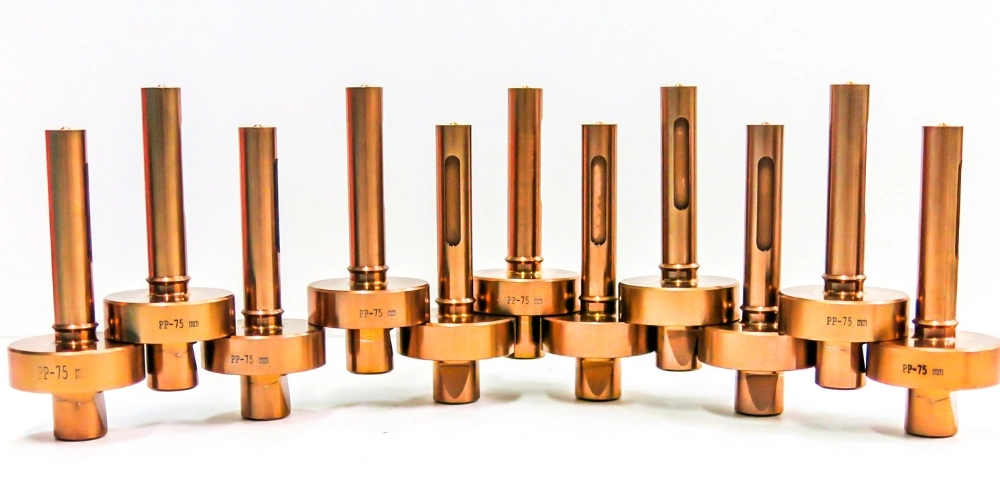
Extensive use of Titanium Grade 2 is demonstrated through its remarkable features in various industries. It has been used by the aerospace industries in airframe structures and engine parts, the healthcare sector due to its biocompatibility and chemical processes for corrosion-resistant equipment. Besides, it is also used in marine situations, construction buildings, and sports gears because it is durable and resistant to electrochemical oxidation. In general titanium alloy Grade 2 stands out as an irreplaceable material in the industries such as aerospace that need lightweight, corrosion-resistant and have high-performance materials.