Sind Sie es leid, wertvolle Zeit mit der Konstruktion von Bauteilen zu verschwenden und am Ende ungenaue Ergebnisse zu erhalten? Keine Sorge, damit sind Sie nicht allein. Manche Bauteile sehen zwar perfekt aus, funktionieren aber nicht wie gewünscht. Doch hier in diesem Blog haben wir die Lösung für Ihr Problem. GD&T? Genau!
Geometrische Bemaßung und Tolerierung (GMT) ist die weltweit anerkannte Sprache der Präzision. Sie gewährleistet, dass jedes Bauteil die geforderten Standards vollständig erfüllt. Lassen Sie uns also ins Detail gehen!
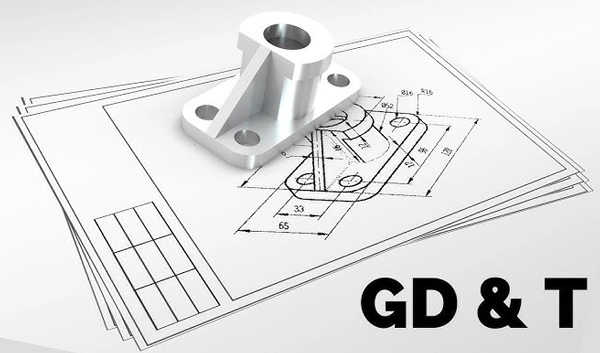
Geschichte und Entwicklung von GD&T
Wir alle wissen, dass die Fertigung früher recht einfach war. Sie basierte lediglich auf Maßen und Konstruktionsplänen. Doch mit der Zeit stellten die Hersteller fest, dass die Produkte nicht die erforderliche Präzision aufwiesen. Dies war der Beginn der Geschichte von GD&T (Geometrische Produktspezifikation und -prüfung). In der Folge wurden die Bauteile immer komplexer (insbesondere in der Luft- und Raumfahrt- sowie der Automobilindustrie), und die Ingenieure bemerkten einen Mangel an Präzision. Die Teile passten nicht mehr exakt.
Es gab keine festgelegte Methode zur Beschreibung von Abmessungen. Parameter waren nicht im Voraus definiert. Diese Unklarheit machte die Einführung der geometrischen Bemaßung und Tolerierung (GD&T) notwendig.
Die Ursprünge von GD&T reichen bis in die 1940er Jahre zurück. Der britische Ingenieur Stanley Parker entwickelte die Idee der “wahren Lage”. Seine Idee fand großen Anklang! Die wahre Lage definiert, wie stark ein Element von seiner ursprünglichen Position abweichen darf. In späteren Jahren entwickelte sich diese Idee zu einem komplexen System geometrischer Kontrollen.

GD&T wurde in den 1960er-Jahren offiziell vom US-Militär (MIL-STD-8) eingeführt. Später entwickelten Organisationen wie ASME und ISO internationale Standards. Dadurch hat sich GD&T zu einer globalen Sprache der Präzision entwickelt. Das Konzept entwickelt sich stetig weiter und steht nicht still. Mit dem Aufkommen neuer Werkzeuge wurden Anpassungen an die moderne Fertigung vorgenommen.
Mittlerweile ist GD&T in jeder Fertigungsstätte unverzichtbar geworden. Dank CAD und digitaler Prüfwerkzeuge ist das Verständnis von GD&T heute zum Glück kein Problem mehr. Tatsächlich entstand GD&T aus dem Bedürfnis nach höherer Genauigkeit, besserer Kommunikation und weniger Fehlern.
Was ist GD&T?
GD&T steht für Geometrische Bemaßung und Tolerierung. Es handelt sich um ein System, das Maße und Toleranzen präzise definiert. Es gibt Ingenieuren Orientierung, beispielsweise hinsichtlich zulässiger Abweichungen und maximaler Abweichungen von den exakten Maßen und Toleranzen. Man kann sagen, dass dieses System beschreibt, wie präzise ein Bauteil sein muss, um einwandfrei zu funktionieren.
Es beschreibt nicht nur lineare Maße, sondern auch Merkmale im dreidimensionalen Raum. Genauer gesagt, es regelt Rundheit, Ebenheit, Parallelität und Position des Bauteils. Daher passt jedes Bauteil, das unter Berücksichtigung von GD&T gefertigt wird, perfekt und funktioniert einwandfrei, selbst wenn es von verschiedenen Herstellern stammt.
Nehmen wir das Beispiel: Sie müssen einen Kuchen backen. Sie kennen die Zutaten, wissen aber nicht, wie Sie sie vermischen und wie lange der Kuchen backen muss. Da ist es klar, dass er misslingen wird. Genauso sollten Sie sich vor der Fertigung eines Bauteils mit den Grundlagen der Bemaßung und den Bestimmungen der geometrischen Produktspezifikation (GPS) auskennen.
Wenn ein Bauteil nicht mit den korrekten Maßen gefertigt wurde, passt es nicht richtig. Es funktioniert nicht einwandfrei. Letztendlich verschwenden Sie dadurch Zeit und Geld. Wenn Ihre Bauteile also wie gewünscht funktionieren sollen, fertigen Sie sie präzise und nutzen Sie die geometrische Produktspezifikation (GPS).
Warum GD&T verwenden – Warum es wichtig ist
GD&T verbessert Genauigkeit, Kommunikation und Qualität in der Fertigung. Es handelt sich nicht nur um eine Sammlung von Symbolen, sondern es unterstützt Hersteller in jeder Phase des Produktionsprozesses. Erfahren Sie, warum es so wichtig ist.
- Gewährleisten Sie eine präzise Kommunikation: GD&T hilft Ihnen, jedes Detail des Designs genau zu verstehen. Jeder weiß genau, was erforderlich ist, wodurch die Fehlerwahrscheinlichkeit reduziert wird.
- Definiert funktionale Toleranzen: Wie bereits besprochen, zeigt GD&T nicht nur lineare Abmessungen, sondern auch die dreidimensionale Darstellung des Bauteils. Beispielsweise, wie flach, parallel oder rund es sein muss. So entspricht jedes Bauteil exakt den geforderten Spezifikationen.
- Reduziert die Herstellungskosten: Da GD&T Über- und Untertoleranzen vermeidet, werden Teile nicht unnötig präzise gefertigt und es werden keine zu großen Abweichungen zugelassen. Durch die richtige Balance werden Material, Zeit und Aufwand gespart.
- Verbessert die Produktqualität und Passform: Da GD&T eine universelle Sprache ist, hätte das Teil die gleichen Abmessungen, selbst wenn es von verschiedenen Konstrukteuren hergestellt wird.
Zusammenfassend lässt sich sagen, dass GD&T bei der Konstruktion, Produktion und Prüfung von Teilen, die präzise, funktional und zuverlässig sind, sehr hilfreich ist, unabhängig davon, wo sie hergestellt werden.
Grundlegende Konzepte und Terminologie
Wer die Grundbegriffe der geometrischen Produktspezifikation und -prüfung (GPS) nicht versteht, kann weder Bauteile konstruieren noch sich effektiv mit anderen Konstrukteuren austauschen. In diesem Abschnitt betrachten wir die grundlegenden Fachbegriffe der GPS.
| Begriff | Bedeutung | Analogie aus dem realen Leben |
| Besonderheit | Das ist der eigentliche Teil, den Sie entwerfen müssen. | Der Türgriff einer Autotür oder das Loch, in das eine Schraube passt |
| Datum | Ein Bezugspunkt, eine Linie oder eine Fläche, die zum Messen oder Positionieren anderer Merkmale verwendet wird. | Genau wie bei einer Wandecke, wenn man Bilderrahmen gleichmäßig an einer Wand aufhängt. |
| Toleranzzone | Der zulässige Bereich, innerhalb dessen eine Funktion variieren kann und dennoch ordnungsgemäß funktioniert | Beim Anbringen einer Handyhülle einige Millimeter Platz lassen. |
| Feature-Control-Frame | Ein rechteckiger Kasten mit GD&T-Symbolen, Toleranzwerten und Bezugspunkten | Eine spezifische Tabelle, die beschreibt, wie genau ein bestimmtes Merkmal sein muss |
| Grunddimension | Die ursprüngliche/theoretische Größe oder Lage eines Merkmals | Genau wie ein idealer Mittelpunkt auf dem Papier, bevor man ein Loch bohrt |
| Materialzustandssymbole | Je nach Größe gibt es Aufschluss über Toleranzen. | Ähnlich verhält es sich, wenn man prüft, ob ein Sieb noch fest sitzt, wenn es etwas kleiner oder größer ist. |
| Formularsteuerelemente | Bereinigt die Formgenauigkeit jedes Merkmals (wie Ebenheit oder Rundheit). | Sicherstellen, dass die Tischoberfläche eben ist und keine Unebenheiten oder Dellen aufweist. |
| Orientierungssteuerung | Definiere die Neigung oder den Winkel zwischen Merkmalen (wie Parallelität oder Rechtwinkligkeit). | Perfekter Winkel, wie wenn sich zwei Personen im 90°-Winkel treffen. |
| Standortsteuerung | Beschreibt, wo ein Merkmal platziert werden soll (z. B. Position oder Konzentrizität). | Hilft dabei, die Löcher so auszurichten, dass die Schrauben beim Zusammenbau reibungslos hindurchgehen. |
| Rundlaufsteuerungen | Es steuert das Ausmaß, in dem eine Oberfläche während der Rotation wackeln kann. | Ähnlich wie ein Autoreifen, der sich gleichmäßig und ohne zu vibrieren dreht. |
Wichtige GD&T-Symbole (Übersicht)
Es ist wichtig zu erwähnen, dass GD&T zur besseren Verständlichkeit ein Symbolsystem verwendet. Die Symbole zeigen, wie die einzelnen Merkmale eines Bauteils geformt, ausgerichtet und positioniert werden sollen. Diese Symbole haben international anerkannte Designs, sodass der Fertigungsort keine Rolle spielt. Jeder kann die Symbole verstehen. Sehen Sie sich die folgende Tabelle an;
| Kategorie | Gemeinsame Symbole |
| Formularsteuerelemente | Geradheit (—), Ebenheit (▭), Kreisform (○), Zylindrizität (⌭) |
| Orientierungssteuerung | Parallelität (∥), Senkrechtheit (⊥), Winkeligkeit (∠) |
| Standortsteuerung | Position (⦿), Konzentrizität (◎), Symmetrie (⌯) |
| Profilsteuerung | Profil einer Linie (∩), Profil einer Fläche (∩ mit zwei Linien) |
| Auslaufsteuerungen | Rundlauf (↗), Gesamtrundlauf (⤸) |
Jedes Symbol ist entscheidend für die korrekte Passform und Funktion der Teile. Wer die GD&T-Symbole versteht, gibt Herstellern klare und messbare Vorgaben. Dadurch lassen sich Fehler reduzieren und qualitativ hochwertige sowie konsistente Ergebnisse sicherstellen.
Wie GD&T in der Praxis funktioniert
GD&T funktioniert nach einem sehr transparenten Prinzip. Der gesamte Prozess beginnt mit der Erstellung des Designs. Designer nutzen Software, um 3D-Modelle zu erstellen. In dieser Phase greifen sie auf GD&T zurück. Sie stellen sicher, dass jedes Detail den erforderlichen Spezifikationen entspricht. Sie prüfen, ob Größe, Position und Toleranz den Normen genügen.
Nach dem Hinzufügen der GD&T-Angabe ist das Modell nicht nur ein Modell, sondern ein vollständiger Fertigungsleitfaden. An diesem Punkt werden die Bezugspunkte sorgfältig ausgewählt; dies ist von entscheidender Bedeutung. Sie dienen als Referenzpunkte, Flächen oder Achsen zur präzisen Vermessung aller anderen Merkmale. Dies ist der Schlüsselschritt zur Definition der funktionalen Baugruppen.

GD&T definiert im Wesentlichen, welche Abweichungen vom Referenzwert zulässig sind. Dieser Toleranzbereich beeinträchtigt weder Passgenauigkeit, Qualität noch Funktionalität des Bauteils. Bei Einhaltung der korrekten Toleranz wird das Bauteil weder überbearbeitet noch verzogen. Das spart Zeit und reduziert Ausschuss.
Nach der Fertigung wird GD&T zur Qualitätsprüfung des fertigen Werkstücks eingesetzt. Hierfür werden verschiedene Werkzeuge verwendet, beispielsweise Koordinatenmessgeräte (KMG), Laserscanner und Messschieber. Auch nach all diesen Schritten ist GD&T weiterhin hilfreich. Es unterstützt die Kommunikation zwischen Konstrukteuren, Ingenieuren und Herstellern.
Häufige Fehler und bewährte Vorgehensweisen
Wissen Sie, selbst erfahrene Ingenieure können Fehler machen. Aber wenn man weiß, welche Fehler das sind und wie man sie vermeiden kann, minimiert sich das Fehlerrisiko. Schauen Sie selbst;
Häufige Fehler
- Überkomplizierte Zeichnungen: Zu viele Symbole und unnötige Toleranzen können für Hersteller verwirrend sein und die Produktion verlangsamen.
- Falsche Datumsauswahl: Sie wissen ja, die Wahl der richtigen Referenz ist entscheidend; sonst kann das ganze Spiel schiefgehen.
- Funktionsanforderungen ignorieren: Manche achten nur auf das Aussehen, aber die Leistung ist entscheidend. Daher sollte man geometrisches Lernen mit Bedacht anwenden.

Bewährte Verfahren:
- Mach die Sache nicht komplizierter: Verwenden Sie möglichst nur die nötigsten Symbole. Überladen Sie die Elemente nicht. Sonst wird es schwer verständlich.
- Wählen Sie die Daten mit Bedacht.Bezugspunkte bestimmen die Abmessungen des fertigen Bauteils. Wählen Sie diese daher sorgfältig aus.
- Kommunizieren Sie mit Ihrem TeamUm die Toleranzen zu bestätigen und sie erreichbar und praktikabel zu machen, kommunizieren Sie während der Konstruktionsphase mit den Fertigungs- und Qualitätsteams.
Indem man die oben beschriebenen Fehler vermeidet und bewährte Verfahren anwendet, lassen sich qualitativ hochwertige Teile herstellen, Nacharbeiten reduzieren und die Arbeitseffizienz steigern. Man kann also sagen, dass die Möglichkeiten unbegrenzt sind. Vorteile von GD&T wenn man die Regeln ordnungsgemäß befolgt.
Zusammenfassung und Schlussfolgerung
Zusammenfassend lässt sich sagen, dass GD&T für die Herstellung präziser und genauer Teile in der modernen Fertigung unerlässlich ist. Es hilft bei der Festlegung von Toleranzen, Form, Größe und Position. Darüber hinaus unterstützt es die Kommunikation im Team. Letztendlich trägt es dazu bei, Fehler zu reduzieren und Zeit und Kosten zu sparen.